
Module 7: Control, Rational Choice, and Routine Activities Theory
Section outline
-
This module discusses Control, Rational Choice, and Routine Activity theories. These theories were first designed decades ago, yet remain very relevant in terms of producing policy. For example, Routine Activity prompts people to think of the patterns of human activity (think - behavior that is more likely to happen at night - in particular places/spaces) when thinking about crime patterns. In fact, Routine Activity is very much relevant in the world of loss prevention to reduce shoplifting behaviors. It can also be useful when urban designers think about how to create city spaces to be family-friendly and promote safe spaces.
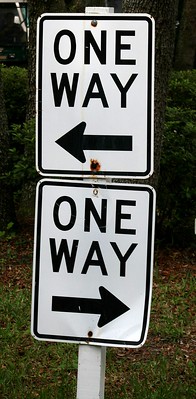
Control theories are unique in that they ask - why not crime? Most theories of crime are built to answer why some people are drawn to criminal behavior - but control theories are set up in the opposite way. Rational Choice theories dig into the thought processes behind why people choose to commit crime (Image: Choices, bitznbites, flickr, Creative Commons).
By the end of this module, students will be able to:
- Define and apply Rational Choice Theory and Routine Activity Theory (C.O. #1, 2)
- Describe how low-self control develops and relates to risky behavior (including "analogous" behaviors") (C.O. #3, 6)
- Identify the key difference driving control theories versus the ones that came before it - asking “why not crime?” (C.O. #1, 4)
- Describe practical uses of rational choice theory. (C.O. #2)
- Describe the three components of Routine Activity Theory - place, time, and target. (C.O. #3)
To achieve these objectives:
- Read the Module 7 Introduction
- Read Chapter 7
- Complete the Discussion task and Reflection Assignment for Module 7.
Module Pressbooks Resources and Activities
You will find the following resources and activities in this module at the Pressbooks website. Click on the links below to access or complete each item.
Background Colour
Font Face
Font Kerning
Font Size
Image Visibility
Letter Spacing
Line Height
Link Highlight
Text Colour