
Criminology
Section outline
-
Welcome to [SUBJ ####]!
Purpose of the CourseThis Open Educational Resource (OER) Criminology course is designed to introduce high school students to the scientific study of crime, criminal behavior, and social influences on law-breaking. The purpose of this course is to help students understand why crime occurs, how social environments shape behavior, and how research and theory are used to analyze real-world problems in communities. This OER course aims to educate, empower, and equip high school students with the knowledge and skills needed to understand crime as a social issue, apply theory to real-world contexts, and develop critical thinking skills essential for academic and civic success.
As an OER course, all materials are freely accessible, allowing students, families, and educators to engage with high-quality academic content without cost barriers. This course supports college and career readiness, especially for students interested in criminal justice, psychology, sociology, social work, public policy, law, or community advocacy.
Course Introduction
Discuss expected outcomes, real-world application of skills and knowledge, and how the course fits within the program. Articulate the purpose of the course.Adopting instructors can embed a welcome video or add additional text here.
Upon successful completion of this course, the student will be able to:
- Understand the difference between the various theories that describe criminal behavior
- Apply criminological theories to cultural and local examples; be able to understand which theories work best for types of crime or criminal circumstances
- Analyze how environmental and traumatic influences, genetics, criminogenic outcomes, and genetics are related to criminality.
- Define the nine steps of the research process, analyze the differences between quantitative and qualitative approaches and compare inductive vs. deductive methods.
- Analyze how social norms, peer associations, and structural inequalities influence criminal behavior by applying key sociological theories such as Differential Association, Social Disorganization, Anomie, and Strain Theory to historical and contemporary crime patterns in diverse contexts like Louisiana.
- Evaluate the role of social bonds, community disorganization, and systemic disparities in shaping individual and group-level deviance.
Adopting institution should provide learners information on how to navigate the course. Consider adding an introductory navigation video. Text description could include, for example:Structure of the Course
Describe the course structure, such as number of modules, to allow the learner to understand how the learning process if structured and carried out.
Navigating the Course
This course is set up in Modules covering various topics which may be accessed from the course navigation menu on the left or by scrolling below. Modules may be collapsed in the menu and it the body of the course to minimize scrolling. Each module includes the relevant chapters followed by various activities, which may include discussion forums, listening activities and quizzes, practice quizzes, module tests, and other relevant activities as appropriate for each module. Many items are required and may be marked as completed automatically when the activity has been submitted (the broken check box), but others will mark as done by the student (the solid check box).Please move through the items below and continue through the Learner Support and Getting Started modules before moving on to Module 1. Be sure to check for announcements and due dates to stay on track. This course and its contents are developed by Ashley Ojo; Brandon Hamann; David Khey; Franklyn Scott; Douglas Marshall; and Jasmine Wise: and licensed under a Creative Commons Attribution 4.0 International License by LOUIS: The Louisiana Library Network, except where otherwise noted.
 Adopting instructors should edit the About Your Instructor and Office Hours Information pages in this Module.
-
Adopting instructors should edit all pages in this module to reflect their institution's policies.
-
This module contains all the items you should review and complete before you begin Module 1. Before moving on, be sure to:
- Check the News and Announcements Forum
- Read the Course Syllabus
- Introduce yourself to the class
- Read the instructions for the Q & A Forum
- Review academic integrity expectations in the course
Good luck in the course!-
This forum contains general news and announcements. You can find all announcements listed in the "Latest News" block in Course Tools within this course or on your My Courses page.
-
Students mustMark as done
Use this forum to tell us a little about yourself and your interests. Some topic ideas:
- What is your field of study/research interest or concentration?
- What are you most interested in learning about in this class and why?
- Have you ever taken an online class before?
- Any other information you would like to share with your classmates, such as special interests or activities.
Post a picture! We look forward to meeting you.
-
Students mustMark as done
Use this forum to ask your instructor any questions you have about the course. You may post at any time, and your instructor will respond here. Be as specific as possible.
Please keep in mind that others can see your posts, so do not post any personal information. If you have questions about your grade, please email your instructor directly. You can expect a response to posts and emails within [X] hours. [Recommendation is 24 hours M-F, next business day on weekends.]
Subscription should be set to Auto.
-
Academic Integrity and Ethical Scholarship
Academic integrity is a core expectation of this course and an essential skill for success in high school, college, and future careers in criminal justice, psychology, sociology, and related fields. Students are expected to complete all coursework honestly, independently, and responsibly, while giving proper credit to the ideas and work of others.
What Academic Integrity Means in This Course
To comply with institutional academic integrity policies, students must:
- Submit original work for all assignments, including written responses, theory applications, research activities, quizzes, and projects.
- Properly cite sources when using ideas, statistics, definitions, or quotations from textbooks, articles, videos, or online materials, even when paraphrasing. Use course materials appropriately, including OER readings and instructor-provided resources, without copying text verbatim unless clearly quoted and cited.
- Complete assessments independently, unless an assignment explicitly allows collaboration or group work.
- Use technology ethically, including AI tools, research databases, and online sources, only as permitted by the instructor.
Examples of Integrity in Course Assessments
Because this course emphasizes theory application and real-world analysis:
- When applying criminological theories (e.g., Strain Theory, Differential Association) to Louisiana or local examples, students must use their own words and reasoning, not copied explanations from websites or classmates.
- Research-related assignments must reflect the student’s understanding of quantitative vs. qualitative methods, inductive vs. deductive reasoning, and the research process.
- Reflections on trauma, environment, peer influence, or community factors should be thoughtful, personal, and evidence-based, not generated or copied without understanding.
Academic Dishonesty Includes (But Is Not Limited To):
- Plagiarism (copying or closely paraphrasing without citation)
- Submitting another person’s work as your own
- Using AI-generated content without permission or proper acknowledgment
- Sharing answers on quizzes or assessments
- Reusing the same assignment for multiple classes without approval
Violations of academic integrity may result in a zero on the assignment, required resubmission, parent/guardian notification, referral to school administration, or other consequences consistent with institutional policy.
Responsible Use of AI and Technology
If AI tools are permitted for brainstorming or outlining:
- Students must clearly acknowledge their use
- AI may not replace original thinking, analysis, or writing
- Final submissions must reflect the student’s own understanding and voice
If AI use is not permitted for a specific assignment, any AI-generated content will be treated as academic dishonesty.
Late Assignment Policy
Meeting deadlines is an important part of academic responsibility and prepares students for college and professional expectations. However, this course also recognizes that students may face challenges.
Standard Late Policy
- Assignments submitted 1–2 days late will receive a 10% deduction per day.
- Assignments submitted 3–5 days late may receive up to a 50% deduction.
- Assignments submitted more than five days later might be rejected without prior approval.
Extensions and Special Circumstances
Extensions may be granted for:
- Illness or medical emergencies
- Family emergencies
- School-sponsored activities
- Technology or access issues beyond the student’s control
Students should communicate with the instructor before the due date whenever possible. Documentation may be required in accordance with school policy.
Make-Up Work and Accountability
- Late work must still meet academic integrity standards and learning objectives.
- Repeated late submissions may impact participation or course progress.
- Students are encouraged to use planning tools, reminders, and instructor check-ins to stay on track.
Commitment to Learning
By following academic integrity standards and submitting work on time, students demonstrate respect for themselves, their classmates, and the learning process. These expectations support the course’s goal of helping students become critical thinkers, ethical scholars, and informed community members.
If students are ever unsure about citation, collaboration, AI use, or deadlines, they are encouraged to ask questions early; seeking clarification is always the right choice.
-
Use the information in this module to customize the template to your needs. This module is currently hidden from students, and available for you to refer to throughout the semester.
-

Crime is a universal social phenomenon, yet its meaning is far from universal. While many people think of crime simply as the violation of codified laws, the term has deeper historical, cultural, and even moral roots. Originating from the Latin word crīmen meaning an intentional act deemed harmful or dangerous, crime has been interpreted differently across time and in societies. For example, early Christian writers equated crime with sin, and modern culture sometimes uses the term more playfully, such as committing a “fashion crime.”
In this module, we explore the complexity of defining crime and the ways societies respond to it. We begin by examining early explanations from the classical period of criminology, then move to debates between legalistic and social constructionist approaches. We also consider how criminological theories can be grouped into two perspectives: consensus perspectives, where laws reflect shared societal values, and conflict perspectives, where laws serve the interests of some groups over others. Through these lenses, students will learn how definitions of crime are shaped by history, culture, and power dynamics, and why these definitions matter in criminological study.
By the end of this module, students will be able to:
- Obj. 1 Explain the historical origins and evolution of criminology as a discipline. (C.O. #1)
- Obj. 2. Analyze crime from both legalistic and social constructionist perspectives. (C.O. #1)
- Obj. 3. Compare and contrast consensus and conflict perspectives on the creation of laws. (C.O. #1, 2)
- Obj. 4. Analyze how cultural and historical contexts influence what is considered a crime. (C.O. #1, 5)
- Obj. 5. Critically evaluate the limitations of defining crime solely through legalistic frameworks. (C.O. #1)
To achieve these objectives: [Edit these items to match your resources and activities.]
- Read the Module 1 Introduction
- Read Chapter #1 in the Criminology textbook.
- Complete the module 1 quiz, discussion and reflection assignment.
Note the check boxes to the right that help you track your progress: some are automatic, and some are manual. [Delete in subsequent modules.]
Module Pressbooks Resources and Activities
You will find the following resources and activities in this module at the Pressbooks website. Click on the links below to access or complete each item.
-

deviance | Divergent deviance (sociology) may 28, 2014 / divergent's blog
This chapter introduces the Conceptualization of Crime, the Classical School of Criminology, as well as the individuals who are responsible for the formulation and implementation of those theories into the study of crime causation.
By the end of this module, students will be able to:
- Identify the theorists responsible for the creation of the first theories of crime causation. (C.O. #1, 6)
- Differentiate the various conceptualizations and typologies of crime. (C.O. #1, 6)
- Recognize the impact of the Classical School of Criminology on policymaking in the state of Louisiana. (C.O. #1, 6)
To achieve these objectives: students will read the chapter, participate in the discussion forum and complete the chapter quiz.- Read the Module 2 Introduction
- Read Chapter 2 in Criminology
- Complete the reading of the chapter, then complete the discussion forum and finally complete the chapter quiz.
Module Pressbooks Resources and Activities
You will find the following resources and activities in this module at the Pressbooks website. Click on the links below to access or complete each item.
-

This chapter will focus on the basic steps to conduct research. The fundamental understanding of research is paramount in the study of criminal justice. All aspects in the criminal justice field require research and the basic component thereof. In this module, the 9 steps of the Scientific Method will be discussed and students knowledge of the methods will be assessed through the quiz in this module. The goal of this chapter is for students to gain knowledge of research concepts as well as a preview research samples in this chapter and in engage in discussions that will foster future research topic for the students.
What is The Scientific Method February 13, 2023|Glossary, Science
By the end of this module, students will be able to:
- Define the 9 steps of the Research Process (C.O. #4, 5, 6)
- Compare and contrast Inductive vs. Deductive Research, (C.O. #4, 5, 6)
- Compare and contrast Qualitative vs. Quantitative Research (C.O. #4, 5, 6)
To achieve these objectives, students will engage in meaningful conversations with their peers in the discussion forum and complete a quiz devoted to understanding the 9 steps of the Research Process through the Scientific Method.- Read the Module 3 Introduction
- Read Chapter 3 in Criminology
- Complete the chapter reading, then the discussion forum and finally the chapter quiz.
Module Pressbooks Resources and Activities
You will find the following resources and activities in this module at the Pressbooks website. Click on the links below to access or complete each item.
-
-
-
Opened: Monday, October 27, 2025, 12:00 AMDue: Sunday, November 2, 2025, 11:00 PM
-
In this chapter, we will gain a basic understanding of the role of genetics and heredity on criminality. Ask yourself or a friend, how many individuals do you know that are incarcerated and have or have had incarcerated parents? Is there truly a genetic link or a coincidence? As criminal justice scholars and future criminal justice professionals, the understanding of genetic behaviors and heredity are essential. The mere understanding of the family background can possible be an aid in helping an individual involved with the criminal justice system. As we read and comprehend this chapter, it is my hope that students will understand the need to research genetics and heredity in the future. We will engage in meaningful conversations in the discussion forum and students will be able to assess their knowledge of this chapter through the chapter quiz.
The Criminal Behavior of Genes | Role of genes in criminal activity | Science Repository | Open Access Journals November 19. 2020
By the end of this module, students will be able to:
- Analyze how environmental, traumatic influences, genetics, criminogenic outcome and genetics are related to criminality. (C.O. #3, 6)
- Evaluate social implications of criminality (C.O. #3, 6)
- Assess alternative educational settings and trauma for adolescents (C.O. #3, 6)
To achieve these objectives: students will engage in meaningful conversations with their peers in the discussion forum and complete a quiz devoted to understanding the Positivist Theories of Criminology.
- Read the Module 4 Introduction
- Read Chapter 4 in Criminology
- Complete the, first read the chapter, then complete the discussion forum, and final complete the quiz.
Module Pressbooks Resources and Activities
You will find the following resources and activities in this module at the Pressbooks website. Click on the links below to access or complete each item.
-

Welcome to Chapter 5! This week, we explore how sociological theories help us make sense of crime not just as an individual act, but as a social phenomenon shaped by cultural norms, group dynamics, and structural forces.
You’ll learn how sociologists have long questioned why certain behaviors are criminalized while others are normalized, and how race, class, gender, and history influence who is labeled a criminal. We’ll begin with foundational theorist Émile Durkheim, who argued that crime is not simply deviance or moral failure; it’s a normal part of social life that helps define our collective values. This perspective is a significant departure from earlier (and often harmful) biological theories like those proposed by Cesare Lombroso.
As you move through this chapter, I encourage you to reflect on how definitions of crime vary across communities, especially in diverse places like New Orleans and Baton Rouge. Ask yourself: Who defines crime? Whose norms are being enforced? And how can sociological insights challenge outdated models of punishment?
Image Generation: Dr. Ashley Ojo, made with Adobe Express AI Image Generator
Image Description: The image depicts a classic legal-themed arrangement featuring three prominent elements:
- A wooden gavel is positioned on the left; it has a polished dark wood finish with a metallic gold band near the head and rests on its circular sound block. This symbolizes the authority of the judiciary.
- The Scales of Justice are centered on top of two thick, leather-bound law books; the golden scales are balanced with chains holding two pans, representing fairness and impartiality in the legal system.
- Two black, hardcover legal volumes are stacked beneath the scales, embossed with gold lettering and accents on their spines, symbolizing the foundation of law and legal precedent.
The background is softly blurred with warm lighting, creating a professional and dignified atmosphere that evokes the solemnity and importance of the justice system.
By the end of this module, students will be able to:
- Describe the sociological perspective on crime by summarizing Émile Durkheim’s view of it as a normal and necessary part of society. (C.O. #1, 2, 5)
- Analyze how social norms and cultural diversity influence definitions of deviance and crime. (C.O. #1, 2, 5)
- Explain the foundational concepts of Social Disorganization and Differential Association and Social Learning Subculture. (C.O. #1, 2, 5)
To achieve these objectives:
- Read the Module 5 Introduction.
- Read Chapter 5 in the Criminology Textbook
- Complete the chapter 5 quiz and discussion.
Module Pressbooks Resources and Activities
You will discover the following resources and activities in this module at the Pressbooks website. Click on the links below to access or complete each item.
-

In our nonstop, twenty-four-hour news world, not every crime or victim's story makes the headlines. Newsrooms must choose which events to cover and how to tell them, guided by what’s considered “newsworthy.” Sometimes these choices reflect audience interest, sometimes the influence of media owners, and sometimes the practical limits of time and staff.
These decisions shape public understanding in powerful ways. Crimes by marginalized groups are often portrayed in sensational terms, while harmful acts by powerful corporations, such as fraud or environmental violations, receive far less attention. Such patterns can reinforce stereotypes, skew public perception, and influence policy.
Media coverage also interacts with deeper social forces that influence crime rates. In the United States, the gap between the American Dream’s promise of economic success and the limited opportunities available to achieve it creates structural strain. When individuals cannot reach culturally valued goals such as wealth or social status, they may experience frustration, anger, and hopelessness. Weakness in other social institutions, such as the family, intensifies this condition known as anomie, allowing the economic drive to dominate. Under such circumstances, crime can become a more likely response to strain, whether due to blocked opportunities, exposure to harmful conditions, or the loss of valued support.
This module explores how crime is selected and framed in the media, why certain stories dominate the news cycle, and how structural strain and social imbalances help explain patterns in both coverage and crime rates.
By the end of this module, students will be able to:
- Explain the concept of anomie and strain theory.
- Assess the limitations of strain theory in explaining nonutilitarian crimes and the crimes of the powerful. (C.O. #3, 5, 6)
- Explain the concept of news values or newsworthiness criteria and how they shape crime reporting.(C.O. #3, 5, 6)
- Compare and contrast the market model, propaganda model, and organizational model of media content selection. (C.O. #3, 5, 6)
- Analyze how media framing influences public perceptions of offenders, victims, and law enforcement.
- Differentiate between street crime and crimes of the powerful (including white-collar and corporate crime) in terms of definition, media portrayal, and societal impact. (C.O. #3, 5, 6)
- Evaluate the role of race and racial bias in media coverage of crime, particularly the overrepresentation of racial minorities in street crime reporting. (C.O. #3, 5, 6)
- Discuss the policy implications of biased crime coverage for criminal justice priorities and public opinion. (C.O. #3, 5, 6)
To achieve these objectives:
- Read the Module 6 Introduction.
- Read Chapter 6 in the Criminology Textbook
- Complete the chapter 6 quiz and discussion.
**Please note: the final project should be submitted in this module or the next. Consider these variables when assigning activities and for grading time.
Module Pressbooks Resources and Activities
You will find the following resources and activities in this module at the Pressbooks website. Click on the links below to access or complete each item.
-
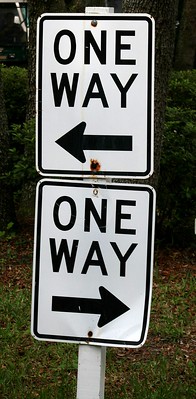
This module discusses Control, Rational Choice, and Routine Activity theories. These theories were first designed decades ago, yet remain very relevant in terms of producing policy. For example, Routine Activity prompts people to think of the patterns of human activity (think - behavior that is more likely to happen at night - in particular places/spaces) when thinking about crime patterns. In fact, Routine Activity is very much relevant in the world of loss prevention to reduce shoplifting behaviors. It can also be useful when urban designers think about how to create city spaces to be family-friendly and promote safe spaces.
Control theories are unique in that they ask - why not crime? Most theories of crime are built to answer why some people are drawn to criminal behavior - but control theories are set up in the opposite way. Rational Choice theories dig into the thought processes behind why people choose to commit crime (Image: Choices, bitznbites, flickr, Creative Commons).
By the end of this module, students will be able to:
- Define and apply Rational Choice Theory and Routine Activity Theory (C.O. #1, 2)
- Describe how low-self control develops and relates to risky behavior (including "analogous" behaviors") (C.O. #3, 6)
- Identify the key difference driving control theories versus the ones that came before it - asking “why not crime?” (C.O. #1, 4)
- Describe practical uses of rational choice theory. (C.O. #2)
- Describe the three components of Routine Activity Theory - place, time, and target. (C.O. #3)
To achieve these objectives:
- Read the Module 7 Introduction
- Read Chapter 7
- Complete the Discussion task and Reflection Assignment for Module 7.
Module Pressbooks Resources and Activities
You will find the following resources and activities in this module at the Pressbooks website. Click on the links below to access or complete each item.
-
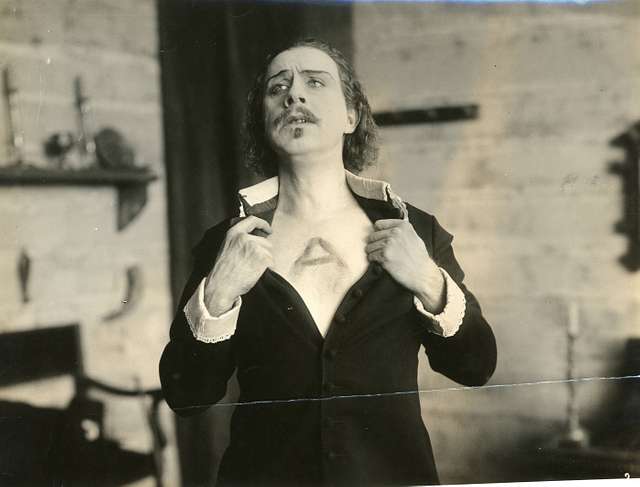
This chapter discusses the concept of stigma and how it shapes behavior through theories of labeling. While these theories do not produce much policy (directly), they are gaining relevance given the embrace of stigma in our current discourse. Think - have there been stretches of time when a label someone pushed upon you stuck? Was it a positive or negative experience? (Image: Scarlet Letter, Public Domain, J. Willis Sayre Collection of Theatrical Photographs).
By the end of this module, students will be able to:
- Explain how cultural criminology builds on earlier theories like subcultural theory, labeling theory, and moral panic theory. (C.O. #1, 5)
- Describe the relationship between violence, capitalism, and popular culture through examples like violent video games and reality TV policing programs. (C.O. #2)
- Identify how "media loops" and "spirals" disrupt the traditional distinction between reality and representation. (C.O. #2)
- Analyze how moral panics have evolved into ongoing, sustained spirals in late modern society. (C.O. #3)
- Discuss how crime, control, and culture intersect in the construction of media-driven narratives about deviance. (C.O. #2, 3, 4, 5)
To achieve these objectives:
- Read the Module 8 Introduction
- Read and view the materials in the Module 8 Pressbooks book
- Read Chapter 8 in the Criminology text.
- Complete the discussion board task and the Reflection assignment for Module 8.
Module Pressbooks Resources and Activities
You will find the following resources and activities in this module at the Pressbooks website. Click on the links below to access or complete each item.
-

This chapter examines Critical and Peacemaking Criminology, both of which challenge traditional individual-focused theories of crime by emphasizing the impact of societal structures and power dynamics. Critical Criminology argues that crime and punishment are deeply influenced by capitalism, systemic inequality, and institutional control. Drawing on Marx’s critique of class relations and Foucault’s theories of power, surveillance, and discourse, the chapter reveals how criminal justice systems disproportionately target marginalized groups. Peacemaking Criminology, in contrast, advocates for restorative justice and healing over retribution, encouraging communities to approach crime with compassion and a focus on social reintegration. Through case studies like Xiomara Luna’s, the chapter illustrates how poverty, lack of healthcare, and housing instability can lead to criminalization of survival behaviors. It also explores abolitionist thought, convict criminology, and critiques of carceral systems, particularly in Louisiana, where systemic failures in education, healthcare, and housing compound social harm. Together, these frameworks urge a reevaluation of justice rooted in equity, dignity, and structural reform. Image by Alexandra Hanesworth | The Brown Daily Herald
By the end of this module, students will be able to:
- Identify the theories of critical and peacemaking in criminology. (C.O. #1)
- Explain how peacemaking theory changed the views of criminology. (C.O. #1, 2)
- Apply critical theory to real world scenarios. (C.O. #1, 6)
To achieve these objectives:
- Read the Module 9 Introduction
- Read and view the materials in the Module 9 Pressbooks book
- Read Chapter 9 in Criminology by Ashley Ojo; Brandon Hamann; David Khey; Franklyn Scott; Douglas Marshall; and Jasmine Wise.
- Complete the Two Discussion forums and assignments in Moodle.
Module Pressbooks Resources and Activities
You will find the following resources and activities in this module at the Pressbooks website. Click on the links below to access or complete each item.
-

This chapter introduces key concepts in feminist criminology and intersectionality showing how systems of power, such as patriarchy, shape criminal justice experiences, especially for marginalized groups. Feminist theories, including liberal, radical, Marxist, and postmodern feminism, explore how social structures contribute to women’s victimization and criminalization, while intersectionality highlights how these identities interlock, deepening inequality. The chapter critiques traditional male-centered criminological theories and advocates for inclusive approaches that address trauma, victimization, and the need for gender-responsive reforms, such as those happening in Louisiana. Ultimately, the chapter urges readers to recognize how oppression operates through social systems and emphasizes building more equitable responses that reflect lived experiences. Image: AdobeStock
By the end of this module, students will be able to::
- Identify the theories of feminism in criminology. (C.O. #1, 2)
- Apply intersectionality to real world scenarios. (C.O. #1, 2)
To achieve these objectives:
- Read the Module 10 Introduction
- Read and view the materials in the Chapter 10 Pressbooks book
- Read Chapter 10 in Criminology by Ashley Ojo; Brandon Hamann; David Khey; Franklyn Scott; Douglas Marshall; and Jasmine Wise.
- Complete the two discussion forums and two assignments in Moodle.
Module Pressbooks Resources and Activities
You will find the following resources and activities in this module at the Pressbooks website. Click on the links below to access or complete each item.
-
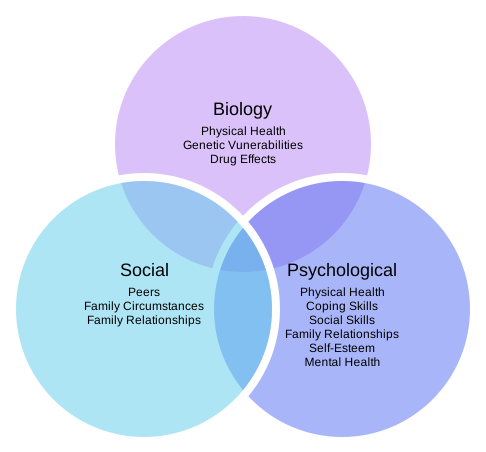 Chapter 11 explains how no single criminological theory can fully account for why people engage in criminal behavior, which is why integrated theories have become increasingly important in the field. Integrated Theory combines elements from multiple perspectives—such as strain theory, social learning theory, control theory, developmental theories, and even biological or psychological factors—to create a more complete explanation of crime. The chapter illustrates how these different influences interact across a person’s life by using examples like “Jason,” whose offending is shaped by economic strain, weakened social bonds, and exposure to delinquent peers. It also introduces practical tools such as the Risk-Need-Responsivity (RNR) model, which helps identify and treat offenders based on their individual risk factors and needs. Overall, the chapter emphasizes that crime is multidimensional, and understanding it requires examining how personal, social, and environmental factors combine over time. (Image: Seth Falco Biopsychosocial Model of Health)
Upon completion of this module, you will be able to:
- Identify origins of integrated theory (C.O. #1)
- Explain sources of integrated theory (C.O. #1, 5)
- Apply integrated theory to real world situations (C.O. #1, 2, 5)
To achieve these objectives:
- Read the Module 11 Introduction
- Read and view the materials in the Module 11 Pressbooks book
- Read Chapter 11 in Criminology by Ashley Ojo; Brandon Hamann; David Khey; Franklyn Scott; Douglas Marshall; and Jasmine Wise.
- Complete the Two Discussion forums and assignments in Moodle.
Module Pressbooks Resources and Activities
You will find the following resources and activities in this module at the Pressbooks website. Click on the links below to access or complete each item.


Background Colour
Font Face
Font Kerning
Font Size
Image Visibility
Letter Spacing
Line Height
Link Highlight
Text Colour