
Module 5: Water and Micronutrients
Section outline
-
(Source: Wikimedia Commons, formulatehealth, CC-BY)
"The magic of food lies not just in the ingredients but in the heart of the cook."
~ Chef Paul Prudhomme
Maintaining proper hydration is essential for survival, as both dehydration and overhydration can impair the body’s function. Water serves as a vital medium, transporting micronutrients, vitamins, and minerals throughout the body. Vitamins, obtained from various foods, are organic compounds classified as either fat-soluble (hydrophobic) or water-soluble (hydrophilic), a distinction that determines where they act in the body. Similarly, minerals are essential nutrients found abundantly in everyday foods, with 20 key minerals required in the diet to support overall health. In this module, we will review the importance of Water and electrolytes, as well as the greater role of vitamins and minerals in the body.Module 5 Objectives-
Upon completion of this module, you will be able to:- Describe the importance of water intake and the major aspects of fluid regulation in the body. (CLO #1, 2, & 3)
- Describe the functions and consequences of the imbalance of electrolytes in the body. (CLO #1, 2 & 3)
- Discuss the health effects of popular beverage choices and advocate for responsible consumption. (CLO #3, 5, & #6)
- Describe the functions of vitamins in the body. (CLO #1, 2, & 3)
- Describe the functional roles and sources of micronutrients, phytochemicals, and minerals in the body. (CLO #1, 2, & 3)
- Distinguish between major minerals and trace minerals. (CLO #1, 2, &3)
To Do List -
To achieve these objectives:
- Read the Module 5 Introduction
- (MLO #1-6) Read Chapters 9, 10, & 11 in the textbook.
- (MLO #5) Complete the Module 5 Assignment.
- Complete the Module 5 Discussion.
- (MLO #1-6) Complete the Module 5 Quiz.
Module Pressbooks Resources & Activities -
You will find the following resources and activities in this module at the Pressbooks website. Click on the links below to access or complete each item.
-
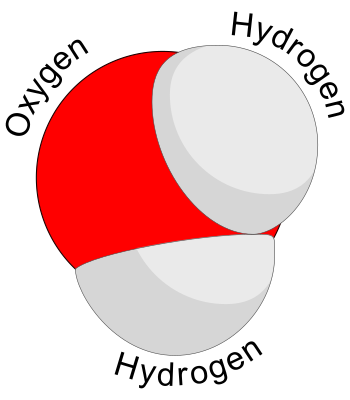
Maintaining the right level of water in your body is crucial to survival, as either too little or too much water in your body will result in less-than-optimal functioning. One mechanism to help ensure the body maintains water balance is thirst.
-

Vitamins are obtained from the different types of foods that we consume. A vitamin deficiency may occur if a diet lacks a specific kind of nutrient. The traditional diet of Louisiana consisted of a mixture of influences from indigenous, European, and African cultures
-
Similarly to vitamins, minerals are essential to human health and can be obtained in our diet from different types of food. Minerals are abundant in our everyday lives. From the soil in your front yard to the jewelry you wear on your body, we interact with minerals constantly.
-
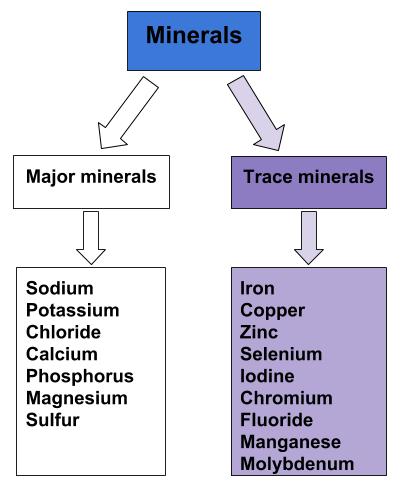
Trace minerals are classified as minerals required in the diet each day in smaller amounts, specifically 100 milligrams or less. These include copper, zinc, selenium, iodine, chromium, fluoride, manganese, molybdenum, and others. Although trace minerals are needed in smaller amounts it is important to remember that a deficiency in a trace mineral can be just as detrimental to your health as a major mineral deficiency.
-
This is a quiz review the Chapters on Water and Electrolytes (Chapter 3), Vitamins (Chapter 9), Major Minerals (Chapter 10) and Trace Minerals (Chapter 11). You have 1 attempt and 30 minutes to complete this assignment
-
Water and Micronutrients: Why They Matter
We have learned about the essentials of water, vitamins, and minerals which are often the overlooked but absolutely vital parts of nutrition.
Think about it: We can survive weeks without food, but only a few days without water. Hydration keeps our cells functioning, helps regulate temperature, and transports nutrients throughout the body. Alongside water, micronutrients (vitamins and minerals) act like the body’s “spark plugs,” enabling countless chemical reactions that keep us alive and thriving. Remember Chef Paul Prudhomme’s words: “The magic of food lies not just in the ingredients but in the heart of the cook.” Nutrition isn’t just science—it’s also about how we connect food to our lives.
Write your response to the following prompt? (150 words minimum). Make sure to response to at least 2 peer posts.
Which vitamin or mineral do you think is most challenging for college students to get enough of, and why? How might cultural food traditions or personal dietary choices (like veganism or keto) affect micronutrient intake?
Background Colour
Font Face
Font Kerning
Font Size
Image Visibility
Letter Spacing
Line Height
Link Highlight
Text Colour