
Chapter 3 - Hazard Recognition, Assessment, and Control
Section outline
-
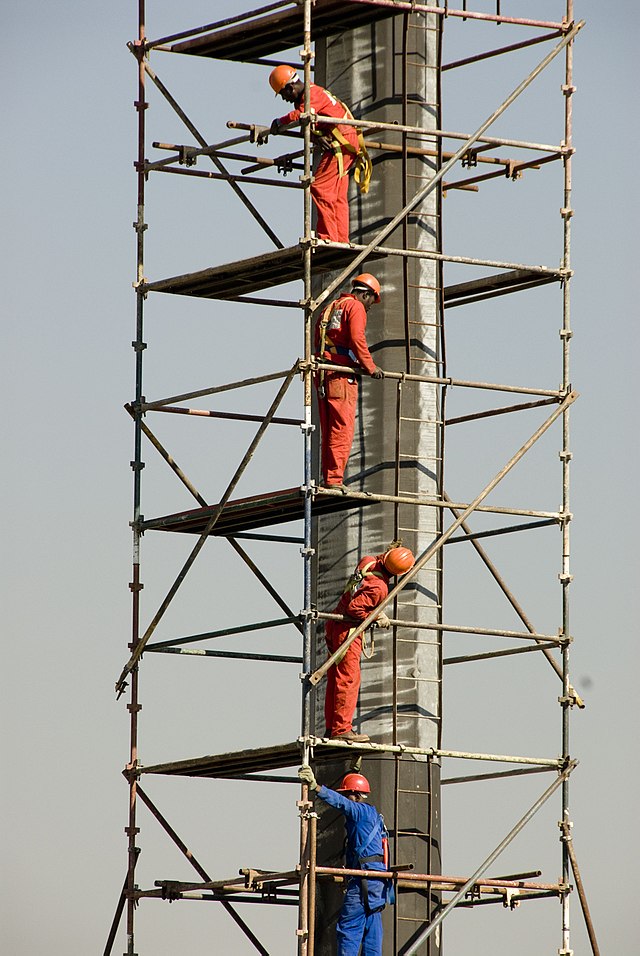
Every job site, laboratory, or industrial facility holds potential hazards—some visible at first glance, like exposed machinery or chemical spills, and others hidden within a job task or daily routines, such as poor ventilation or repetitive movements.
In this module, students will learn how to systematically recognize occupational hazards and potential risks before they cause harm. Additionally, students should be able to identify and accurately assess or evaluate their likelihood of occurrence and potential human health, safety, and environmental impact, and finally propose evaluate and implement effective controls to eliminate or reduce the hazards.
Students will finally explore the hierarchy of hazard controls. These include, but are not limited to elimination and substitution as well as engineering solutions or strategies, administrative measures, and personal protective equipment (PPEs). Students should be able to link each of these control approach to real-world scenarios across various industries.
Through case studies and practical exercises, you will develop the ability to look beyond surface symptoms, identify root causes, and design prevention strategies that protect health, enhance productivity, and support a proactive safety culture in any environment.
(Image: Tower Construction.jpg, by Yeudakn, Wikimedia Commons, Creative Commons Attribution-Share Alike 4.0 International).
Upon completion of this module, you will be able to:
- M3.1 (C3, C5): Explain the process of hazard anticipation and recognition.
- M3.2 (C2, C3, C5): Identify and assess workplace hazards using a systematic model.
- M3.3 (C3, C4, C5): Apply the hierarchy of controls to mitigate occupational hazards.
- M3:4 (C2, C3, C4, C5): Analyze real-world incidents to improve safety decision-making.
- Read the Module 3 Introduction
- Read Chapter 3: Hazard Recognition, Assessment, and Control in the "Introduction to Safety" Book
- Complete the Exercise 1 and Exercise 2 comprising quizzes (multiple choice and open-ended questions)
Module Pressbooks Resources and Activities
You will find the following resources and activities in this module at the Pressbooks website. Click on the links below to access or complete each item.
-
Students mustMark as done
Chapter 3: Hazard Recognition, Assessment, and Control
This is a narrative outline of Chapter 3 (Or Module 3), which focuses on the anticipation, identification, assessment, and control of physical hazards in the workplace. Physical hazards—such as noise, vibration, radiation, and temperature extremes—are environmental factors that can harm workers without direct contact. Understanding these hazards requires recognizing root causes (systemic issues like poor design) and proximate causes (immediate triggers like faulty equipment) to guide effective control measures.
Key topics on this Module include techniques for controlling workplace noise through engineering and administrative measures (strategies), as well as personal protective equipment (PPE). Vibration hazards are also examined for their musculoskeletal disorders (MSDs) and circulatory impacts, with solutions like equipment redesign and safe work practices (administrative controls). Radiation, both ionizing and non-ionizing, is a physical hazard which is addressed through prevention strategies such as shielding and exposure duration minimization. The chapter also covers prevention of heat and cold stress through acclimatization, monitoring, and protective gear (PPE).
Finally, the chapter explores ergonomic hazards and related principles, emphasizing proper work design to reduce long-term health effects from repetitive tasks and awkward postures. It concludes by noting that, by applying the processes or framework of anticipation, identification, assessment, and control, learners will be prepared to address a wide range of physical hazards to safeguard worker health and safety.
-
-
-
Students mustPost replies: 1Make forum posts: 1
-
Instructions for students taking the quiz. This quiz tests your understanding of hazard recognition, assessment, and control in agricultural and educational settings. It includes multiple-choice, true/false, drag-and-drop, matching, and essay questions.
- Read each question carefully and select or provide the best answer.
- Answer all questions. Essay responses should be clear, complete, and demonstrate application of course concepts.
- Review your answers before submitting.
What You’ll Practice and Demonstrate:
- Mastery of Hazard Anticipation, Recognition, and Assessment (M3.1, M3.2)
- Applying the hierarchy of controls in the workplace (M3.3)
- Analyzing real-world incidents to improve safety (M3.4)
- OSHA standards, safe work practices, roles/responsibilities, and workplace ethics (C3–C6)
Background Colour
Font Face
Font Kerning
Font Size
Image Visibility
Letter Spacing
Line Height
Link Highlight
Text Colour