
Chapter 11 - The Practice of Health and Safety
Section outline
-
This module examines how health and safety operate in real workplaces, moving beyond idealized rules to explore how power, enforcement, and organizational priorities shape everyday safety outcomes. While laws and standards are designed to protect workers, their effectiveness often depends on how they are applied, enforced, and challenged in practice. This module highlights the gap between formal safety systems and lived workplace experiences, with particular attention to workers' rights, employers' responsibilities, and regulatory enforcement.
Students will explore why injuries persist even when safety rules are in place, how economic and organizational pressures influence decision-making, and the role of worker advocacy in improving conditions. Understanding these dynamics is essential for anyone entering technical, industrial, healthcare, or service-related fields, where safety is not only a legal requirement but a practical and ethical concern. By engaging with real-world examples, this module encourages students to think critically about safety as an active process shaped by human, institutional, and social factors rather than a checklist of rules.
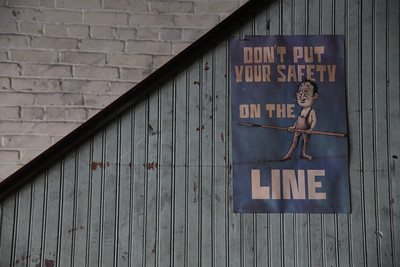
(Image: “Don't Put Your Safety on the Line”, by Paul Sableman, CC BY 2.0.)
Upon completion of this module, you will be able to:
- Explain how workplace health and safety systems function in practice and why their outcomes may differ from their intended design.
- Analyze how power relationships, enforcement strategies, and economic pressures influence health and safety decisions in the workplace.
- Evaluate the role of worker participation and advocacy in improving health and safety outcomes across different industries.
To achieve these objectives:
- Read the Module 11 Introduction
- Read Chapter 11 in your textbook.
- Participate in discussion forum activities, sharing your perspectives and responding to classmates.
- Complete a self-check quiz to test your understanding of key concepts and definitions.
- Engage in a scenario-based activity to identify and suggest solutions to workplace psycho-social hazards.
- Review and reflect on supplementary resources (articles, infographics, or videos).
- Submit a short-written reflection or assignment connecting module content to your own experiences or career field.
- Complete the assignment, discussion forum, and the quiz.
Module Pressbooks Resources and Activities
You will find the following resources and activities in this module at the Pressbooks website. Click on the links below to access or complete each item.
-
-
Due: Tuesday, December 16, 2025, 2:17 PMStudents mustMark as done
Forum Instructions
In a post below, respond to the following prompt, which assess course outcome 2 (Demonstrate an ability to understand professional, ethical, and social responsibilities), outcome 4 (Explain the responsibilities of employers, managers, supervisors, and employees for maintaining safe, healthful working environments), and module learning objective 2 (Analyze how power relationships, enforcement strategies, and economic pressures influence health and safety decisions in the workplace). Then, you must respond to; of your classmates' posts. After you post a response, you will be able to see other responses. You are not required to post more than once, but feel free to respond to other posts and engage with your classmates
Your initial post is due on [day of week] by [time] CST. Your response to another student is due on [day of week] by [time] CST.
Prompt
Workplace safety is often described as a shared responsibility, but in practice, workers may face barriers such as limited enforcement, fear of retaliation, and employer pressure to prioritize productivity. Drawing from your own experiences, observations, or credible case studies:
- Describe a workplace situation where a hazard existed but was not effectively addressed (e.g., understaffing, unsafe manual handling, missing equipment, rushed timelines, or ignored warnings).
- Analyze how at least two factors influenced what happened (examples: power imbalance, cost/production pressure, weak training, limited OSHA enforcement, or fear of reporting).
- Propose one realistic improvement that could prevent harm (policy change, training, engineering control, reporting process, staffing change, or equipment).
- Discuss the responsibilities of employers, managers/supervisors, and employees in this situation, and explain at least one ethical issue involved.
Details:
- Initial post: 200–300 words. Clearly connect your ideas to course concepts and demonstrate critical thinking.
- Replies: Respond to at least two classmates with constructive feedback, additional examples, or alternative perspectives.
- Evidence: Support your points using workplace examples, legal/regulatory expectations, or relevant research.
- A simple “I agree” or “Yes” or “LOL” will not count. Please reply thoughtfully and courteously, following netiquette rules. Use good English grammar, correct punctuation, and complete sentences. While posts are primarily graded for thoughtfulness and completeness, I reserve the right to deduct points for grammatical errors, especially if they reduce clarity.
- Describe a workplace situation where a hazard existed but was not effectively addressed (e.g., understaffing, unsafe manual handling, missing equipment, rushed timelines, or ignored warnings).
-
Opened: Tuesday, December 16, 2025, 2:16 PMDue: Wednesday, December 16, 2026, 2:16 PMStudents mustMark as done
-
This is a module feedback, and your help is needed to make this course better to serve all students at the very best level. Please answer the questions with honesty and integrity. Your feedback will be submitted anonymously.
- Explain how workplace health and safety systems function in practice and why their outcomes may differ from their intended design.
Background Colour
Font Face
Font Kerning
Font Size
Image Visibility
Letter Spacing
Line Height
Link Highlight
Text Colour