
Module 13: Skin and Eye Infections
Section outline
-
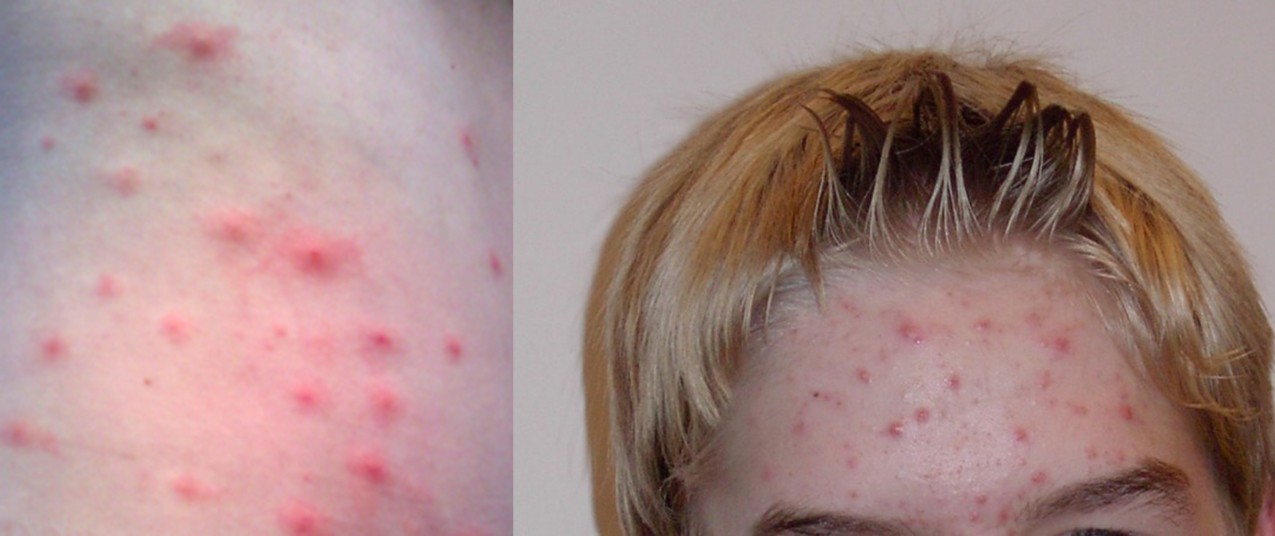
Skin and Eye Infections
The skin is an important barrier to pathogens, but it can also develop infections. These raised lesions (left) are typical of folliculitis, a condition that results from the inflammation of hair follicles. Acne lesions (right) also result from inflammation of hair follicles. In this case, the inflammation results when hair follicles become clogged with complex lipids, fatty acids, and dead skin cells, producing a favorable environment for bacteria.
Image: There are many possible causes of itchy skin, including allergic reactions, skin conditions, and infection. Source: "Woman Scratching Skin" by NIAID is licensed CC BY 2.0
Upon completion of this module, you will be able to:
- Describe the major anatomical features of the skin and eyes (Course Outcomes # C.O. 2 and 5).
- Compare and contrast the microbiomes of various body sites, such as the hands, back, feet, and eyes (C.O. 1, 3, and 5).
- Explain how microorganisms overcome defenses of skin and eyes in order to cause infection (C.O. 2, 3, and 5).
- Describe general signs and symptoms of disease associated with infections of the skin and eyes (C.O. 3 and 5).
- Identify the most common bacterial pathogens that cause infections of the skin and eyes (C.O. 1 and 3).
- Compare the major characteristics of specific bacterial diseases affecting the skin and eyes (C.O. 1, 3, and 5).
- Identify the most common viruses associated with infections of the skin and eyes (C.O. 1 and 3).
- Compare the major characteristics of specific viral diseases affecting the skin and eyes (C.O. 1, 3, and 5).
- Identify the most common fungal pathogens associated with cutaneous and subcutaneous mycoses (C.O. 1 and 3).
- Compare the major characteristics of specific fungal diseases affecting the skin (C.O. 1, 3, and 5).
- Identify two parasites that commonly cause infections of the skin and eyes (C.O. 1 and 3).
- Identify the major characteristics of specific parasitic diseases affecting the skin and eyes (C.O. 1, 3, and 5).
- Utilize digital public health surveillance tools (e.g., CDC, WHO, KFF, state health department dashboards, or GIS mapping systems) to research, compare, and chart the frequency of the most commonly reported bacterial, viral, fungal, and parasitic skin and eye infections in your city and state (C.O. 3, 4, and 6).
- Create and present a digital chart or graph (using tools such as Excel, Google Sheets, Tableau Public, GIS dashboards, or other data visualization platforms) that illustrates trends in the most reported skin and eye infections for your city and state, and interpret public health implications of the patterns observed (C.O. 3, 5, and 6).
To achieve these objectives:
[Welcome to this module! To be successful, please complete the activities in the sequence listed below. Each activity is designed to build your microbiology knowledge while also strengthening essential digital, scientific, and communication skills needed for today’s workforce.]
- Read the Module 13 Introduction: This provides the purpose of the module, key themes, and the learning outcomes you are expected to achieve by the end.
- Read Chapter 13 in Medical Microbiology for Nursing and Allied Health: A Louisiana Perspective
- Complete the [following activities in order. Check off each box as you go.]
Module 13: Skin & Eye Infections To-Do List (Student Tracking Checklist)
Complete the following activities in order. Check off each box as you go.
1. Review the Module Overview
☐ Read the Module Overview page
☐ Review the focus on skin and eye infections
☐ Review how microbiology, immunity, and epidemiology intersect
☐ Review how digital public health tools are used in disease surveillance
2. Complete the Required Readings
☐ Anatomy and Host Defenses of the Skin and Eyes
☐ Normal Microbiota of the Skin and Eyes
☐ How Pathogens Overcome Skin and Eye Defenses
☐ Signs and Symptoms of Skin and Eye Infections
☐ Bacterial Skin and Eye Pathogens
☐ Viral Skin and Eye Infections
☐ Fungal Skin Infections (Cutaneous & Subcutaneous Mycoses)
☐ Parasitic Infections of the Skin and Eyes
☐ Epidemiology of Common Skin and Eye Diseases
3. Watch the Module Lecture Videos
☐ Skin and Eye as First-Line Defenses
☐ Pathogens Associated with Skin and Eye Infections
☐ Clinical Manifestations and Transmission Routes
☐ Introduction to Disease Surveillance for Skin and Eye Infections
☐ Foundational Digital Skill: Digital Content Navigation
4. Complete the Learning Check Quiz
☐ Complete the Module Learning Check (Self-Assessment Quiz)
☐ Foundational Digital Skill: Digital Assessment Tools
5. Explore Digital Public Health Surveillance Tools
☐ CDC disease surveillance dashboards
☐ WHO disease outbreak and surveillance tools
☐ KFF (Kaiser Family Foundation) health data resources
☐ State and local health department dashboards
☐ Industry-Specific Digital Skill: Public Health Data Literacy
6. Complete the Data Visualization Assignment
☐ Identify the most commonly reported skin and eye infections in your city
☐ Identify the most commonly reported skin and eye infections in your state
☐ Extract relevant data from the digital resource
☐ Create charts and/or graphs that visually represent the data
☐ Ensure charts are clearly labeled and include titles and data sources
☐ Industry-Specific Digital Skill: Data Visualization Using Digital Tools
☐ Foundational Digital Skill: Digital Productivity Tools
7. Submit Your Assignment
☐ Upload your completed charts/graphs to the assignment submission area
☐ Ensure files are clearly labeled with your name
☐ Cite all data sources
☐ Confirm charts are readable and professionally formatted
8. Review Instructor Feedback
☐ Review instructor feedback using the LMS grading tool
☐ Foundational Digital Skill: Using Digital Feedback Tools
9. Complete the Module Reflection
☐ Respond to the reflection prompt on digital disease surveillance and community health
☐ Industry-Specific Digital Skill: Reflective Practice Using Digital Tools
Module Pressbooks Resources and Activities
You will find the following resources and activities in this module at the Pressbooks website. Click on the links below to access or complete each item.
-
-
This file contains the PowerPoint Slides for Chapter 13. This PowerPoint Presentation was obtained from OpenStax under the License Type: Creative Commons CC BY-NC-SA Attribution-NonCommercial-ShareAlike 4.0 International https://creativecommons.org/licenses/by-nc-sa/4.0/. ; The author of this PowerPoint is: Mark Gucinski. I am also including this file as a PDF for your convenience. You can locate the PDF version just below this file.
-
This file contains the PDF version of the Chapter 13 PowerPoint slides. This file is a Creative Commons CC BY-NC-SA Attribution-NonCommercial-ShareAlike 4.0 International https://creativecommons.org/licenses/by-nc-sa/4.0/ created by Mark Gucinski.
-
-
Students mustMark as done
Instructions
This assignment addresses course outcome(s)
Student Learning Outcome(s) Addressed
• SLO 13: Utilize digital public health surveillance tools to research and chart skin and eye infections.
• SLO 14: Create digital charts/graphs showing infection trends and analyze public health implications.
Course Outcomes Addressed: C.O. 3, 4, 5, and 6
Assignment Overview
Students will utilize digital public health surveillance systems to analyze trends in skin and eye infections in their city and state, construct charts/graphs, and interpret the public health implications.
-
Dear students,
please take quiz/assignment during dates of availability:
Dates of availability: xx/xx/202x to xx/xx/202x
Attempts: unlimited within dates of availability.
Grade/score: Highest score of attempt counts.
Length of time per attempt: You have xxx minutes for each attempt.
Uninterrupted attempts required.
Number of questions: There are xx questions.
Contribution towards final grade: yes/no
The quiz has to be taken in the learning management system, in this case canvas or moodle.
Email, paper, or any other type of submissions will not be accepted.
Sincerely,
Illya Tietzel
Background Colour
Font Face
Font Kerning
Font Size
Image Visibility
Letter Spacing
Line Height
Link Highlight
Text Colour