
Module 14: Respiratory System Infections
Section outline
-
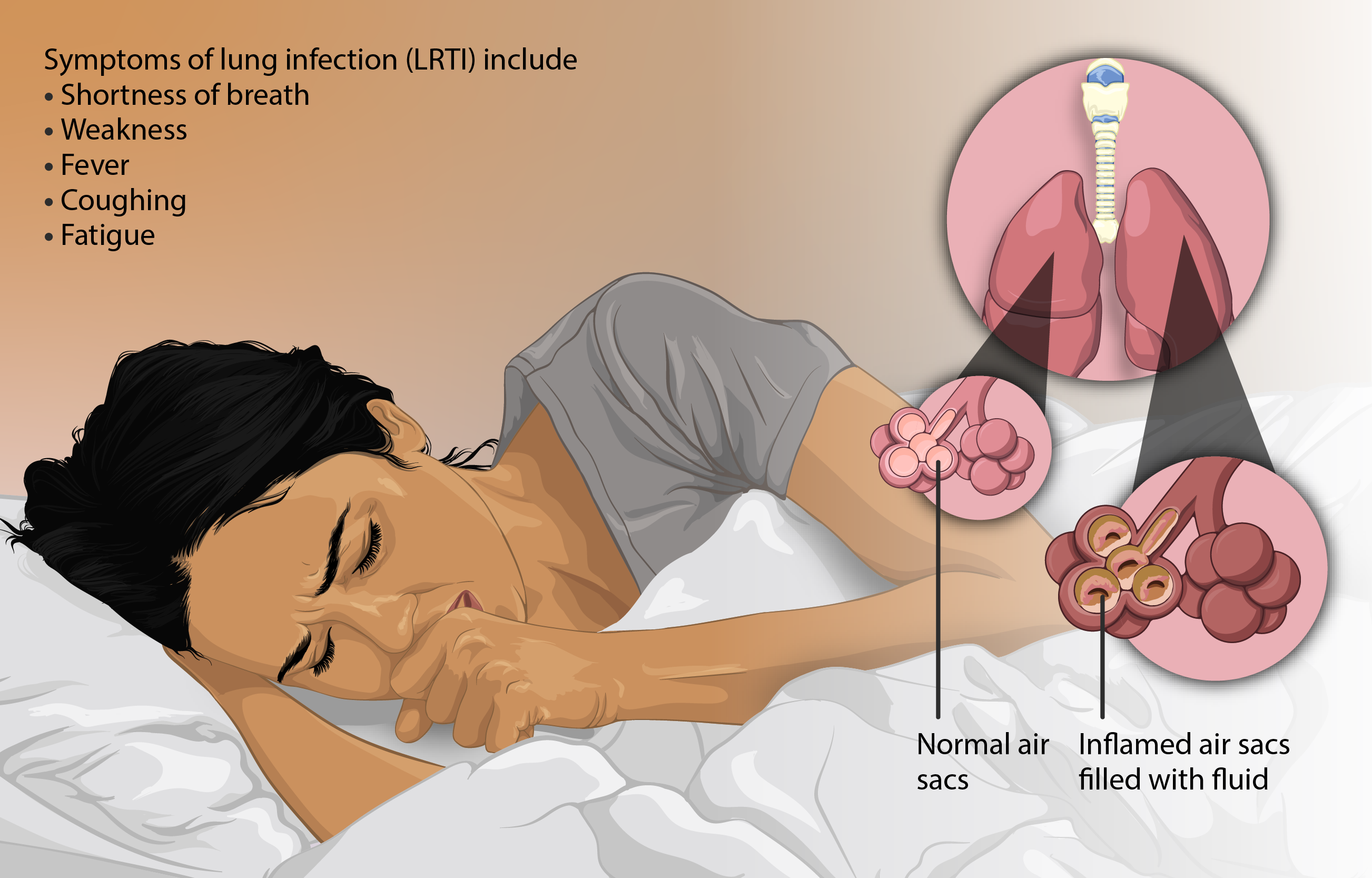 The respiratory system is a critical interface between the inner body and the external environment. Although its primary role is the essential exchange of gases—oxygen intake and carbon dioxide elimination, it also contributes to phonation (sound production) and olfaction (sense of smell), playing a significant part in communication and sensory perception.
Due to constant exposure to airborne pathogens and environmental irritants, the respiratory system is vulnerable to infectious agents.
Respiratory infections can range in severity from minor illnesses, such as rhinitis and sinusitis, to severe, potentially life-threatening conditions like pneumonia and COVID-19. Understanding the respiratory system's structure, function, and common pathologies is fundamental to effective patient care and clinical decision-making in nursing practice.
Image source: "Depiction of a person with a lung or lower respiratory tract infection" MyUpchar in licensed CC BY-SA 4.0
Upon completion of this module, you will be able to:
- Explain the significant historical events regarding the respiratory tract infections. (Course Objective# 5)
- Identify the major anatomical structures of the respiratory system and their roles in immune defense. (CO# 2, 5)
- Differentiate between upper and lower respiratory tract organs (CO# 2,4)
- Describe normal microbiota of the respiratory system. (CO#1,2)
- Define the factors that can damage the respiratory system and promote infections. (CO# 2, 4)
- Define the terminology about inflammation and infection within the respiratory system. (CO#4)
- Identify common bacterial pathogens (e.g., Streptococcus pneumoniae, Hemophilus influenzae) and viral pathogens (e.g., influenza virus, respiratory syncytial virus) responsible for respiratory infections. (CO# 1,2,3,4)
- Understand the role of fungi (e.g., Aspergillus, Histoplasma) and parasites (e.g., Toxoplasma gondii) in causing respiratory infections. (CO#2,3,4)
- Recognize the symptoms and signs associated with upper respiratory tract infections. (CO# 3,4,5)
- Understand the laboratory diagnostic techniques used to identify respiratory pathogens, including cultures, PCR, serology, and imaging. (CO# 3,4,5,6)
- Outline the treatment options for bacterial, viral, fungal, and parasitic respiratory infections. (CO# 4,5)
- Discuss the role of vaccines in preventing common respiratory infections. (CO# 2,4,5)
- Describe the public health measures to control the spread of respiratory infections. (CO#4)
To achieve these objectives:
- Read the Module 14 Introduction
- Read Chapter 14 in Medical Microbiology for Nursing and Allied Health: A Louisiana Perspective
- Complete the module assignment and discussion.
Module Pressbooks Resources and Activities
You will find the following resources and activities in this module at the Pressbooks website. Click on the links below to access or complete each item.

Background Colour
Font Face
Font Kerning
Font Size
Image Visibility
Letter Spacing
Line Height
Link Highlight
Text Colour