
Module 2: The Blood
Section outline
-
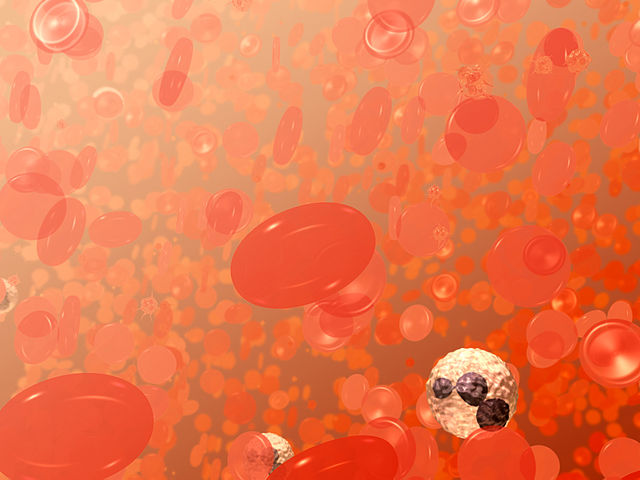
Figure 2.1. This image primarily shows red blood cells, also known as erythrocytes. These cells are characterized by their bi-concave disc shape. The white blood cell with the dark, purplish, multi-lobed nucleus is a neutrophil, a type of white blood cell or leukocyte. The smaller, spikey objects are platelets.
Image: Red blood cells. Source: National Cancer Institute, Donald Bliss (Illustrator), Wikimedia Commons
Module Overview:
Human blood is a fluid medium composed of red blood cells, white blood cells, plasma, and proteins. It is a connective tissue that functions as a dynamic and efficient transport system. As a transport system, blood plays an essential role in delivering crucial elements such as oxygen and glucose to every cell, ensuring not only their proper function but also their vitality and health. Beyond nourishment, blood also performs the critical task of removing metabolic waste products generated by cellular activity. This removal process is essential for sustaining a stable internal environment, a delicate balance known as homeostasis. Homeostasis allows the body to function optimally, maintaining health and promoting overall well-being.
Module 2 Learning Objectives Upon completion of this module, you will be able to:- Identify the primary functions of blood, its fluid and cellular components, and its physical characteristics (CLO1, CLO2, CLO3, CLO4)
- Identify the most important proteins and other solutes present in blood plasma (CLO1, CLO2, CLO3, CLO4, CLO5)
- Describe the formation of the formed element components of blood (CLO1, CLO2, CLO3, CLO4)
- Discuss the structure and function of red blood cells and hemoglobin (CLO1, CLO2, CLO3, CLO4)
- Classify and characterize white blood cells (CLO1, CLO2, CLO3, CLO4)
- Describe the structure of platelets and explain the process of hemostasis (CLO1, CLO2, CLO3, CLO4)
- Explain the significance of AB and Rh blood groups in blood transfusions (CLO1)
- Discuss a variety of blood disorders (CLO1)
To achieve these objectives:
- Read the Module 2 Introduction
- Read Chapter 2 in the textbook
- Complete the activities below:
- Review Topics: 2.1 to 2.7 (MLO1 to MLO8, CLO1 to CLO4) using the textbook to complete H5P
- Participate in Discussion Board Assignment: Blood Disorders (MLO8, CLO1) using the discussion board rubric to complete Discussion Board assignment
- Complete Discussion Board Assignment (MLO8, CLO1)
- Complete the Quiz (MLO1 to MLO8, CLO1 to CLO4), using the textbook to complete the quiz
Module Pressbooks Resources and Activities
You will find the following resources and activities in this module at the Pressbooks website. Click on the links below to access or complete each item.
-
Opened: Tuesday, July 29, 2025, 3:27 PMStudents mustMark as done
-
Due: Thursday, July 31, 2025, 12:04 AMStudents mustPost replies: 1Make forum posts: 1
Background Colour
Font Face
Font Kerning
Font Size
Image Visibility
Letter Spacing
Line Height
Link Highlight
Text Colour