
Module 6: Lifespan Nutrition
Section outline
-

(Source: Wikimedia Commons, Herb Roe, CC-BY)
"The thing I learned after the storm is that, if something really bad happened to you, and maybe it happened to your friends and your neighbors and your normal support system, if you’re lucky enough to be part of a food community, you’re going to be okay."
-Poppy Tooker
This chapter outlines the stages of human development across the lifespan, from pregnancy and fetal development through the lactational period, infancy, toddler years, childhood, adulthood, and senior adulthood. It describes how nutritional needs and health concerns evolve at each stage and emphasizes the importance of good nutrition and physical activity in supporting growth, development, and overall well-being. Special attention is given to the pregnancy and breastfeeding periods, as well as the unique needs of older adults. The chapter also highlights how diet and lifestyle choices can help prevent chronic disease, manage age-related changes, and promote healthy aging.
Module 6 Objectives-
Upon completion of this module, you will be able to:- Define the stages of human development from pregnancy and fetal development through the lactational period, infancy, toddler years, childhood, adulthood, and finally senior adulthood. (CLO #4)
- Identify the nutrient needs of each stage of development and explain nutrition-related issues across the lifespan. (CLO #2, 3, & 4)
- Describe the benefits, challenges, and contraindications of breastfeeding for both mother and child. (CLO #3 & 4)
- Evaluate the importance of a healthy lifestyle and physical activity across the lifespan. (CLO #4)
- Discuss strategies to prevent and treat obesity and excessive weight across the lifespan. (CLO #3, 4, 5, & 6)
- Discuss nutritional requirements and dietary interventions necessary for older adults to prevent chronic disease and promote health and longevity. (CLO #3, 4, & 5)
To Do List
To achieve these objectives:- Read the Module 6 Introduction
- (MLO 1-6) Read the Chapters 12, 13 & 14 in the textbook.
- (MLO #2, 4, & 6) Watch the following videos
- Complete the Module 6 Assignment. [This item will be added by the cohort at a future date.]
- Complete the Module 6 Discussion.
Module Pressbooks Resources and Activities
You will find the following resources and activities in this module at the Pressbooks website. Click on the links below to access or complete each item.
-

Throughout the human life cycle, the body constantly changes and goes through different periods known as stages. This chapter will focus on pregnancy, infancy, and the toddler years.
-
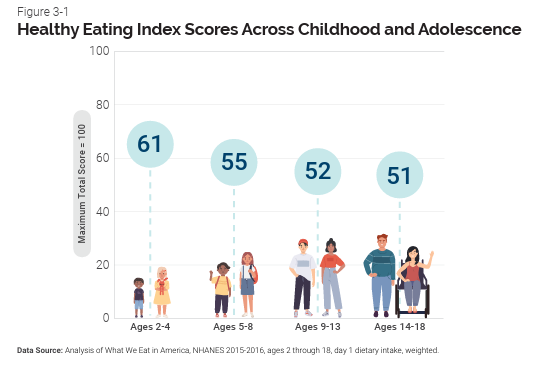
Early childhood encompasses infancy and the toddler years, from birth through age three. The remaining part of childhood is when children enter school from ages four through eight. Several critical physiological and emotional changes occur during the life stage from childhood through adolescence. Children’s attitudes and opinions about food deepen. They begin taking their cues about food preferences from family members, as well as from peers and the larger culture. This normative developmental transition that all youth experience is shaped by both social and biological processes.
-
Along with physical activity, nutrition also plays an essential role in maintaining health through adulthood. As you’ve already learned, a healthful diet includes a variety of nutrient-dense foods. The USDA Dietary Guidelines recommend eating a balanced diet from the five food groups: fruits, vegetables, protein, grains, and dairy.
-
-
Background Colour
Font Face
Font Kerning
Font Size
Image Visibility
Letter Spacing
Line Height
Link Highlight
Text Colour