
Chapter 4 - Physical Hazards
Section outline
-
Every workplace, from busy construction zones to quiet offices, contains physical hazards that can harm workers—some obvious, like falls from heights, and others so common they become invisible, such as persistent noise or awkward workstations. In this module, you will build on your existing safety knowledge to understand how hazards like noise, vibration, temperature extremes, radiation, and poor ergonomics develop, how they affect health and performance, and how they can be effectively controlled. We will connect real-world examples to prevention strategies used by safety professionals, encouraging you to think beyond immediate causes to systemic solutions. By learning to identify, assess, and manage these risks, you will be developing a core skill that will serve you in any career—helping you protect yourself and others, improve workplace efficiency, and contribute to a culture of safety and responsibility.
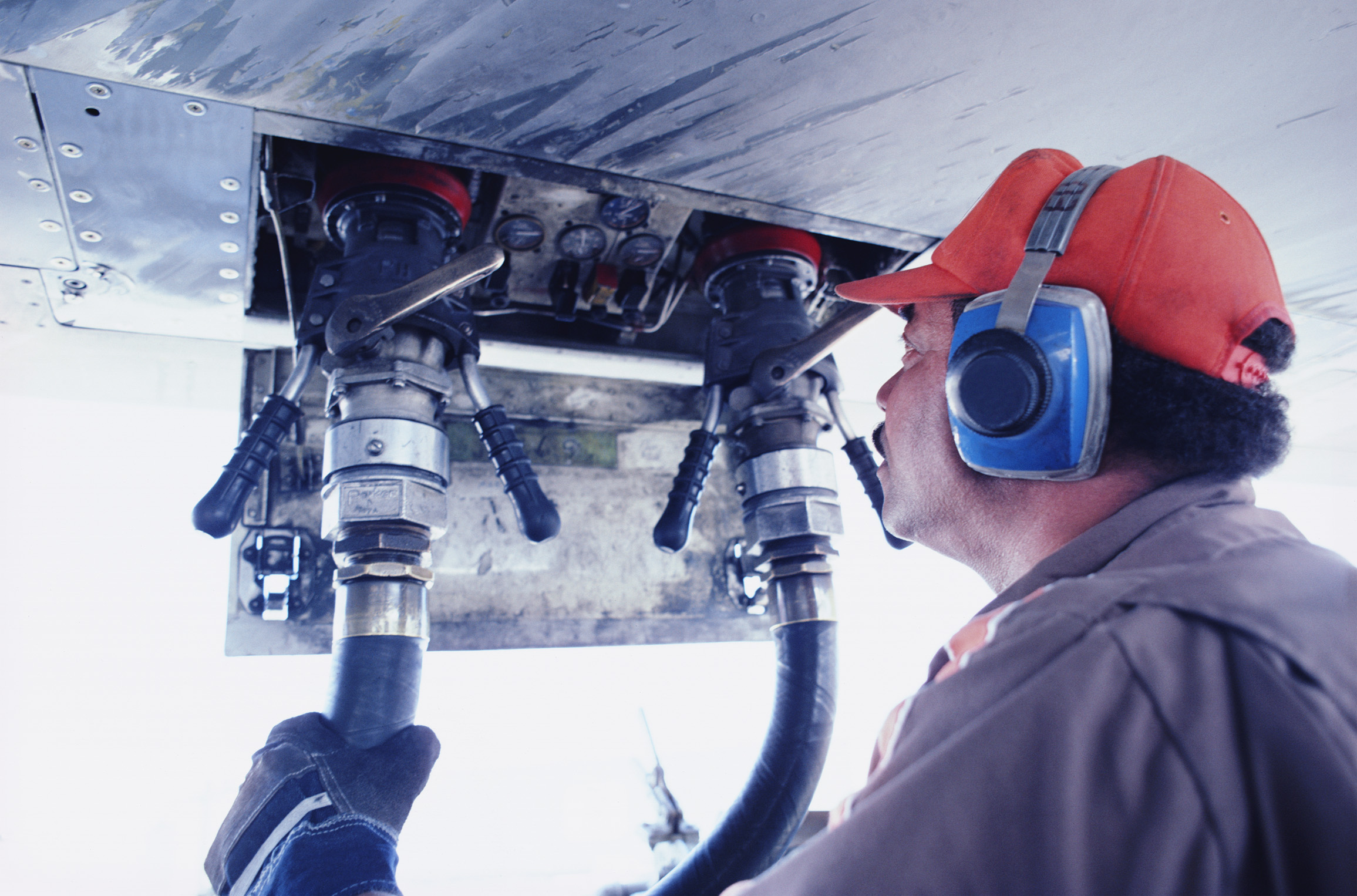
Image: A worker wearing hearing protection and gloves connects fuel hoses to an aircraft, demonstrating safety measures against noise and contact hazards. Source: https://www.osha.gov/noise
Upon completion of this module, you will be able to:- M4.1 (C5): Define physical hazards and explain how they operate.
- M4.2 (C5): Describe root and proximate causes of physical hazards and how they affect hazard control.
- M4.3 (C1, C4): Identify techniques to control workplace noise.
- M4.4 (C5): Explain why vibration is a hazard and consider control options.
- M4.5 (C5): Discuss why radiation and temperature extremes are hazards and consider control options.
- M4.6 (C5): Outline the longer-term health effects of work design and the principles of ergonomics.
To achieve these objectives:
- Read the Module 4 Introduction
- Read Chapter 4: Physical Hazards in The "Introduction to Safety" book.
- Participate in the module quiz and discussion to demonstrate understanding and share practical examples.
Module Pressbooks Resources and Activities
You will find the following resources and activities in this module at the Pressbooks website. Click on the links below to access or complete each item.
-
-
-
-
This Quiz addresses course outcomes, C1, C4 and C5 and module learning objective M4.3, M4.4, M4.5, and M4.6.
Background Colour
Font Face
Font Kerning
Font Size
Image Visibility
Letter Spacing
Line Height
Link Highlight
Text Colour