
Module 4: The Eukaryotes of Microbiology
Section outline
-
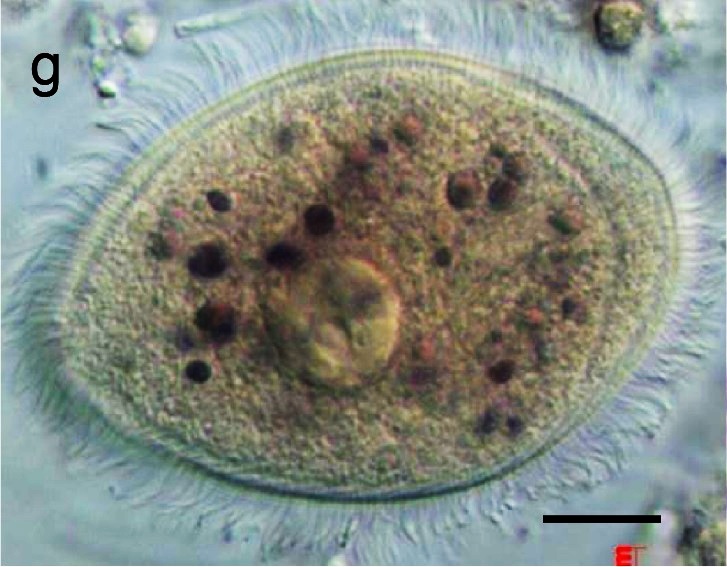
Eukaryotic microorganisms represent a diverse group of organisms with complex cellular structures and significant biological importance. This chapter explores fungi, protozoa, algae, and helminths, highlighting their unique characteristics, roles in disease and the environment, and relevance to human health. Understanding eukaryotic microbes expands our view of microbial diversity beyond bacteria and viruses.
Image: This specimen of the ciliate Balantidium coli is a trophozoite form isolated from the gut of a primate. Source: Balantidium coli by Roland Yao Wa Kouassi, Scott William McGraw, Patrick Kouassi Yao, Ahmed Abou-Bacar, Julie Brunet, Bernard Pesson, Bassirou Bonfoh, Eliezer Kouakou N’goran and Ermanno Candolfi licensed CC BY 4.0
Upon completion of this module, you will be able to:
- Define the distinguishing features of eukaryotic microorganisms, including the presence of a nucleus and membrane-bound organelles.
- Differentiate between the major groups of eukaryotic microbes, including protozoa, fungi, algae, and helminths.
- Describe key structural and functional characteristics of protists, including forms of locomotion and nutrition.
- Explain why parasitic helminths are included in microbiology and identify the major helminth groups (Nematoda and Platyhelminthes).
- Compare and contrast unicellular vs. multicellular eukaryotic microbes in terms of morphology and life cycles.
- Identify examples of medically relevant eukaryotic pathogens and their disease associations (e.g., Plasmodium causing malaria).
- Describe the reproductive strategies of selected eukaryotic microbes (e.g., yeast budding and multicellular fungal spores).
- Explain environmental and ecological roles of eukaryotic microbes, including the contribution of algae and lichens to ecosystems.
- Analyze the challenges of classifying eukaryotic microbes using modern taxonomic schemes.
- Evaluate the role of select eukaryotic microbes in public health, disease transmission, and infection control.
To achieve these objectives:
- Read the Module 4 Introduction
- Read Chapter 4 in Medical Microbiology for Nursing and Allied Health: A Louisiana Perspective
- Complete the Discussion forum, the practice quiz, the graded quiz, and the assignment (case study).
Module Pressbooks Resources and Activities
You will find the following resources and activities in this module at the Pressbooks website. Click on the links below to access or complete each item.
-
-
Students mustPost replies: 1Make forum posts: 1
- Define the distinguishing features of eukaryotic microorganisms, including the presence of a nucleus and membrane-bound organelles.

Background Colour
Font Face
Font Kerning
Font Size
Image Visibility
Letter Spacing
Line Height
Link Highlight
Text Colour