
Digital Literacy Basics
Section outline
-
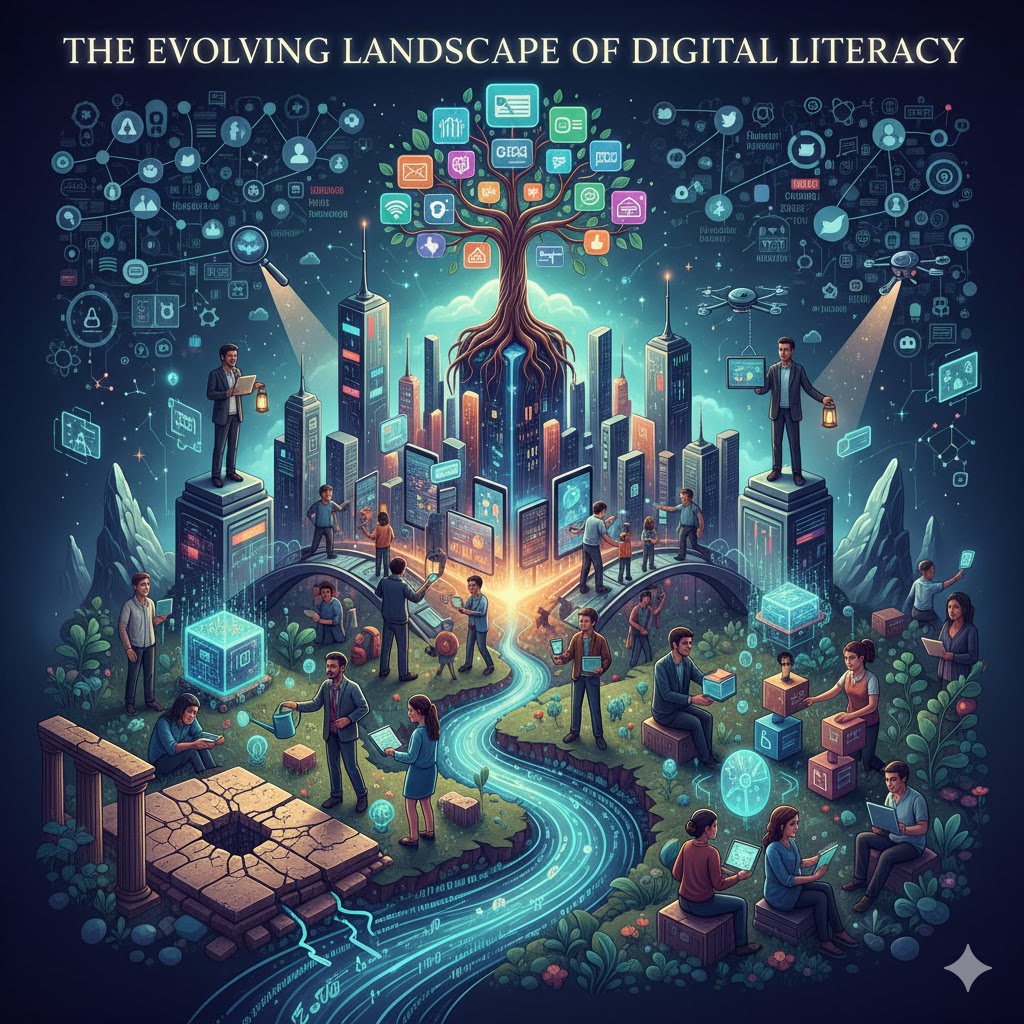
The Evolving Landscape of Digital Literacy
It’s 1985. You’re a college student without a smartphone, the internet, or even email. Research means flipping through dusty encyclopedias for hours. Group projects require everyone to meet in the same physical place. Contacting your professor means finding a payphone. Job hunting? You walk from office to office collecting paper applications. Life moves slower and information is harder to get, share, and verify.Fast forward to today. With just a few taps, you can:
• Search millions of scholarly articles in seconds
• Collaborate with peers across the globe in real time
• Access entire libraries, video tutorials, and AI powered tools from your pocket
• Manage your finances, apply for jobs, and create multimedia presentations anytime, anywhereThat is the power of digital literacy, and it is not just about knowing how to use technology. It is about thinking critically, navigating information wisely, and creating content that can influence the world.
In this module, you will discover:
• What digital literacy really means and how it goes beyond technical know how
• How it has evolved from the early days of computing to our AI driven era
• Why mastering it is essential for your academic success, career growth, and everyday lifeYou will not just read about these concepts. You will apply them. You will assess your own strengths, explore new tools, and challenge yourself to adapt in a world where technology changes faster than ever before.
By the end of this module, you will not just be a student using technology. You will be a digitally literate thinker, creator, and problem solver, ready to thrive in the connected world.
Let us begin this journey, not to learn what technology can do for you, but what you can do with technology.
Upon completion of this module, you will be able to:- Define key digital literacy concepts by explaining the components of information, media, and technological literacy. (Remember/Understand.
- Categorize digital skills into relevant types such as information evaluation, online communication, and data analysis. (Analyze)
- Create a self-assessment to identify personal strengths and weaknesses in digital literacy. (Create)
To achieve these objectives:
- Read the Digital Literacy Basics Chapter
- Complete all of the assignments listed below.
Module Pressbooks Resources and Activities
You will find the following resources and activities in this module at the Pressbooks website. Click on the links below to access or complete each item.
-
-
Students mustPost replies: 1Make forum posts: 1
-
Background Colour
Font Face
Font Kerning
Font Size
Image Visibility
Letter Spacing
Line Height
Link Highlight
Text Colour