
Foundational Digital Skills, Financial Literacy, Communication and Time management and Goal-Setting
Section outline
-
Welcome to Foundational Skills for College and Beyond!
Course Introduction
The goal of this course is to equip you with essential skills for success in college and in your life beyond the classroom. You will explore five core areas—financial literacy, digital skills, communication skills, time management, and goal setting—through practical, applied activities. Throughout the course, you will learn concrete strategies and techniques you can immediately integrate into your daily routines to improve your academic performance, personal decision-making, and long-term planning.Course Learning Objectives
Expand each section to see course learning objectives:
Accordion lists organize the course objectives from the document into collapsible sections by topic, making them easy to navigate.Click to expand Digital Literacy objectives
- Define key digital literacy concepts by explaining the components of information, media, and technological literacy. (Remember/Understand)
- Categorize digital skills into relevant types such as information evaluation, online communication, and data analysis. (Analyze)
- Create a self-assessment to identify personal strengths and weaknesses in digital literacy. (Create)
- Explain AI applications in academia e.g., research tools, plagiarism detection, online learning. (Understand)
- Evaluate AI's impact on academic integrity by weighing potential benefits and challenges. (Evaluate)
- Develop strategies for using AI responsibly in academic work. (Create)
- Compare online communication platforms e.g., email, video conferencing, forums for academic effectiveness. (Analyze)
- Demonstrate effective communication techniques through role-play and written practice. (Apply)
- Develop digital communication guidelines for personal academic use. (Create)
- Differentiate credible from untrustworthy sources using criteria such as authority, expertise, and bias. (Analyze)
- Apply advanced research techniques in databases and online resources. (Apply)
- Produce accurate citations of online sources using a required style guide. (Apply)
Click to expand Time Management objectives
- Analyze time demands of coursework by auditing syllabi and weekly workload. (Analyze)
- Identify high-demand courses and rank them by expected effort. (Analyze)
- Apply time management techniques e.g., Pomodoro, Pareto analysis to personal schedules. (Apply)
- Evaluate the effectiveness of chosen techniques through reflection logs. (Evaluate)
- Identify personal distractions and rank their impact on study time. (Analyze)
- Develop a distraction management plan to reduce barriers to productivity. (Create)
- Track and refine strategies by monitoring distraction management over time. (Evaluate)
- Explain group collaboration techniques e.g., role delegation, communication tools. (Understand)
- Create a group management plan for collaborative projects. (Create)
- Demonstrate teamwork and conflict resolution through role-play exercises. (Apply)
Click to expand Financial Literacy objectives
- Create a personal budget that tracks income and expenses over one month. (Create)
- Analyze spending habits to identify areas of overspending and needed adjustments. (Analyze)
- Evaluate the effectiveness of personal budgeting over a set period. (Evaluate)
- Compare financial aid options e.g., grants, loans, scholarships. (Analyze)
- Develop a financing plan for education based on aid options and costs. (Create)
- Differentiate between good and bad debt with examples. (Understand/Analyze)
- Design a debt repayment strategy for managing existing obligations. (Create)
- Recommend techniques to avoid excessive debt in the future. (Evaluate)
Click to expand Communication Skills objectives
- Define key communication concepts e.g., active listening, nonverbal communication. (Remember/Understand)
- Analyze communication strategies in case studies to identify strengths/weaknesses. (Analyze)
- Develop a communication portfolio with reflections, presentations, or role-play evidence. (Create)
- Demonstrate active listening skills in structured role-play scenarios. (Apply)
- Deliver clear presentations that demonstrate effective verbal and nonverbal communication. (Apply)
- Adapt communication style to suit diverse audiences. (Apply/Evaluate)
- Identify conflict resolution strategies negotiation, compromise, mediation. (Remember/Understand)
- Role-play conflict scenarios to apply learned strategies. (Apply)
- Design a personal conflict management plan for academic and professional settings. (Create)
Click to expand Goal Setting objectives
- Define SMART and SMARTER goals and explain their elements. (Remember/Understand)
- Develop a SMART goal framework for academics, career, and personal growth. (Create)
- Apply the framework to set short-, mid-, and long-term goals. (Apply)
- Differentiate between needs and wants in personal goal setting. (Analyze)
- Evaluate personal goals to ensure alignment with needs before wants. (Evaluate)
- Revise goals to reflect essential needs as priorities. (Create)
Structure of the Course
Each module of the course is organized around five key competencies that support students’ success in college and beyond. Each unit blends explanation, practice, and reflection so that students not only understand concepts but apply them in authentic academic and personal contexts.
21st Century Digital Skills
Digital skills are integrated throughout this course so you can confidently navigate technology in both academic and everyday settings. You will practice using learning platforms, online communication tools, and productivity apps, while also building skills in evaluating websites, searching scholarly databases, and citing digital sources. Across activities, you will develop habits for ethical technology and AI use, professional online communication, and effective digital collaboration, reinforcing your skills in every major unit.
The following digital skills are assessed integrated into the course modules:
- Using email, discussion boards, and video conferencing tools for professional academic communication
- Evaluating websites and online articles for credibility, bias, and authority before using them in assignments
- Applying advanced search strategies in scholarly databases to locate high‑quality academic sources
- Creating properly formatted citations for online and multimedia sources using a chosen style (e.g., APA, MLA)
Navigating the Course
Adopting institution should provide learners information on how to navigate the course. Consider adding an introductory navigation video. Text description could include, for example:This course is set up in Modules covering various topics which may be accessed from the course navigation menu on the left or by scrolling below. Modules may be collapsed in the menu and it the body of the course to minimize scrolling. Each module includes the relevant chapters followed by various activities, which may include discussion forums, listening activities and quizzes, practice quizzes, module tests, and other relevant activities as appropriate for each module. Many items are required and may be marked as completed automatically when the activity has been submitted (the broken check box), but others will marked as done by the student (the solid check box).Please move through the items below and continue through the Learner Support and Getting Started modules before moving on to Module 1. Be sure to check for announcements and due dates to stay on track. This course and its contents are developed by Dr. Nick Taylor, Dr. Wynde Jones, Dr. Veronica McEachin, Paul Haddican, Sarina Lirette, and David Williams and licensed under a Creative Commons Attribution 4.0 International License by LOUIS: The Louisiana Library Network, except where otherwise noted.
 Adopting instructors should edit the About Your Instructor and Office Hours Information pages in this Module.
-
Adopting instructors should edit all pages in this module to reflect their institution's policies.
Activities: 6 -
This module contains all the items you should review and complete before you begin Module 1. Before moving on, be sure to:
- Check the News and Announcements Forum
- Read the Course Syllabus
- Introduce yourself to the class
- Read the instructions for the Q & A Forum
- Review academic integrity expectations in the course
Good luck in the course!Activities: 5 -
Use the information in this module to customize the template to your needs. This module is currently hidden from students, and available for you to refer to throughout the semester.
Activities: 2 -
Regardless whether your asking a friend to lunch or applying for a job, effective communication is critical. While we all share messages everyday, not everyone understands the components of effective message sending and receiving. That is what this module and associated chapter are about, effective communication. Throughout the module we will discuss the history of communication, understanding messages across culture, listening to others and developing a professional presentation. As we move through the module many communication concepts will be discussed allowing you to become an effective communicator.
Image attribution:"Business Communication Duplicat model" by Ghozt Tramp is licensed under CC BY-SA 2.0
Upon completion of this module, you will be able to:- Obj. 1 Define Key Communication Concepts: By the end of this module, students will define and explain at least five core interpersonal communication concepts, theories, and competencies
- Obj. 2. Become Effective Communicators
- Obj. 3. Navigate Conflict Constructively
- Obj. 4 Develop a professional presentation
To achieve these objectives:
- Read the Module 1 Introduction
- Read Chapter # 2 in your Textbook: Foundational Digital Skills, Financial Literacy, Communication and Time management and Goal-Setting
- Complete The following assignments:
- LET’S PRACTICE COMM (Obj. 2. Become Effective Communicators)
- Discussion Questions (Obj. 2. Become Effective Communicators)
- Communication Journal (Obj. 1 Define Key Communication Concepts)
- Listening Practice (Obj. 2. Become Effective Communicators & Obj. 3. Navigate Conflict Constructively)
- University Forum (Obj. 3. Navigate Conflict Constructively)
- Cultural Presentation (Obj. 4 Develop a professional presentation)
Module Pressbooks Resources and Activities
You will find the following resources and activities in this module at the Pressbooks website. Click on the links below to access or complete each item.
Activities: 11 -
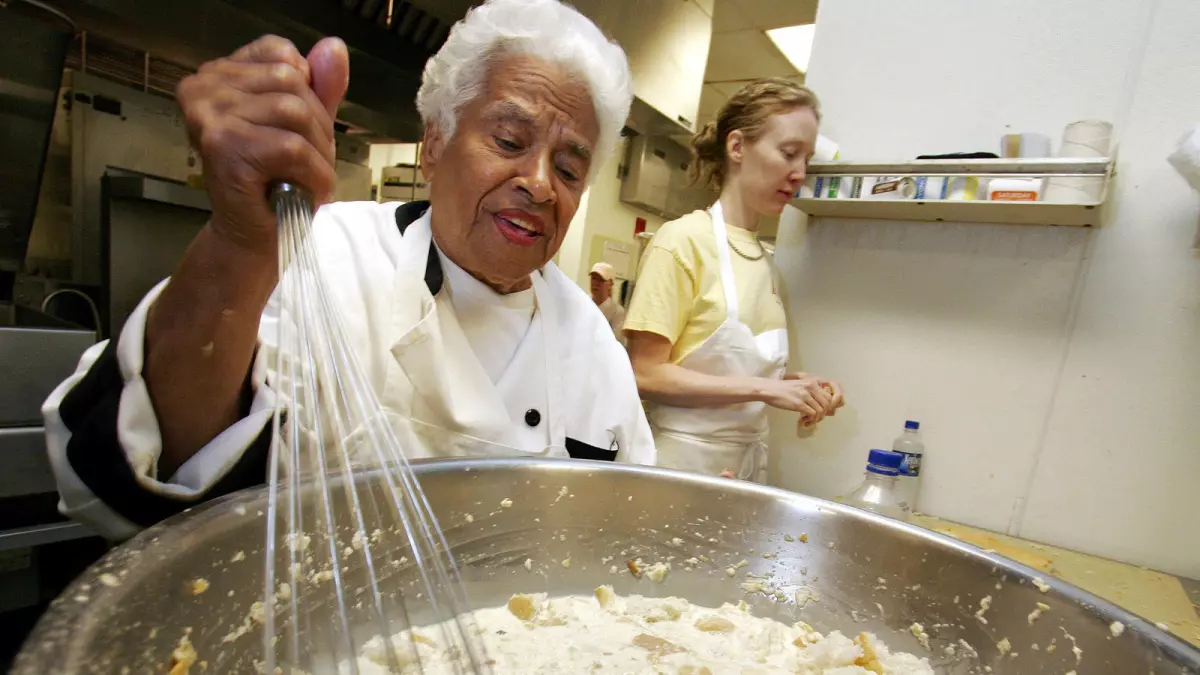 Alex Brandon / Associated Press)
"Life is about listening, learning, and never giving up. As long as you're here on earth, you're here for a purpose..." Leah Chase, renowned New Orleans chef and civil rights activist
What You’ll Learn in This Chapter
Setting goals is one thing—setting goals that actually work is another. In this chapter, you’ll be introduced to the SMART and SMARTER goal-setting frameworks, powerful tools for turning intentions into action.
By the end of this chapter, you will be able to:
- Define SMART and SMARTER goals
You'll break down what each letter stands for—Specific, Measurable, Achievable, Relevant, Time-Bound (and the added Evaluated and Rewarded)—and why these elements are essential for setting goals that stick. - Develop a SMART goal framework
You’ll learn how to tailor the SMART/SMARTER model to your own life—whether you're focusing on school, career, or personal growth. - Apply the framework
You’ll practice setting realistic goals across short-term, mid-term, and long-term timelines, building a roadmap that moves you from where you are to where you want to be.
Whether you're setting goals for the week ahead or the life you want five years from now, this chapter will help you do it with clarity, intention, and confidence.
To achieve these objectives:
- Read the Module 2 Introduction
- Read Chapter 4 in Foundational Digital Skills, Financial Literacy, Communication and Time management and Goal-Setting
- Watch this video
- Complete the Smart Goals worksheet, Discussion Forum, Reflection, Academic Goals worksheet, Quiz, and Video Reflection.
Activities: 7 - Define SMART and SMARTER goals
-
"Values are like fingerprints. Nobody's are the same, but you leave them all over everything you do."
Elvis Presley, a Southern icon known for blazing his own trail, reminds us that our values shape every choice we make. When your goals reflect those values, they become more meaningful—and more likely to stick.
What You’ll Learn in This Chapter
Goal setting isn’t just about dreaming big—it’s about knowing what truly matters. In this chapter, you'll learn how to tell the difference between what you need and what you want, and how to build your goals around the essentials first. You can still reach for the stars—but you’ve got to plant your feet firmly on the ground first.
By the end of this chapter, you will be able to:
- Differentiate between needs and wants in personal goal setting. (Analyze)
- Evaluate personal goals to ensure alignment with needs before wants. (Evaluate)
- Revise goals to reflect essential needs as priorities. (Create)
To achieve these objectives:
- Read the Introduction
- Read Chapter 5 in Foundational Digital Skills, Financial Literacy, Communication and Time management and Goal-Setting
- Complete the Needs vs Wants worksheet, Reflection and Discussion, Media Reflection, Vision Board, Quiz and Elevator Pitch.
Activities: 8 -
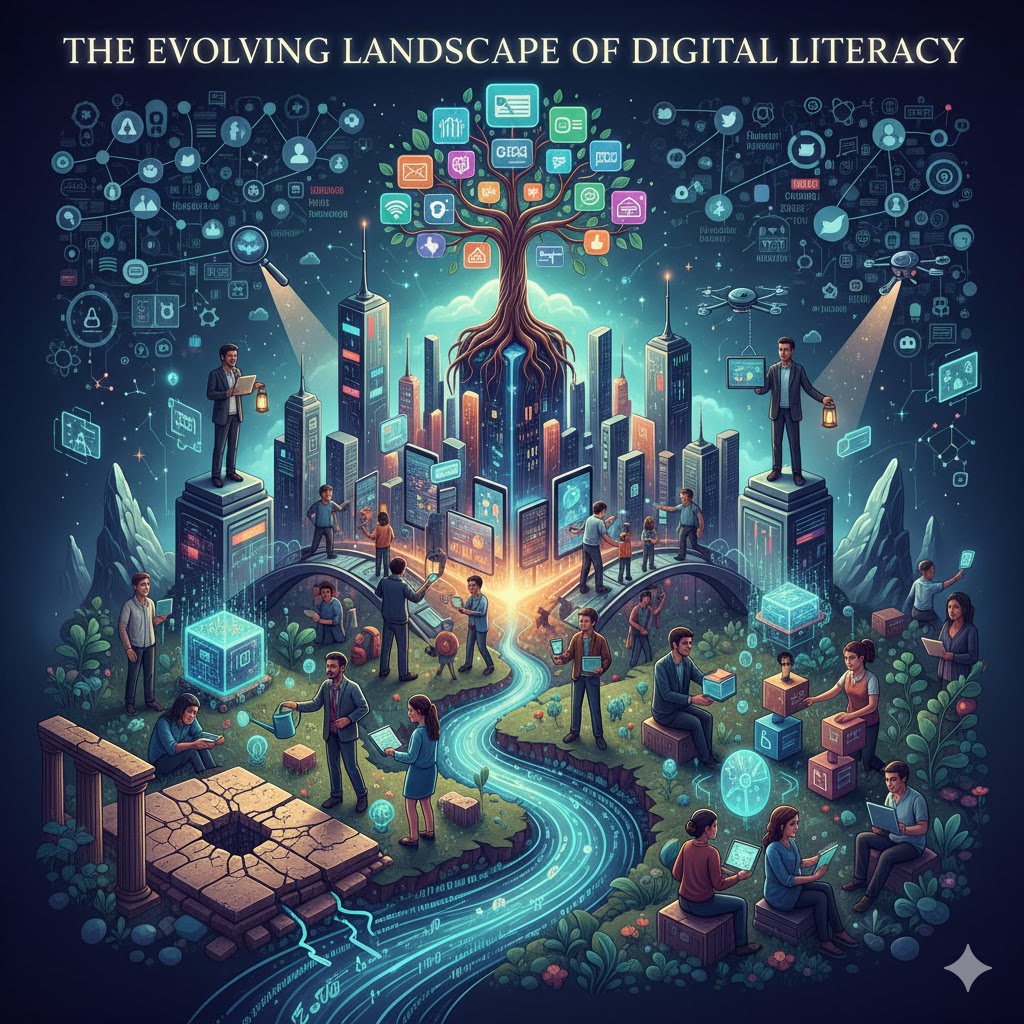
The Evolving Landscape of Digital Literacy
It’s 1985. You’re a college student without a smartphone, the internet, or even email. Research means flipping through dusty encyclopedias for hours. Group projects require everyone to meet in the same physical place. Contacting your professor means finding a payphone. Job hunting? You walk from office to office collecting paper applications. Life moves slower and information is harder to get, share, and verify.Fast forward to today. With just a few taps, you can:
• Search millions of scholarly articles in seconds
• Collaborate with peers across the globe in real time
• Access entire libraries, video tutorials, and AI powered tools from your pocket
• Manage your finances, apply for jobs, and create multimedia presentations anytime, anywhereThat is the power of digital literacy, and it is not just about knowing how to use technology. It is about thinking critically, navigating information wisely, and creating content that can influence the world.
In this module, you will discover:
• What digital literacy really means and how it goes beyond technical know how
• How it has evolved from the early days of computing to our AI driven era
• Why mastering it is essential for your academic success, career growth, and everyday lifeYou will not just read about these concepts. You will apply them. You will assess your own strengths, explore new tools, and challenge yourself to adapt in a world where technology changes faster than ever before.
By the end of this module, you will not just be a student using technology. You will be a digitally literate thinker, creator, and problem solver, ready to thrive in the connected world.
Let us begin this journey, not to learn what technology can do for you, but what you can do with technology.
Upon completion of this module, you will be able to:- Define key digital literacy concepts by explaining the components of information, media, and technological literacy. (Remember/Understand.
- Categorize digital skills into relevant types such as information evaluation, online communication, and data analysis. (Analyze)
- Create a self-assessment to identify personal strengths and weaknesses in digital literacy. (Create)
To achieve these objectives:
- Read the Digital Literacy Basics Chapter
- Complete all of the assignments listed below.
Module Pressbooks Resources and Activities
You will find the following resources and activities in this module at the Pressbooks website. Click on the links below to access or complete each item.
Activities: 3 -
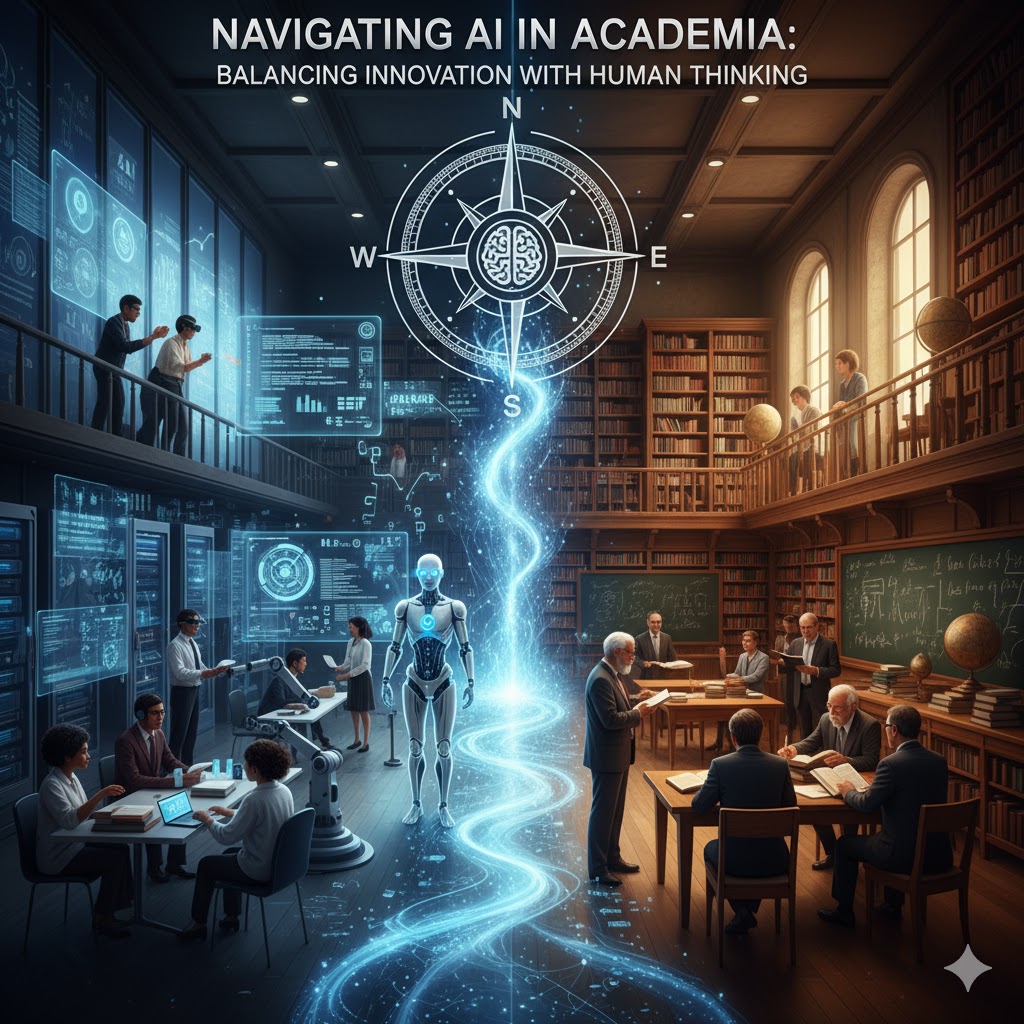 Navigating AI in Academia: Balancing Innovation with Human Thinking
College is a new chapter in your life, a time to grow, explore, and challenge yourself in ways you may have never imagined. In this class, you’re not just here to complete assignments; you’re here to prepare for a future where technology and human creativity work side by side.
Artificial Intelligence (AI) is one of the most powerful tools you will encounter in your academic journey. It can help you find information faster, refine your ideas, and even make learning more personalized. But here’s the truth: AI is only as strong as the mind that guides it. Your thinking, your judgment, and your voice are what make the difference.
This chapter will show you how to use AI in ways that make your work stronger without losing what makes it yours. You’ll learn how to:
-
Use AI to support, not replace, your learning.
-
Keep your work original and your integrity intact.
-
Blend innovation with critical thinking so you’re not just completing tasks; you’re building skills for life.
I encourage you to read each section closely, complete the assignments thoughtfully, and approach every activity as an investment in yourself. Don’t just skim for answers; dig in, ask questions, and reflect on how AI can help you work smarter while still thinking deeply.
Remember, AI may help you cross the finish line faster, but it’s your own effort that will carry you across with pride. By the end of this chapter, you won’t just know how AI works in academia; you’ll know how to make it work for you.
Let’s get started. Your future self will thank you.
Upon completion of this module, you will be able to:
- Explain Artificial Intelligence (AI) Applications in academia(e.g., research tools, plagiarism detection, online learning). (Understand)
- Evaluate AI's Impact on Academic Integrity: Students will analyze the potential challenges and benefits of AI
- Evaluate AI’s impact on academic integrity by weighing potential benefits and challenges. (Evaluate).
- Develop strategies for using AI responsibly in academic work. (Create)
To achieve these objectives:
- Read Ethical AI Usage in Academia
- Complete all of the assignments.
Activities: 6 -
-
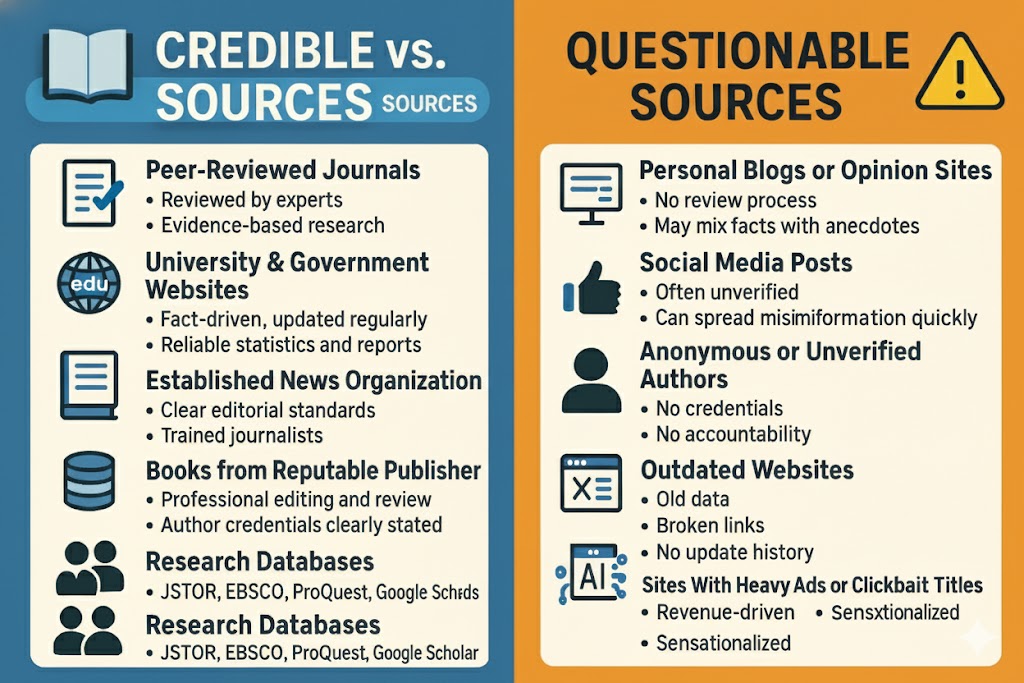
In today's rapidly evolving digital landscape, the ability to locate, evaluate, and ethically use information is no longer optional—it is foundational to academic success, professional advancement, and informed citizenship. Colleges, employers, and global leaders emphasize that we now live in a world where information is abundant, technology is accelerating exponentially, and the ability to think critically is one of the most valuable human skills.
This chapter will guide you in developing the competencies needed to thrive in this environment. You will learn to distinguish credible sources from misinformation and low-quality content, apply advanced digital-research strategies across academic databases and online platforms, and accurately cite digital information using accepted style guides. These skills align with current research that emphasizes digital literacy, media literacy, and AI literacy as essential competencies for 21st-century learners.
Recent literature highlights that, as artificial intelligence, algorithms, and user-generated content continue to shape the information we consume, individuals must be able to:
-
Recognize bias, authorship, and intent in digital content
-
Evaluate the reliability of emerging formats such as AI-generated text, social media posts, and multimodal information
-
Use academic databases, digital libraries, and machine-assisted research tools effectively
-
Verify facts across multiple credible sources
-
Understand the ethics of information use, including plagiarism, attribution, and digital footprint
Research skills are becoming increasingly important because technology is not only advancing, but it is also accelerating. According to global digital-literacy studies, the volume of online information doubles at unprecedented rates, misinformation spreads more quickly than verified facts, and AI-assisted tools can both support and complicate the research process.
For this reason, strong research literacy is one of the most critical lifelong skills you can develop. Students who master digital and AI-enhanced research are better equipped to learn independently, adapt to new technologies, and participate confidently in academic and professional spaces.
In short, this chapter will prepare you to become not only a consumer of information but also a producer of knowledge. Still, a wise evaluator and skilled researcher—equipped to navigate the digital world with clarity, confidence, and integrity.
Upon completion of this module, you will be able to:
- Differentiate between credible and untrustworthy sources using criteria such as authority, expertise, and potential bias. (Analyze)
- Apply advanced research techniques in databases and online resources. (Apply)
- Produce accurate citations of online sources using a required style guide. (Apply)
To achieve these objectives:
- Read the Module Becoming a Savvy Online Researcher
- Complete the Assignments
Module Pressbooks Resources and Activities
You will find the following resources and activities in this module at the Pressbooks website. Click on the links below to access or complete each item.
Activities: 3 -
-
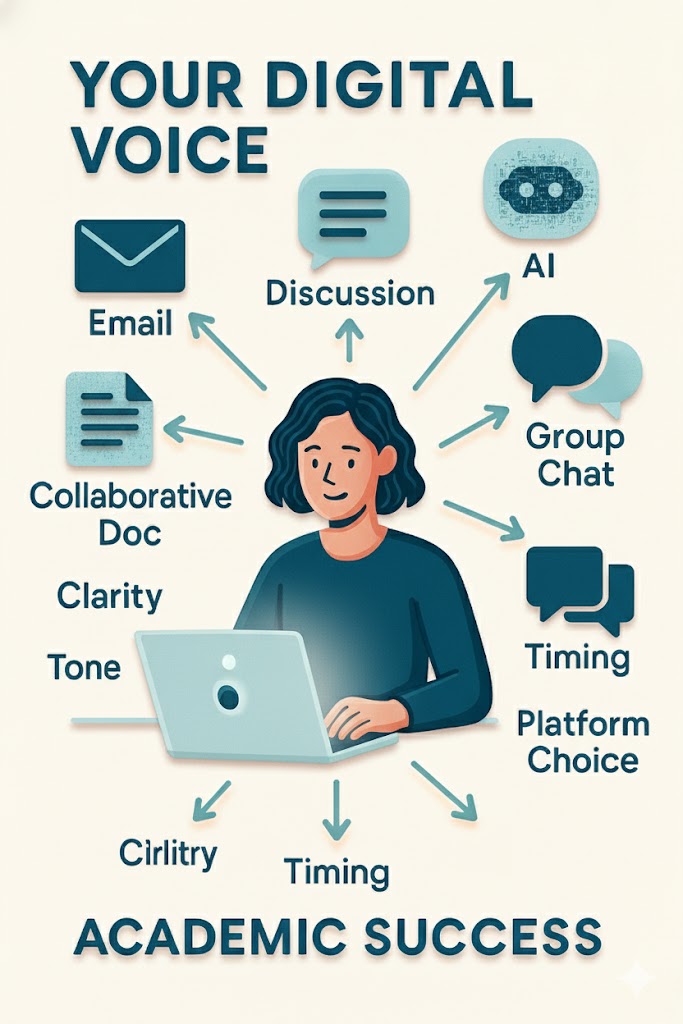
Your Digital Voice in the Academic World
Every day, you send messages, join group chats, and maybe even hop on a quick video call, but have you ever stopped to consider how those choices impact your success? In the world of higher education, the way you communicate online can open doors, build connections, and establish your credibility, or it can leave the wrong impression.
Imagine you’re working on a group project with classmates scattered across time zones. You’ve got five different tools at your fingertips: email, Zoom, discussion boards, collaborative docs, and AI-powered helpers. Which one do you choose? How do you make sure your words are precise, professional, and inclusive? And how do you adapt when technology changes the rules overnight?
This chapter on Digital Communication in Academic Contexts is more than just a reading—it’s your playbook for navigating the fast-changing, multi-platform world of online learning. You will explore when to go live and when to stay asynchronous, learn how to write messages that yield results, and discover how to establish guidelines that foster smooth and respectful collaboration.
The real magic happens when you take these ideas and run with them, testing new tools, refining your style, and even researching beyond the chapter to discover emerging best practices. The more you master these skills now, the more prepared you’ll be for academic success, career opportunities, and leadership in any digital environment.
So read with curiosity, experiment with confidence, and ask yourself at every step: How can I make my digital voice stronger, clearer, and more impactful?
Upon completion of this module, you will be able to:
- Compare online communication platforms (e.g., email, video conferencing, forums) for academic effectiveness. (Analyze)
- Demonstrate effective communication techniques through role-play and written practice. (Apply)
- Develop digital communication guidelines for personal academic use. (Create)
To achieve these objectives:
- Read the Module # Introduction
- Read and view the materials in the Module # Pressbooks book
- Complete the following assignments.
Module Pressbooks Resources and Activities
You will find the following resources and activities in this module at the Pressbooks website. Click on the links below to access or complete each item.
Activities: 2 -
 Financial literacy is the ability to understand and effectively manage personal finances through budgeting, saving, investing, and handling debt. This skill equips individuals with the knowledge necessary to make informed financial decisions that impact their short-term and long-term financial and personal well-being.
Financial literacy is a crucial life skill that empowers individuals to make informed and strategic decisions about their money. This module will provide essential knowledge and practical tools to help students master personal financial management, navigate education financing, and manage debt wisely.
Financial success is not just about earning money—it’s about managing it wisely. By applying the principles learned in this module, students can build financial stability, reduce stress, and create a solid foundation for long-term wealth. Developing strong financial habits today will lead to greater financial independence and security in the future.Upon completion of this module, you will be able to:- Create a personal budget that tracks income and expenses over one month. (Create)
- Analyze spending habits to identify areas of overspending and needed adjustments. (Analyze)
- Evaluate the effectiveness of personal budgeting over a set period. (Evaluate)
- Compare financial aid options (e.g., grants, loans, scholarships). (Analyze)
- Develop a financing plan for education based on aid options and costs. (Create)
- Differentiate between good and bad debt with examples. (Understand/Analyze)
- Design a debt repayment strategy for managing existing obligations. (Create)
- Recommend techniques to avoid excessive debt in the future. (Evaluate)
To achieve these objectives:
- Read the Financial Literacy Introduction above.
- Read Chapters 7, 8, and 9 in Foundational Digital Skills, Financial Literacy, Communication and Time Management and Goal-Setting.
- Complete the corresponding Knowledge Checks, Assignments, and Case Studies for each chapter.
Module Pressbooks Resources and Activities
You will find the following resources and activities in this module at the Pressbooks website. Click on the links below to access or complete each item.
Activities: 14 -
 Time management may be misleading because it is a skill best learned through trial and error. While we cannot actually manage time (there will always be twenty-four hours in a day, no matter what we do), the focus is on managing ourselves and what we do with those twenty-four hours each day. Time is indeed money because it is valuable and limited and must be protected, used wisely, and budgeted. Time management can be critical for many reasons, including productivity, stress reduction, better decision-making, self-discipline, career development, and work-life balance. Time management can help you get more done in less time, leading to more time freedom. Good time management can help you avoid unwanted stress and capture daily opportunities. Time management is crucial because many decisions have deadlines, and you may need to think quickly. Time management can help you develop self-discipline by setting goals and creating schedules to achieve them. Time management skills can help you prioritize tasks, maintain focus, and meet deadlines, which can help you achieve company goals and grow your career. Time management can help you balance your work and personal life by taking breaks, allocating time for hobbies, and spending time with loved ones.Upon completion of this module, you will be able to:
- Understand how to break down course workload and identify high-demand courses.
- Learn and apply various time management strategies to effectively allocate time for coursework.
- Identify personal distractions and implement
strategies to reduce procrastination.
- Learn strategies for successful group
collaboration and manage team dynamics effectively.
- Reflect on the learning process and plan for
continued improvement in time management.
To achieve these objectives:
- Read the Module 5 Introduction
- Read Chapter Mastering Time Management, Master Time Allocation Techniques, and Conquer Distractions
- Complete the discussions, quizzes, and module assessments.
Module Pressbooks Resources and Activities
You will find the following resources and activities in this module at the Pressbooks website. Click on the links below to access or complete each item.
Activities: 18 -
In this module you will take your submit your final assessment for this course. Read the instructions carefully and take note of any special submission guidelines.
Upon completion of this module, you will have:
- Read and viewed the final assessment instructions
- Prepared and submitted your final assessment
To achieve these objectives:
- Review the final assessment guidelines in your syllabus to make
sure you are ready. Click on Final Project: Course Portfolio and follow the instructions.
Activities: 2



Background Colour
Font Face
Font Kerning
Font Size
Image Visibility
Letter Spacing
Line Height
Link Highlight
Text Colour