
Module 3: Ubiquity of Microorganisms
Section outline
-
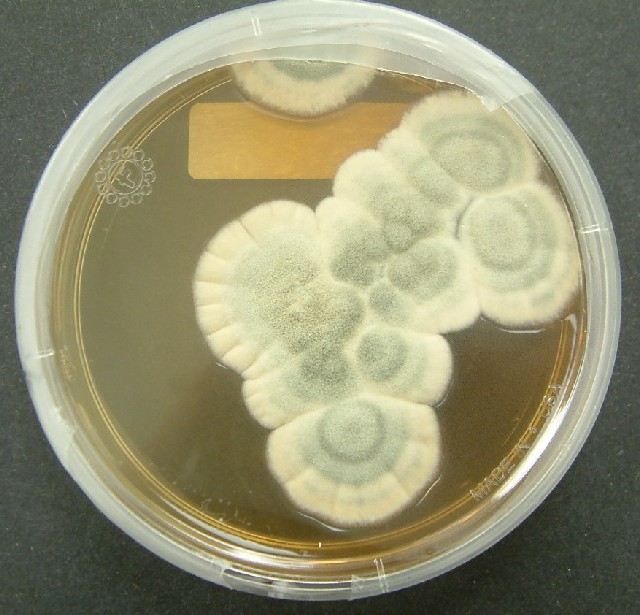
Microorganisms are found in nearly every environment on Earth, including air, water, soil, and on living organisms. In this lab, students will investigate the ubiquity of microorganisms by collecting and analyzing samples from common surfaces and environments. Through observation and comparison of microbial growth, students will gain a better understanding of how widespread microorganisms are and the factors that influence their presence and distribution.
This image shows green-blue mold colonies of Penicillium growing on culture media. Penicillium is a genus of fungi that reproduces by forming spores and can be easily distinguished from bacterial colonies by its filamentous, fuzzy appearance. U.S. Press Office. (Year). Colonies of Penicillium fungi species on agar plates [Photograph]. EurekAlert! https://www.eurekalert.org/multimedia/719840
(Image: Penicillium notatum.jpg, Wikimedia Commons, Creative Commons Attribution-Share Alike 3.0)
Upon completion of this module, you will be able to:- Explain the concept of microbial ubiquity and describe why microorganisms are found in nearly all environments.
- Demonstrate proper aseptic technique while collecting environmental samples.
- Observe and document microbial growth from different environmental sources.
- Compare microbial diversity from various surfaces or locations based on colony morphology and growth patterns.
- Interpret experimental results to explain factors that influence microbial distribution.
- Apply laboratory safety protocols when handling microbial cultures and materials.
- Communicate experimental findings clearly through written observations and analysis.
To achieve these objectives:
- Read the Module 3 Introduction
- Read Lab 3 The Ubiquity of Microorganisms: Exploring Microbial Life in Everyday Environments – Medical Microbiology for Nursing and Allied Health Lab Manual
- Complete the lab activities, quiz, and lab report
**This module could contain a midpoint check for the final project. This may include a proposal, a building block to the project, or a portion of the project.
Module Pressbooks Resources and Activities
You will find the following resources and activities in this module at the Pressbooks website. Click on the links below to access or complete each item.

Background Colour
Font Face
Font Kerning
Font Size
Image Visibility
Letter Spacing
Line Height
Link Highlight
Text Colour