
Module 16: Digestive System Infections
Section outline
-
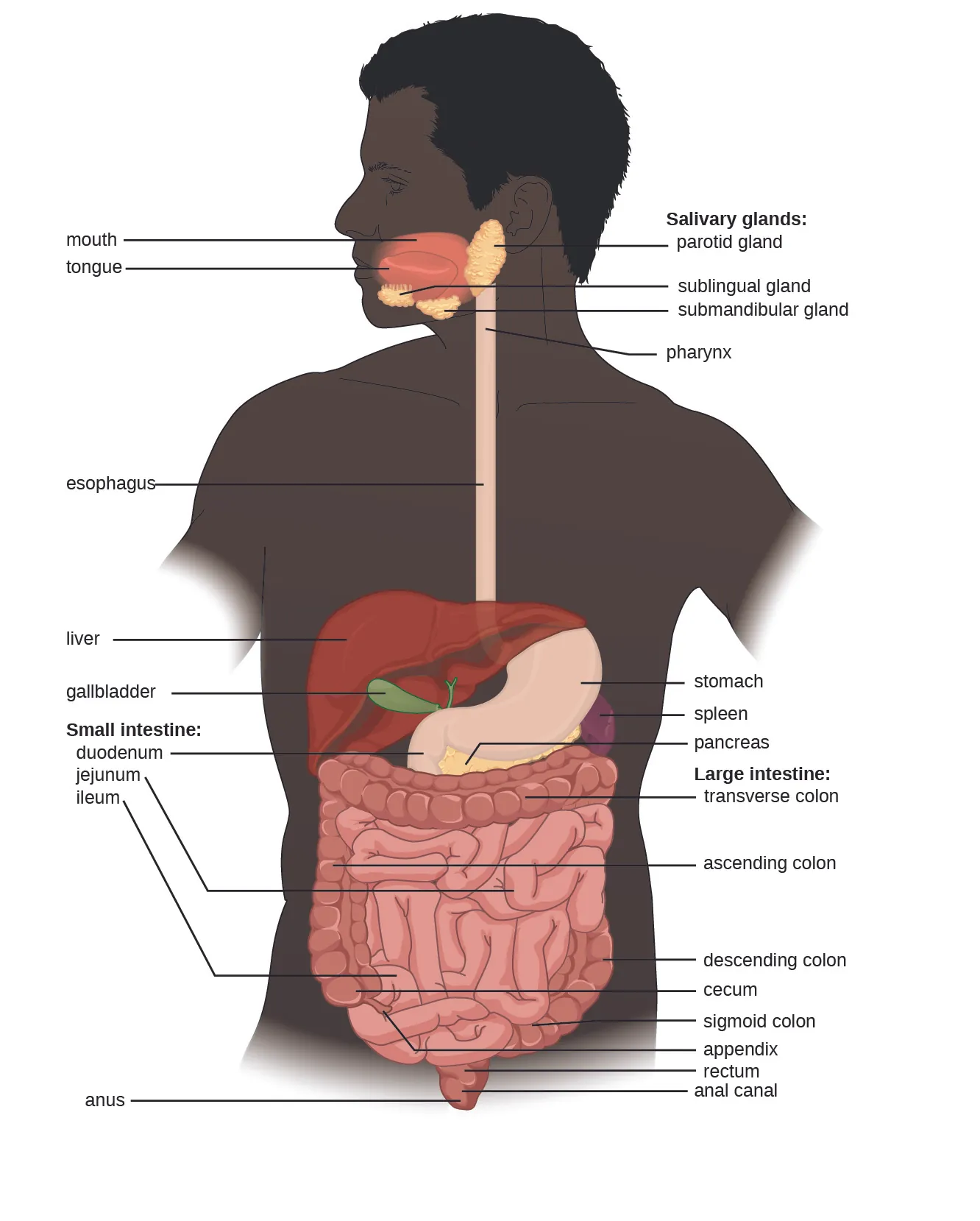
The digestive system includes all organs that process food, absorb nutrients, and eliminate waste. Infections of the digestive tract occur when pathogenic microbes overcome normal defenses and disrupt the balance of the microbiota. These infections can be caused by bacteria, viruses, parasites, or their toxins and often result in symptoms such as nausea, vomiting, diarrhea, and abdominal pain. Understanding digestive system infections helps explain how pathogens enter, cause disease, and affect human health.
Diagram of the human digestive system showing major organs from mouth to anus and accessory organs.
Image: 11ac41ede65192aa624b92a63211cd5be05e33a4 by OpenStax in Microbiology is under a CC-BY-NC-SA 4.0 license
Upon completion of this module, you will be able to:
- Describe the structure and function of the digestive system and explain its role in nutrient absorption and waste elimination.
- Explain the role of the normal gastrointestinal microbiota in digestion, immune protection, and disease prevention.
- Identify common bacterial, viral, and parasitic pathogens that cause digestive system infections.
- Compare modes of transmission of digestive system pathogens, including foodborne, waterborne, and person-to-person spread.
- Describe the mechanisms by which digestive system pathogens cause disease, including toxin production, tissue invasion, and inflammation.
- Differentiate between intoxication and infection as causes of gastrointestinal illness.
- Explain the signs and symptoms associated with digestive system infections and how they relate to pathogen activity.
- Discuss methods for preventing digestive system infections, including sanitation, food safety practices, and public health measures.
- Apply knowledge of digestive system infections to real-world clinical or public health scenarios.
To achieve these objectives:
[Edit these items to match your resources and activities.]
- Read the Module 16 Introduction
- Read Chapter 16 in Medical Microbiology for Nursing and Allied Health: A Louisiana Perspective
- Complete the discussion board, practice quiz, graded quiz, and case study assignment.
Module Pressbooks Resources and Activities
You will find the following resources and activities in this module at the Pressbooks website. Click on the links below to access or complete each item.
-
Opened: Wednesday, December 31, 2025, 12:00 AMDue: Wednesday, January 7, 2026, 12:00 AM
Background Colour
Font Face
Font Kerning
Font Size
Image Visibility
Letter Spacing
Line Height
Link Highlight
Text Colour