
Module 8: Antimicrobial Drugs
Section outline
-
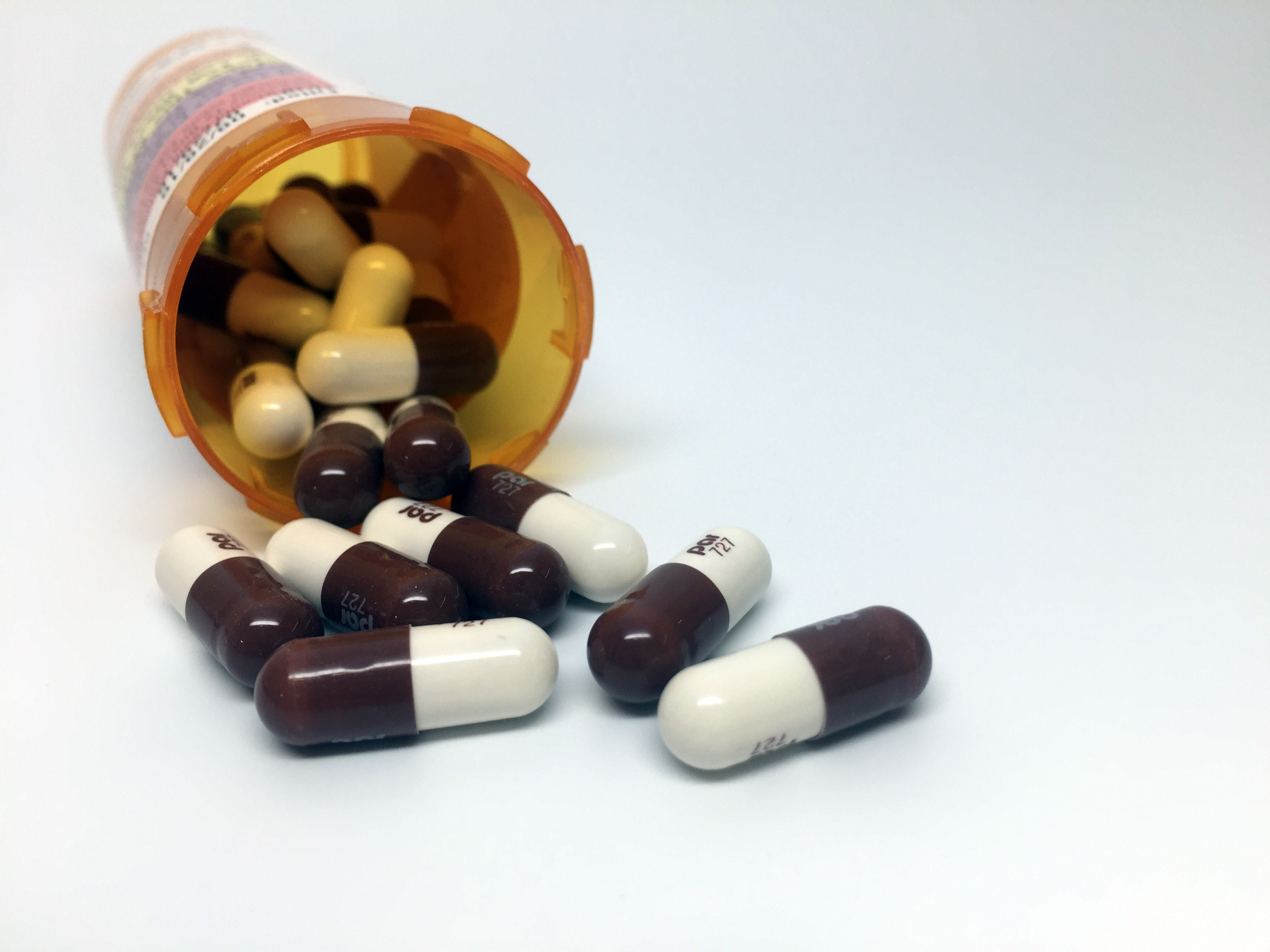
Antimicrobial drugs are agents that kill microorganisms or inhibit their growth, and they are essential tools in the treatment and control of infectious diseases. These drugs include antibiotics, antifungals, antivirals, and antiparasitics, and many were originally discovered as natural compounds produced by microbes themselves. Since the discovery of penicillin, antimicrobial therapies have saved countless lives, but their overuse and misuse have contributed to the emergence of drug-resistant pathogens. In this module, you will learn how antimicrobial drugs work, how microbes develop resistance, and why responsible use and continued discovery of new drugs are vital for public health.
Image: Capsules of the antibiotic doxycycline spill from a medication bottle. Source: "Bottle of Doxycycline" by NIAID licensed CC BY 2.0
Upon completion of this module, you will be able to:
- Define antimicrobial drugs and distinguish among antibiotics, antivirals, antifungals, and antiparasitic drugs.
- Explain how antimicrobial drugs work, including their major mechanisms of action against microorganisms.
- Differentiate between selective toxicity and spectrum of activity (narrow vs. broad spectrum).
- Describe how antimicrobial resistance develops and identify factors that contribute to its spread.
- Compare bactericidal and bacteriostatic drugs and explain their clinical significance.
- Explain common mechanisms of antimicrobial resistance, such as enzyme inactivation, target modification, and efflux pumps.
- Interpret the role of antimicrobial susceptibility testing, including the use of MIC and disk diffusion tests.
- Discuss the importance of appropriate antimicrobial use in healthcare and public health settings.
- Apply antimicrobial drug concepts to real-world scenarios involving infection treatment and resistance prevention.
To achieve these objectives:
[Edit these items to match your resources and activities.]
- Read the Module 8 Introduction
- Read Chapter 8 in Medical Microbiology for Nursing and Allied Health: A Louisiana Perspective
- Complete the Discussion forum, the practice quiz, the graded quiz, and the case study assignment.
Module Pressbooks Resources and Activities
You will find the following resources and activities in this module at the Pressbooks website. Click on the links below to access or complete each item.
Background Colour
Font Face
Font Kerning
Font Size
Image Visibility
Letter Spacing
Line Height
Link Highlight
Text Colour