
Applied Algebra
Section outline
-
Welcome to Applied Algebra [CMAT 1203]!
Course Introduction
This Applied Algebra [CMAT 1203] course adheres to the scope and sequence of a one-semester Applied Algebra course. The course description provided is from the statewide common course information.
Course Description: Emphasizes applications involving solving equations and inequalities; function properties and graphs; linear, quadratic, polynomial, exponential and logarithmic functions.Upon successful completion of this course, the student will be able to:
- Apply mathematical foundational techniques of divisibility, factorization, unit conversations, and order of operations.
- Use formulas to solve geometry problems and applications.
- Apply algebraic techniques to solve equations and inequalities.
- Interpret function properties and graphs.
- Solve problems with linear, quadratic, polynomial, exponential, and logarithmic functions.
- Solve application problems using technology to build student's knowledge of digital skills.
(**Note: This course also provides foundational skills for students concurrently enrolled in Applied Algebra. As a co-requisite, this course enables students to complete both this course and Applied Algebra in the same semester.
Upon successful completion of the co-requisite support course, the student will be able to:
- Recognize mathematical foundational techniques of divisibility, factorization, unit conversations, and order of operations.
- Identify formulas that are used to solve geometry problems and applications
- Identify algebraic techniques to solve equations and inequalities.
- Recognize different function properties and graphs.
- Apply knowledge to interpret function properties and graphs.
- Identify techniques to solve problems involving linear, quadratic, polynomial, rational, exponential, and logarithmic functions.
- Identify the different technology methods to solve application problems
Adopting instructors can embed a welcome video or add additional text here.
Structure of the Course
The course includes 7 content Modules which covers each of the 7 chapters in the textbook (links provided). Each module includes a brief introduction text with module learning objectives, links to the corresponding Pressbook sections, homework assignments in MyOpenMath, a Quiz in MyOpenMath, a Q&A discussion forum for that Module, and Digital Skills assignments. There are additional modules for smaller Exams, a Midterm Exam, and/or Final Exam.
(Note: If you are not teaching this course as a co-requisite, adjustments to the concepts taught in a semester is advised.)
Navigating the Course
This course is set up in Modules covering various topics which may be accessed from the course navigation menu on the left or by scrolling below. Modules may be collapsed in the menu and it the body of the course to minimize scrolling. Each module includes the relevant chapters followed by various activities, which may include discussion forums, listening activities and quizzes, practice quizzes, module tests, and other relevant activities as appropriate for each module. Many items are required and may be marked as completed automatically when the activity has been submitted (the broken check box), but others will marked as done by the student (the solid check box).
Please move through the items below and continue through the Learner Support and Getting Started modules before moving on to Module 1. Be sure to check for announcements and due dates to stay on track.
Adopting instructors can embed a navigation video or add additional text here. This course and its contents are developed by author Jared Eusea and licensed under a Creative Commons Attribution 4.0 International License by LOUIS: The Louisiana Library Network, except where otherwise noted.
 Adopting instructors should edit the About Your Instructor and Office Hours Information pages in this Module.
-
Adopting instructors should edit all pages in this module to reflect their institution's policies.
-
This module contains all the items you should review and complete before you begin Module 1. Before moving on, be sure to:
- Check the News and Announcements Forum
- Read the Course Syllabus
- Introduce yourself to the class
- Read the instructions for the Q & A Forum
- Review academic integrity expectations in the course
Good luck in the course!-
This forum contains general news and announcements. You can find all announcements listed in the "Latest News" block in Course Tools within this course or on your My Courses page.
-
Students mustMark as done
Use this forum to tell us a little about yourself and your interests. Some topic ideas:
- What is your field of study/research interest or concentration?
- What are you most interested in learning about in this class and why?
- Have you ever taken an online class before?
- Any other information you would like to share with your classmates, such as special interests or activities.
Post a picture! We look forward to meeting you.
-
Students mustMark as done
Use this forum to ask your instructor any questions you have about the course. You may post at any time, and your instructor will respond here. Be as specific as possible.
Please keep in mind that others can see your posts, so do not post any personal information. If you have questions about your grade, please email your instructor directly. You can expect a response to posts and emails within [X] hours. [Recommendation is 24 hours M-F, next business day on weekends.]
Subscription should be set to Auto.
-
Provide specific and contextualized information about how students can comply with institutional academic integrity policies and standards as they complete assessments in the course.
-

It’s a cold day in Antarctica. In fact, it’s always a cold day in Antarctica. The coldest temperature ever recorded, over one hundred degrees below zero on the Celsius scale, was recorded by remote satellite. It is no surprise then, that no native human population can survive the harsh conditions. Only explorers and scientists brave the environment for any length of time.
Measuring and recording the characteristics of weather conditions in Antarctica requires a use of different kinds of numbers. For tens of thousands of years, humans have undertaken methods to tally, track, and record numerical information. While we don't know much about their usage, the Lebombo Bone (dated to about 35,000 BCE) and the Ishango Bone (dated to about 20,000 BCE) are among the earliest mathematical artifacts. Found in Africa, their clearly deliberate groupings of notches may have been used to track time, moon cycles, or other information. Performing calculations with them and using the results to make predictions requires an understanding of relationships among numbers. In this chapter, we will review sets of numbers and properties of operations used to manipulate numbers. This understanding will serve as prerequisite knowledge throughout our study of algebra.
Image Caption: Earth’s southernmost continent, Antarctica experiences the coldest, driest, and windiest conditions known. (Credit: Andreas Kambanls)
(Content & Image Source: Chapter 1 Introduction, College Algebra with Corequisite Support 2e, Jay Abramson & Sharon North, OpenStax, CC BY 4.0 License)
Upon completion of this module, you will be able to:Section 0.1 Divisibility and Factorization
- Find the prime factorization of a composite number (CLO1)
- Find the least common multiple (LCM) of two numbers (CLO1)
Section 0.2 Proportions
- Use the definition of proportion (CLO1)
- Solve proportions (CLO1, CLO3)
- Use a graphing calculator to solve a proportion. (CLO1, CLO3, CLO6)
- Solve applications using proportions (CLO1, CLO3, CLO6)
- Write percent equations as proportions (CLO1)
- Translate and solve percent proportions (CLO1, CLO3)
Section 0.3 Unit Conversion
- Make unit conversions in the US system. (CLO1)
- Use mixed units of measurement in the U.S. system. (CLO1)
- Make unit conversions in the metric system. (CLO1)
- Use mixed units of measurement in the metric system. (CLO1)
- Convert between the US and the metric systems of measurement. (CLO1)
- Convert between Fahrenheit and Celsius temperatures. (CLO1)
Section 0.4 Scientific Notation
- Use the product rule of exponents. (CLO1)
- Use the quotient rule of exponents. (CLO1)
- Use the power rule of exponents. (CLO1)
- Use the zero exponent rule of exponents. (CLO1)
- Use the negative rule of exponents. (CLO1)
- Find the power of a product and a quotient. (CLO1)
- Simplify exponential expressions. (CLO1)
- Use scientific notation. (CLO1, CLO6)
Section 0.5 Order of Operations and Algebraic Expressions
- Classify a real number as a natural, whole, integer, rational, or irrational number. (CLO1)
- Perform calculations using order of operations. (CLO1)
- Use the following properties of real numbers: commutative, associative, distributive, inverse, and identity. (CLO1)
- Evaluate algebraic expressions. (CLO1)
- Simplify algebraic expressions. (CLO1)
Section 0.6 Percentages
- Use the definition of percent (CLO1)
- Convert percents to fractions and decimals (CLO1)
- Convert decimals and fractions to percents (CLO1)
- Translate and solve basic percent equations (CLO1, CLO3)
Section 0.7 Radicals and Rational Exponents
- Evaluate square roots. (CLO1)
- Use the product rule to simplify square roots. (CLO1)
- Use the quotient rule to simplify square roots. (CLO1)
- Add and subtract square roots. (CLO1)
- Rationalize denominators. (CLO1)
- Use rational roots. (CLO1)
Section 0.8 Working with Rates- Use the distance, rate, and time formula (CLO1, CLO3, CLO6)
- Carry out rate conversions for computations involving two or more properties (CLO1)
(Note: Alignment of MLOs might be needed if this course is taught as a co-requisite.)
To achieve these objectives:
- Read the Module 1 Introduction (see above).
- Read Sections 0.1 - 0.8 of Chapter 0: Math Fundamentals in Applied Algebra (links to each Section provided below)
- At the end of each Section there is a list of Key Concepts, Section Exercises, and a Glossary of terms
- Complete the MyOpenMath Homework Assignments for each Section (links provided below) - These are graded!
- Complete the MyOpenMath Quiz for Chapter 0 (link provided below) - This is graded!
- Once you complete the Quiz, upload your work in the Quiz for Chapter 0 Work Upload Assignment using the submission link below.
- Post in the Chapter 0 Q&A Discussion Forum - link provided below.
- Complete the Digital Skills - Using the online graphing calculator (Chapter 0) (link provided below) - This is graded!
- Complete the Digital Skills - Using AI for math help (Chapter 0) (link provided below) - This is graded!
- Complete the Digital Skills - AI reliability, first reaction post (Chapter 0) (link provided below) - This is graded!
Note the check boxes to the right that help you track your progress: some are automatic, and some are manual.Module Pressbooks Resources and Activities
You will find the following resources and activities in this module at the Pressbooks website. Click on the links below to access or complete each item.
For select assessments in this course, students will be allowed to use the following links to online graphing calculators:
- Desmos Calculator
- TI-84 Calculator Online (free version, but not sure how long it will stay active)
- TI-84 Plus CE (*Note: This link requires a paid subscription to be purchased by the student using a credit card.)
-
-
-
Students mustMark as done
-
-
-

We are surrounded by all sorts of geometry. Architects use geometry to design buildings. Artists create vivid images out of colorful geometric shapes. Street signs, automobiles, and product packaging all take advantage of geometric properties. In this chapter, we will begin by considering a formal approach to solving problems and use this use this problem-solving strategy to explore geometry and relate it to everyday situations.
(Note: Later in this course, we will use the same problem-solving strategy to solve a variety of common problems, including making decisions about money.)
Image Caption: Note the many individual shapes in this building. (credit: Bert Kaufmann, Flickr)
(Content & Image Source: Chapter 9 Introduction, Prealgebra 2e, Lynn Marecek/MaryAnne Anthony-Smith/Andrea Honeycutt Mathis, OpenStax, CC BY 4.0 License)
Upon completion of this module, you will be able to:Section 1.1 Use Properties of Angles, Triangles, and the Pythagorean Theorem
- Use the properties of angles (CLO2)
- Use the properties of triangles (CLO2)
- Use the Pythagorean Theorem (CLO2, CLO3, CLO6)
Section 1.2 Use Properties of Rectangles, Triangles and Quadrilaterals
- Understand linear, square, and cubic measure (CLO2)
- Use properties of rectangles and parallelograms (CLO2)
- Use properties of triangles (CLO2)
- Use properties of trapezoids and kites (CLO2)
Section 1.3 Solve Geometry Applications: Circles and Irregular Figures
- Use the properties of circles (CLO2)
- Find the area of irregular figures (CLO2, CLO6)
Section 1.4 Solve Geometry Applications: Volume and Surface Area
- Find volume and surface area of rectangular solids (CLO2)
- Find volume and surface area of spheres (CLO2)
- Find volume and surface area of cylinders (CLO2)
- Find volume and surface area of cones (CLO2, CLO6)
(Note: Alignment of MLOs might be needed if this course is taught as a co-requisite.)
To achieve these objectives:
- Read the Module 2 Introduction (see above).
- Read Sections 1.1 - 1.4 of Chapter 1: Geometry in Applied Algebra (links to each Section provided below)
- At the end of each Section there is a list of Key Concepts, Section Exercises, and a Glossary of terms
- Complete the MyOpenMath Homework Assignments for each Section (links provided below) - These are graded!
- Complete the MyOpenMath Quiz for Chapter 1 (link provided below) - This is graded!
- Once you complete the Quiz, upload your work in the Quiz for Chapter 1 Work Upload Assignment using the submission link below.
- Post in the Chapter 1 Q&A Discussion Forum - link provided below.
- Complete the Digital Skills - Using the online graphing calculator (Chapter 1) (link provided below) - This is graded!
- Complete the Digital Skills - Using AI for math help (Chapter 1) (link provided below) - This is graded!
Note the check boxes to the right that help you track your progress: some are automatic, and some are manual.Module Pressbooks Resources and Activities
You will find the following resources and activities in this module at the Pressbooks website. Click on the links below to access or complete each item.
For select assessments in this course, students will be allowed to use the following links to online graphing calculators:
- Desmos Calculator
- TI-84 Calculator Online (free version, but not sure how long it will stay active)
- TI-84 Plus CE (*Note: This link requires a paid subscription to be purchased by the student using a credit card.)
-
-
-
Students mustMark as done
-
-
In this module you will take your Exam 1. [revise as needed]
Read the Exam 1 Information and Instructions page carefully and take note of any special submission guidelines.
Upon completion of this module, you will have:- Read and view the Exam 1 Information and Instructions page
- Schedule your exam with the proctoring service [if applicable, delete if not needed]
- Post in the Exam 1 Q&A Discussion Forum - link provided below.
- Prepare for and submit your Exam 1 [revise as needed]
- Upload your work in the Exam 1 Work Upload Assignment using the submission link below.
Attribution of image: ("Iphone, Math, Studying image. Free for use." Pixabay.com. https://pixabay.com/photos/iphone-math-studying-2418042/)
Adopting instructors: Edit the Exam 1 Information and Instructions page.
-
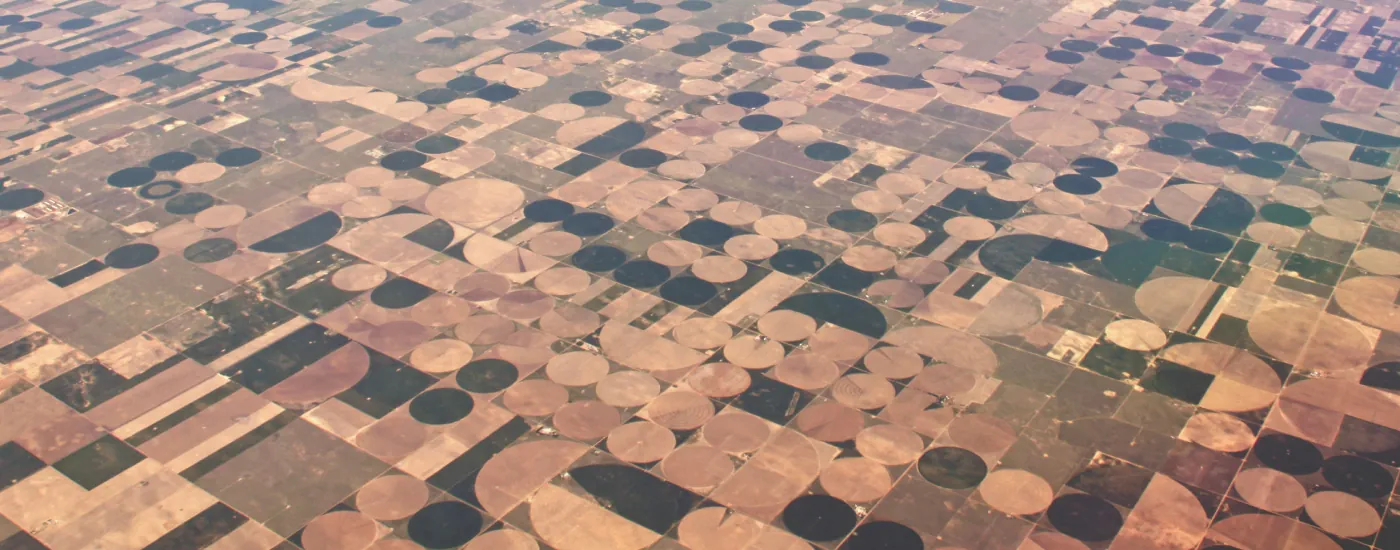
Irrigation is a critical aspect of agriculture, which can expand the yield of farms and enable farming in areas not naturally viable for crops. But the materials, equipment, and the water itself are expensive and complex. To be efficient and productive, farm owners and irrigation specialists must carefully lay out the network of pipes, pumps, and related equipment. The available land can be divided into regular portions (similar to a grid), and the different sizes of irrigation systems and conduits can be installed within the plotted area.
Image Caption: From the air, a landscape of circular crop fields may seem random, but they are laid out and irrigated very precisely. Farmers and irrigation providers combining agricultural science, engineering, and mathematics to achieve the most productive and efficient array. (Credit: Modification of "Aerial Phot of Center Pivot Irrigations Systems (1)" by Soil Science/flickr)
(Content & Image Source: Chapter 2 Introduction, College Algebra with Corequisite Support 2e, Jay Abramson & Sharon North, OpenStax, CC BY 4.0 License)
Upon completion of this module, you will be able to:
Section 2.R Factoring Review (For use with co-requisite support)- Factor the greatest common factor of a polynomial.
- Factor a trinomial. (CLO6)
- Factor by grouping.
- Factor a perfect square trinomial. (CLO6)
- Factor a difference of squares.
- Factor the sum and difference of cubes.
- Factor expressions using fractional or negative exponents.
Section 2.1 Linear Equations in One VariableSection 2.2 Models and Applications- Solve equations in one variable. (CLO3)
- Solve a rational equation. (CLO3)
Section 2.3 Complex Numbers- Approach word problems with a positive attitude (CLO3)
- Use a problem solving strategy for word problems (CLO3)
- Set up a linear equation to solve a real-world application. (CLO3)
- Use a formula to solve a real-world application. (CLO2, CLO3, CLO6)
- Solve number problems (CLO2, CLO3)
Section 2.4 Quadratic Equations- Add and subtract complex numbers.
- Multiply complex numbers.
- Divide complex numbers.
- Simplify powers of i
Section 2.5 Other Types of Equations- Solve quadratic equations by factoring. (CLO3, CLO6)
- Solve quadratic equations by the square root property. (CLO3, CLO6)
- Solve quadratic equations by completing the square. (CLO3, CLO6)
- Solve quadratic equations by using the quadratic formula. (CLO3, CLO6)
- Solve equations involving rational exponents. (CLO3)
- Solve equations using factoring. (CLO3)
- Solve radical equations. (CLO3)
- Solve absolute value equations. (CLO3)
- Solve other types of equations. (CLO3)
Section 2.6 Linear Inequalities and Absolute Value Inequalities- Write solutions using interval notation.
- Solve inequalities in one variable algebraically. (CLO3)
- Solve absolute value inequalities. (CLO3)
Section 2.7 Linear Applications- Solve coin word problems. (CLO3, CLO6)
- Solve ticket and stamp word problems. (CLO3, CLO6)
- Solve a formula for a specific variable (CLO3, CLO6)
(Note: Alignment of MLOs might be needed if this course is taught as a co-requisite.)To achieve these objectives:- Read the Module 3 Introduction (see above).
- Read Sections 2.R - 2.7 of Chapter 2: Equations and Inequalities in Applied Algebra (links to each Section provided below)
- At the end of each Section there is a list of Key Concepts, Section Exercises, and a Glossary of terms
- At the end of each Section there is a list of Key Concepts, Section Exercises, and a Glossary of terms
- Complete the MyOpenMath Homework Assignments for each Section (links provided below) - These are graded!
- Complete the MyOpenMath Quiz for Chapter 2 (link provided below) - This is graded!
- Once you complete the Quiz, upload your work in the Quiz for Chapter 2 Work Upload Assignment using the submission link below.
- Post in the Chapter 2 Q&A Discussion Forum - link provided below.
- Complete the Digital Skills - Using the online graphing calculator (Chapter 2) (link provided below) - This is graded!
- Complete the Digital Skills - Using AI for math help (Chapter 2) (link provided below) - This is graded!
Note the check boxes to the right that help you track your progress: some are automatic, and some are manual.Module Pressbooks Resources and Activities
You will find the following resources and activities in this module at the Pressbooks website. Click on the links below to access or complete each item.
For select assessments in this course, students will be allowed to use the following links to online graphing calculators:
- Desmos Calculator
- TI-84 Calculator Online (free version, but not sure how long it will stay active)
- TI-84 Plus CE (*Note: This link requires a paid subscription to be purchased by the student using a credit card.)
-
-
-
Students mustMark as done
-
-
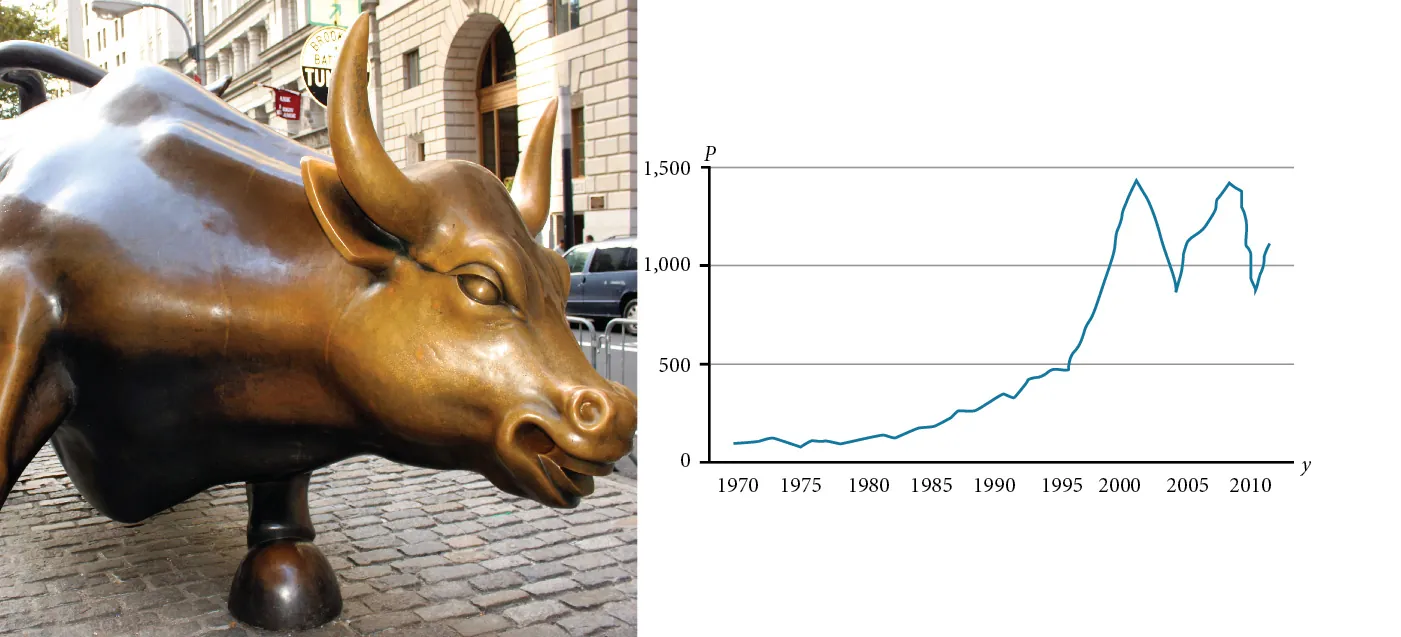
Toward the end of the twentieth century, the values of stocks of Internet and technology companies rose dramatically. As a result, the Standard and Poor’s stock market average rose as well. The graph above tracks the value of that initial investment of just under $100 over the 40 years. It shows that an investment that was worth less than $500 until about 1995 skyrocketed up to about $1100 by the beginning of 2000.
That five-year period became known as the “dot-com bubble” because so many Internet startups were formed. As bubbles tend to do, though, the dot-com bubble eventually burst. Many companies grew too fast and then suddenly went out of business. The result caused the sharp decline represented on the graph beginning at the end of 2000.
Notice, as we consider this example, that there is a definite relationship between the year and stock market average. For any year we choose, we can determine the corresponding value of the stock market average. In this chapter, we will explore these kinds of relationships and their properties.
Image Caption: Standard and Poor’s Index with dividends reinvested (credit "bull": modification of work by Prayitno Hadinata; credit "graph": modification of work by MeasuringWorth)
(Content & Image Source: Chapter 3 Introduction, College Algebra with Corequisite Support 2e, Jay Abramson & Sharon North, OpenStax, CC BY 4.0 License)
Upon completion of this module, you will be able to:
Section 3.R Polynomial Review (For use with co-requisite support)- Identify the degree and leading coefficient of polynomials.
- Add and subtract polynomials.
- Multiply polynomials.
- Perform operations with polynomials of several variables.
Section 3.1 The Rectangular Coordinate Systems and GraphsSection 3.2 Functions and Function Notation- Plot ordered pairs in a Cartesian coordinate system. (CLO4)
- Graph equations by plotting points. (CLO4, CLO6)
- Graph equations using a graphing calculator. (CLO4, CLO6)
- Find x-intercepts and y-intercepts. (CLO4, CLO6)
- Use the distance formula. (CLO3, CLO4)
- Use the midpoint formula. (CLO3, CLO4)
- Determine whether a relation represents a function. (CLO4)
- Find the value of a function. (CLO4)
- Determine whether a function is one-to-one. (CLO4)
- Use the vertical line test to identify functions. (CLO4, CLO5)
- Graph the functions listed in the library of functions. (CLO4, CLO5)
Section 3.3 Domain and RangeSection 3.4 Rates of Change and Behavior of Graphs- Find the domain of a function defined by an equation. (CLO4, CLO5)
- Graph piecewise-defined functions. (CLO4, CLO5, CLO6)
Section 3.5 Composition of Functions- Find the average rate of change of a function. (CLO4, CLO5)
- Use a graph to determine where a function is increasing, decreasing, or constant. (CLO4, CLO5)
- Use a graph to locate local maxima and local minima. (CLO4, CLO5)
- Use a graph to locate the absolute maximum and absolute minimum. (CLO4, CLO5)
Section 3.6 Transformation of Functions- Combine functions using algebraic operations. (CLO4, CLO5)
- Create a new function by composition of functions. (CLO4, CLO5)
- Evaluate composite functions. (CLO4, CLO5)
- Find the domain of a composite function. (CLO4, CLO5)
- Decompose a composite function into its component functions. (CLO4, CLO5)
Section 3.7 Absolute Value Functions- Graph functions using vertical and horizontal shifts. (CLO4, CLO5)
- Graph functions using reflections about the x-axis and the y-axis. (CLO4, CLO5)
- Determine whether a function is even, odd, or neither from its graph. (CLO4, CLO5)
- Graph functions using compressions and stretches. (CLO4, CLO5)
- Combine transformations. (CLO4, CLO5)
Section 3.8 Inverse Functions- Graph an absolute value function. (CLO4)
- Solve an absolute value equation. (CLO4)
- Verify inverse functions. (CLO4, CLO5)
- Determine the domain and range of an inverse function and restrict the domain of a function to make it one-to-one. (CLO4, CLO5)
- Find or evaluate the inverse of a function. (CLO4, CLO5)
- Use the graph of a one-to-one function to graph its inverse function on the same axes. (CLO4, CLO5)
(Note: Alignment of MLOs might be needed if this course is taught as a co-requisite.)To achieve these objectives:- Read the Module 4 Introduction (see above).
- Read Sections 3.R - 3.8 of Chapter 3: Functions in Applied Algebra (links to each Section provided below)
- At the end of each Section there is a list of Key Concepts, Section Exercises, and a Glossary of terms
- Complete the MyOpenMath Homework Assignments for each Section (links provided below) - These are graded!
- Complete the MyOpenMath Quiz for Chapter 3 (link provided below) - This is graded!
- Once you complete the Quiz, upload your work in the Quiz for Chapter 3 Work Upload Assignment using the submission link below.
- Post in the Chapter 3 Q&A Discussion Forum - link provided below.
- Complete the Digital Skills - Using the online graphing calculator (Chapter 3) (link provided below) - This is graded!
- Complete the Digital Skills - Using AI for math help (Chapter 3) (link provided below) - This is graded!
Note the check boxes to the right that help you track your progress: some are automatic, and some are manual.Module Pressbooks Resources and Activities
You will find the following resources and activities in this module at the Pressbooks website. Click on the links below to access or complete each item.
For select assessments in this course, students will be allowed to use the following links to online graphing calculators:
- Desmos Calculator
- TI-84 Calculator Online (free version, but not sure how long it will stay active)
- TI-84 Plus CE (*Note: This link requires a paid subscription to be purchased by the student using a credit card.)
-
-
-
Students mustMark as done
-
-
In this module you will take your Midterm Exam or Exam 2. [revise as needed]
Read the Midterm Exam or Exam 2 Information and Instructions page carefully and take note of any special submission guidelines.
Upon completion of this module, you will have:
- Read and view the Midterm Exam or Exam 2 Information and Instructions page
- Schedule your exam with the proctoring service [if applicable, delete if not needed]
- Post in the Midterm Exam or Exam 2 Q&A Discussion Forum - link provided below.
- Prepare for and submit your Midterm Exam or Exam 2 [revise as needed]
- Upload your work in the Midterm Exam or Exam 2 Work Upload Assignment using the submission link below.
Attribution of image: ("Iphone, Math, Studying image. Free for use." Pixabay.com. https://pixabay.com/photos/iphone-math-studying-2418042/)Adopting instructors: Edit the Midterm Exam or Exam 2 Information and Instructions page.
-

Imagine placing a plant in the ground one day and finding that it has doubled its height just a few days later. Although it may seem incredible, this can happen with certain types of bamboo species. These members of the grass family are the fastest-growing plants in the world. One species of bamboo has been observed to grow nearly 1.5 inches every hour (http://www.guinnessworldrecords.com/records-3000/fastest-growing-plant/). In a twenty-four hour period, this bamboo plant grows about 36 inches, or an incredible 3 feet! A constant rate of change, such as the growth cycle of this bamboo plant, is a linear function.
Recall from Functions and Function Notation (Section 3.2) that a function is a relation that assigns to every element in the domain exactly one element in the range. Linear functions are a specific type of function that can be used to model many real-world applications, such as plant growth over time. In this chapter, we will explore linear functions, their graphs, and how to relate them to data.
Image Caption: A bamboo forest in China (credit: "JFXie"/Flickr)
(Content & Image Source: Chapter 4 Introduction, College Algebra with Corequisite Support 2e, Jay Abramson & Sharon North, OpenStax, CC BY 4.0 License)
Upon completion of this module, you will be able to:Section 4.1 Linear Equations in Two VariablesSection 4.2 Linear Functions- Write a linear equation in two variables. (CLO4)
- Given the equations of two lines, determine whether their graphs are parallel or perpendicular. (CLO4)
- Write the equation of a line parallel or perpendicular to a given line. (CLO4)
- Represent a linear function. (CLO4, CLO5)
- Determine whether a linear function is increasing, decreasing, or constant. (CLO4, CLO5, CLO6)
- Interpret slope as a rate of change. (CLO4, CLO5)
- Write and interpret an equation for a linear function. (CLO4, CLO5)
- Graph linear functions. (CLO4, CLO5)
Section 4.3 Modeling with Linear Functions
- Build linear models from verbal descriptions. (CLO4, CLO5)
- Model a set of data with a linear function. (CLO4, CLO5)
Section 4.4 Systems of Linear Equations: Two Variables
- Solve systems of equations by graphing. (CLO4, CLO5, CLO6)
- Solve systems of equations by substitution. (CLO4, CLO5, CLO6)
- Solve systems of equations by addition. (CLO4, CLO5, CLO6)
- Identify inconsistent systems of equations containing two variables. (CLO4, CLO5, CLO6)
- Express the solution of a system of dependent equations containing two variables. (CLO4, CLO5)
(Note: Alignment of MLOs might be needed if this course is taught as a co-requisite.)To achieve these objectives:- Read the Module 5 Introduction (see above).
- Read Sections 4.1 - 4.4 of Chapter 4: Linear Functions in Applied Algebra (links to each Section provided below)
- At the end of each Section there is a list of Key Concepts, Section Exercises, and a Glossary of terms
- At the end of each Section there is a list of Key Concepts, Section Exercises, and a Glossary of terms
- Complete the MyOpenMath Homework Assignments for each Section (links provided below) - These are graded!
- Complete the MyOpenMath Quiz for Chapter 4 (link provided below) - This is graded!
- Once you complete the Quiz, upload your work in the Quiz for Chapter 4 Work Upload Assignment using the submission link below.
- Post in the Chapter 4 Q&A Discussion Forum - link provided below.
- Complete the Digital Skills - Using the online graphing calculator (Chapter 4) (link provided below) - This is graded!
- Complete the Digital Skills - Using AI for math help (Chapter 4) (link provided below) - This is graded!
Note the check boxes to the right that help you track your progress: some are automatic, and some are manual.Module Pressbooks Resources and Activities
You will find the following resources and activities in this module at the Pressbooks website. Click on the links below to access or complete each item.
For select assessments in this course, students will be allowed to use the following links to online graphing calculators:
- Desmos Calculator
- TI-84 Calculator Online (free version, but not sure how long it will stay active)
- TI-84 Plus CE (*Note: This link requires a paid subscription to be purchased by the student using a credit card.)
-
-
-
Students mustMark as done
-
-

You don't need to dive very deep to feel the effects of pressure. As a person in their neighborhood pool moves eight, ten, twelve feet down, they often feel pain in their ears as a result of water and air pressure differentials. Pressure plays a much greater role at ocean diving depths.
Scuba and free divers are constantly negotiating the effects of pressure in order to experience enjoyable, safe, and productive dives. Gases in a person's respiratory system and diving apparatus interact according to certain physical properties, which upon discovery and evaluation are collectively known as the gas laws. Some are conceptually simple, such as the inverse relationship regarding pressure and volume, and others are more complex. While their formulas seem more straightforward than many you will encounter in this chapter, the gas laws are generally polynomial expressions.
Image Caption: Whether they think about it in mathematical terms or not, scuba divers must consider the impact of functional relationships in order to remain safe. The gas laws, which are a series of relations and equations that describe the behavior of most gases, play a core role in diving. This diver, near the wreck of a World War II Japanese ocean liner turned troop transport, must remain attentive to gas laws during their dive and as they ascend to the surface. (credit: "Aikoku - Aft Gun": modification of work by montereydiver/flickr)
(Content & Image Source: Chapter 5 Introduction, College Algebra with Corequisite Support 2e, Jay Abramson & Sharon North, OpenStax, CC BY 4.0 License)
Upon completion of this module, you will be able to:Section 5.1 Quadratic Functions
Section 5.R Rational Expressions Review (For use with co-requisite support)- Simplify rational expressions.
- Multiply rational expressions.
- Divide rational expressions.
- Add and subtract rational expressions.
- Simplify complex rational expressions
- Recognize characteristics of parabolas. (CLO4, CLO5)
- Compare the graph of a parabola to its quadratic function. (CLO4, CLO5, CLO6)
- Graph quadratic functions. (CLO4, CLO5, CLO6)
- Find the domain and range of a quadratic function. (CLO4, CLO5, CLO6)
- Determine and solve problems involving the minimum and maximum value of a quadratic function (CLO4, CLO5, CLO6)
Section 5.2 Power Functions and Polynomial Functions
- Identify power functions. (CLO4, CLO5)
- Identify end behavior of power functions. (CLO4, CLO5)
- Identify polynomial functions. (CLO4, CLO5)
- Identify the degree and leading coefficient of polynomial functions. (CLO4, CLO5)
Section 5.3 Graphs of Polynomial Functions
- Recognize characteristics of graphs of polynomial functions. (CLO4, CLO5)
- Use factoring to find zeros of polynomial functions. (CLO4, CLO5)
- Identify zeros and their multiplicities. (CLO4, CLO5)
- Determine end behavior. (CLO4, CLO5)
- Understand the relationship between degree and turning points. (CLO4, CLO5)
- Graph polynomial functions. (CLO4, CLO5)
- Use the Intermediate Value Theorem. (CLO4, CLO5)
Section 5.4 Dividing Polynomials
- Use long division to divide polynomials. (CLO4, CLO5)
- Use synthetic division to divide polynomials. (CLO4, CLO5)
Section 5.5 Zeros of Polynomial Functions
- Evaluate a polynomial using the Remainder Theorem. (CLO4, CLO5)
- Use the Factor Theorem to solve a polynomial equation. (CLO4, CLO5)
- Use the Rational Zero Theorem to find rational zeros. (CLO4, CLO5)
- Find zeros of a polynomial function. (CLO4, CLO5)
- Use the Linear Factorization Theorem to find polynomials with given zeros. (CLO4, CLO5)
- Use Descartes’ Rule of Signs. (CLO4, CLO5)
- Solve real-world applications of polynomial equations (CLO4, CLO5)
Section 5.6 Rational Expressions and Functions
- Use arrow notation. (CLO4, CLO5)
- Solve applied problems involving rational functions. (CLO4, CLO5)
- Find the domains of rational functions. (CLO4, CLO5)
- Identify vertical asymptotes. (CLO4, CLO5)
- Identify horizontal asymptotes. (CLO4, CLO5)
- Graph rational functions. (CLO4, CLO5)
Section 5.7 Variation
- Solve direct variation problems. (CLO3, CLO4, CLO6)
- Solve inverse variation problems. (CLO3, CLO4, CLO6)
- Solve problems involving joint variation. (CLO3, CLO4, CLO6)
Section 5.8 Variation: Applications in Science- Use Kepler's Law to calculate the period of planets' orbits around the sun. (CLO3, CLO4, CLO6)
- Relate pressure, volume, amount, and temperature using The Ideal Gas Laws (CLO3, CLO4, CLO6)
(Note: Alignment of MLOs might be needed if this course is taught as a co-requisite.)
To achieve these objectives:- Read the Module 6 Introduction (see above).
- Read Sections 5.R - 5.8 of Chapter 5: Polynomial and Rational Functions; Variation in Applied Algebra (links to each Section provided below)
- At the end of each Section there is a list of Key Concepts, Section Exercises, and a Glossary of terms
- At the end of each Section there is a list of Key Concepts, Section Exercises, and a Glossary of terms
- Complete the MyOpenMath Homework Assignments for each Section (links provided below) - These are graded!
- Complete the MyOpenMath Quiz for Chapter 5 (link provided below) - This is graded!
- Once you complete the Quiz, upload your work in the Quiz for Chapter 5 Work Upload Assignment using the submission link below.
- Post in the Chapter 5 Q&A Discussion Forum - link provided below.
- Complete the Digital Skills - Using the online graphing calculator (Chapter 5) (link provided below) - This is graded!
- Complete the Digital Skills - Using AI for math help (Chapter 5) (link provided below) - This is graded!
Note the check boxes to the right that help you track your progress: some are automatic, and some are manual.Module Pressbooks Resources and Activities
You will find the following resources and activities in this module at the Pressbooks website. Click on the links below to access or complete each item.
For select assessments in this course, students will be allowed to use the following links to online graphing calculators:
- Desmos Calculator
- TI-84 Calculator Online (free version, but not sure how long it will stay active)
- TI-84 Plus CE (*Note: This link requires a paid subscription to be purchased by the student using a credit card.)
-
-
-
Students mustMark as done
-
-
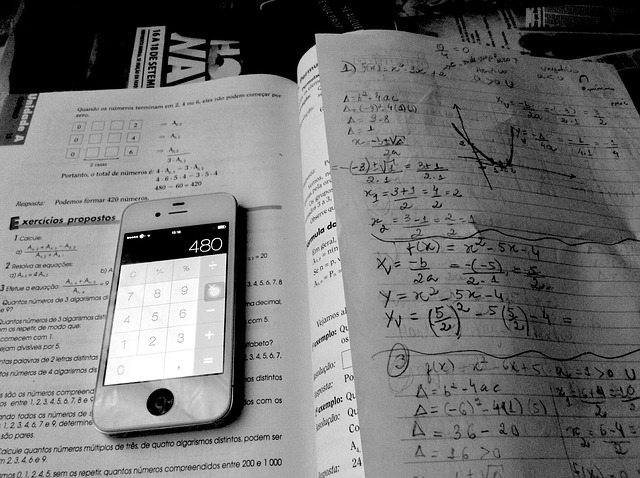
In this module you will take your Exam 2 or Exam 3. [revise as needed]
Read the Exam 2 or Exam 3 Information and Instructions page carefully and take note of any special submission guidelines.
Upon completion of this module, you will have:- Read and view the Exam 2 or Exam 3 Information and Instructions page
- Schedule your exam with the proctoring service [if applicable, delete if not needed]
- Post in the Exam 2 or Exam 3 Q&A Discussion Forum - link provided below.
- Prepare for and submit your Exam 2 or Exam 3 [revise as needed]
- Upload your work in the Exam 2 or Exam 3 Work Upload Assignment using the submission link below.
Attribution of image: ("Iphone, Math, Studying image. Free for use." Pixabay.com. https://pixabay.com/photos/iphone-math-studying-2418042/)Adopting instructors: Edit the Exam 2 or Exam 3 Information and Instructions page.
-
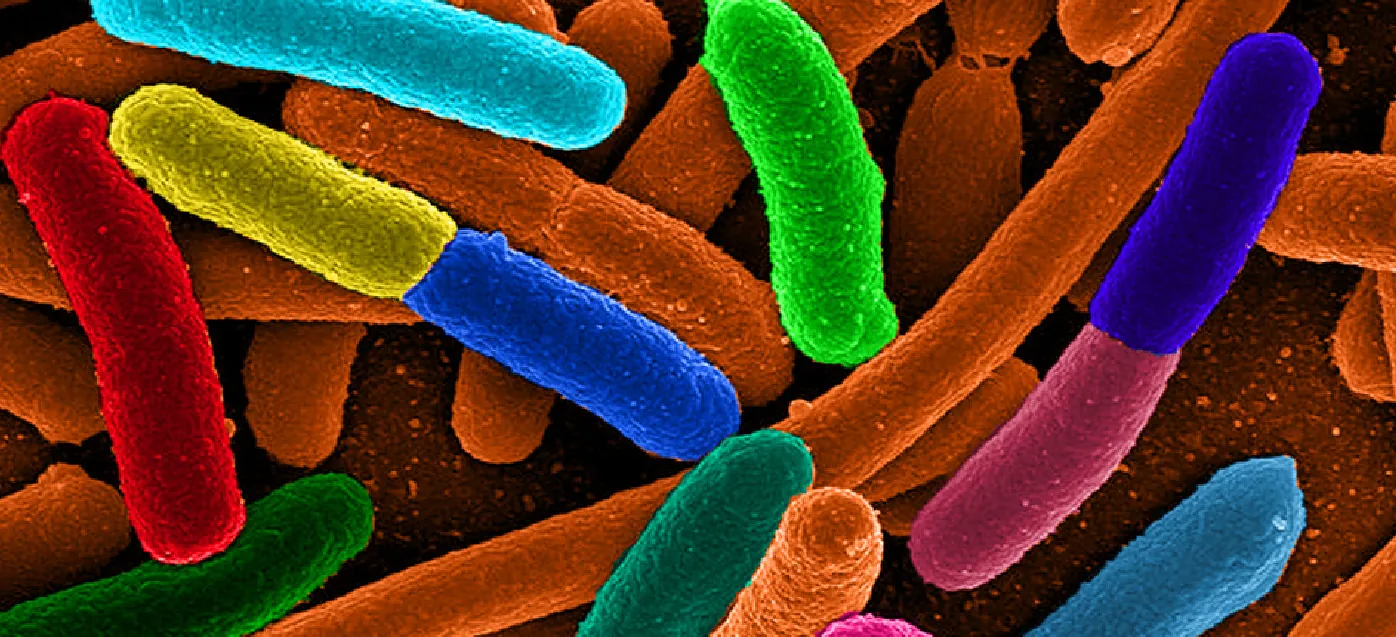
Focus in on a square centimeter of your skin. Look closer. Closer still. If you could look closely enough, you would see hundreds of thousands of microscopic organisms. They are bacteria, and they are not only on your skin, but in your mouth, nose, and even your intestines. In fact, the bacterial cells in your body at any given moment outnumber your own cells. But that is no reason to feel bad about yourself. While some bacteria can cause illness, many are healthy and even essential to the body.
Bacteria commonly reproduce through a process called binary fission, during which one bacterial cell splits into two. When conditions are right, bacteria can reproduce very quickly. Unlike humans and other complex organisms, the time required to form a new generation of bacteria is often a matter of minutes or hours, as opposed to days or years (Todar, PhD, Kenneth. Todar's Online Textbook of Bacteriology. http://textbookofbacteriology.net/growth_3.html).
For simplicity’s sake, suppose we begin with a culture of one bacterial cell that can divide every hour. We would see that the single bacterial cell leads to over one thousand bacterial cells in just ten hours! And if we were to extrapolate to twenty-four hours, we would have over 16 million!
In this chapter, we will explore exponential functions, which can be used for, among other things, modeling growth patterns such as those found in bacteria. We will also investigate logarithmic functions, which are closely related to exponential functions. Both types of functions have numerous real-world applications when it comes to modeling and interpreting data.Image Caption: Electron micrograph of E.Coli bacteria (credit: “Mattosaurus,” Wikimedia Commons)(Content & Image Source: Chapter 6 Introduction, College Algebra with Corequisite Support 2e, Jay Abramson & Sharon North, OpenStax, CC BY 4.0 License)
Upon completion of this module, you will be able to:
Section 6.R Percent Applications (For use with co-requisite support)- Solve applications of percent
- Find percent increase and percent decrease
- Solve sales tax applications
- Solve commission applications
- Solve discount applications
- Solve mark-up applications
Section 6.1 Exponential Functions
Section 6.2 Graphs of Exponential Functions- Evaluate exponential functions. (CLO4, CLO5)
- Find the equation of an exponential function. (CLO4, CLO5)
- Use compound interest formulas. (CLO2, CLO4, CLO5)
- Evaluating Functions with Base e. (CLO4, CLO5)
- Graph exponential functions. (CLO4, CLO5)
- Graph exponential functions using transformations. (CLO4, CLO5)
Section 6.3 Logarithmic FunctionsSection 6.4 Graphs of Logarithmic Functions- Convert from logarithmic to exponential form. (CLO4, CLO5)
- Convert from exponential to logarithmic form. (CLO4, CLO5)
- Evaluate logarithms. (CLO4, CLO5)
- Use common logarithms. (CLO4, CLO5)
- Use natural logarithms. (CLO4, CLO5)
Section 6.5 Logarithmic Properties- Identify the domain of a logarithmic function. (CLO4, CLO5)
- Graph simple logarithmic functions. (CLO4, CLO5, CLO6)
- Graphing transformations of Logarithmic Functions. (CLO4, CLO5, CLO6)
Section 6.6 Exponential and Logarithmic Equations- Use the product rule for logarithms. (CLO4, CLO5)
- Use the quotient rule for logarithms. (CLO4, CLO5)
- Use the power rule for logarithms. (CLO4, CLO5)
- Expand logarithmic expressions. (CLO4, CLO5)
- Condense logarithmic expressions. (CLO4, CLO5)
- Use the change-of-base formula for logarithms. (CLO4, CLO5, CLO6)
Section 6.7 Exponential and Logarithmic Models- Use like bases to solve exponential equations. (CLO3, CLO4, CLO5)
- Use logarithms to solve exponential equations. (CLO3, CLO4, CLO5)
- Use the definition of a logarithm to solve logarithmic equations. (CLO3, CLO4, CLO5)
- Use the one-to-one property of logarithms to solve logarithmic equations. (CLO3, CLO4, CLO5)
- Solve applied problems involving exponential and logarithmic equations. (CLO3, CLO4, CLO5, CLO6)
- Model exponential growth and decay. (CLO3, CLO4, CLO5, CLO6)
- Use Newton’s Law of Cooling. (CLO3, CLO4, CLO5, CLO6)
- Use logistic-growth models. (CLO3, CLO4, CLO5, CLO6)
- Choose an appropriate model for data. (CLO3, CLO4, CLO5, CLO6)
- Express an exponential model in base e. (CLO3, CLO4, CLO5, CLO6)
(Note: Alignment of MLOs might be needed if this course is taught as a co-requisite.)To achieve these objectives:- Read the Module 7 Introduction (see above).
- Read Sections 6.R - 6.7 of Chapter 6: Exponential and Logarithmic Functions in Applied Algebra (links to each Section provided below)
- At the end of each Section there is a list of Key Concepts, Section Exercises, and a Glossary of terms
- At the end of each Section there is a list of Key Concepts, Section Exercises, and a Glossary of terms
- Complete the MyOpenMath Homework Assignments for each Section (links provided below) - These are graded!
- Complete the MyOpenMath Quizzes for Chapter 6 (link provided below) - This is graded!
- Once you complete the Quiz, upload your work in the Quiz for Chapter 6 Work Upload Assignment using the submission link below.
- Post in the Chapter 6 Q&A Discussion Forum - link provided below.
- Complete the Digital Skills - Using the online graphing calculator (Chapter 5) (link provided below) - This is graded!
- Complete the Digital Skills - Using AI for math help (Chapter 5) (link provided below) - This is graded!
- Complete the Digital Skills - AI reliability, final reflection post (Chapter 5) (link provided below) - This is graded!
Note the check boxes to the right that help you track your progress: some are automatic, and some are manual.Module Pressbooks Resources and Activities
You will find the following resources and activities in this module at the Pressbooks website. Click on the links below to access or complete each item.
For select assessments in this course, students will be allowed to use the following links to online graphing calculators:
- Desmos Calculator
- TI-84 Calculator Online (free version, but not sure how long it will stay active)
- TI-84 Plus CE (*Note: This link requires a paid subscription to be purchased by the student using a credit card.)
-
-
-
Students mustMark as done
-
-
-
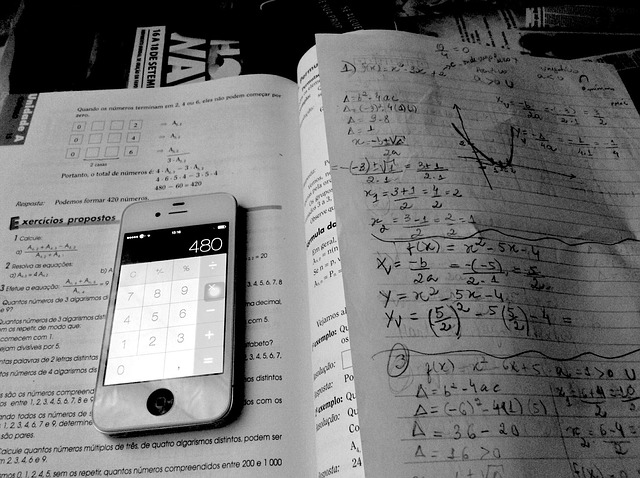
In this module you will take your Final Exam. [revise as needed]
Read the Final Exam Information and Instructions page carefully and take note of any special submission guidelines.
Upon completion of this module, you will have:- Read and view the Final Exam Information and Instructions page
- Schedule your exam with the proctoring service [if applicable, delete if not needed]
- Post in the Final Exam Q&A Discussion Forum - link provided below.
- Prepare for and submit your Final Exam [revise as needed]
- Upload your work in the Final Exam Work Upload Assignment using the submission link below.
Attribution of image: ("Iphone, Math, Studying image. Free for use." Pixabay.com. https://pixabay.com/photos/iphone-math-studying-2418042/)Adopting instructors: Edit the Final Exam Information and Instructions page.
Background Colour
Font Face
Font Kerning
Font Size
Image Visibility
Letter Spacing
Line Height
Link Highlight
Text Colour