
Environmental Science
Section outline
-
Welcome to Environmental Science (Course #)!
Course Introduction
This course provides an overview of environmental science principles, important global concerns, and current issues in Louisiana. This course provides a brief history of environmental ethics, eco-friendly resource utilization such as water, soil, air, renewable and non-renewable energy, environmental preservation, principles of biodiversity, and ecological conservation. There is an emphasis on fundamental principles of resource socioeconomics, energy and sustainability, water and land, green best practices for effective conservation, applicable case studies, and environmental health.
Upon successful completion of this course, the student will be able to:
- Chapter 1: Introduction [Course Learning Objective: Explain the interdisciplinary nature and sustainability principles of environmental science.
- Chapter 2: Water, Soil, and Air [Course Learning Objective: Explain how air, water, and soil quality management are important for a clean and healthy atmosphere.]
- Chapter 3: Biodiversity [Course Learning Objective: Discuss the factors impacting biodiversity at the local, national, and global levels.]
- Chapter 4: Renewable and Non-renewable Energy Sources [Course Learning Objective: Differentiate between the positive and negative aspects of nonrenewable and renewable energy sources.]
- Chapter 5: Biodegradable and Non-Biodegradable Waste [Course Learning Objective: Critique overall waste management strategies taken by government agencies and non-profit organizations.]
- Chapter 6: Environmental Hazards and Toxicology [Course Learning Objective: Describe various types of environmental hazards and toxins and their effect on biota].
- Chapter 7: Biochemical Cycles [Course Learning Objective: Describe or explain various concepts involved in nutrient cycling.
- Chapter 8: Global Climate and Greenhouse Gases [Course Learning Objective: Describe or explain how human activities contribute to the influx of greenhouse gases in the Earth.
- Chapter 9: Impact of Environmental Health on Public Health [Course Learning Objective: Explain how environmental health affects public health]
- Chapter 10: Global Nutrition, Starvation, and Malnutrition [Course Learning Objective: Explain factors that influence global nutrition, starvation, and malnutrition.]
- Chapter 11: Environmental Justice [Course Learning Objective: Reflect on the role of humans regarding environmental justice.]
Structure of the Course
This course has 11 educational modules addressing the major concepts in environmental science. Each module includes a link to the corresponding Pressbook chapter, an assignment, and a discussion post. There are 2 additional modules for the midterm exam and final exam. Please feel free to add modules and materials as needed.
Navigating the Course
This course is set up in Modules covering various topics which may be accessed from the course navigation menu on the left or by scrolling below. Modules may be collapsed in the menu and it the body of the course to minimize scrolling. Each module includes the relevant chapters followed by various activities, which may include discussion forums, listening activities and quizzes, practice quizzes, module tests, and other relevant activities as appropriate for each module. Many items are required and may be marked as completed automatically when the activity has been submitted (the broken check box), but others will be marked as done by the student (the solid check box).
Please move through the items below and continue through the Learner Support and Getting Started modules before moving on to Module 1. Be sure to check for announcements and due dates to stay on track.Attribution
This course was developed by Waneene Dorsey, Adronisha Frazier, John Galiotos, Murty Kambhampati, and Soma Mukherjee. This course and its contents are licensed under a Creative Commons Attribution 4.0 International License by LOUIS: The Louisiana Library Network, except where otherwise noted. -
-
-
-
This module contains all the items you should review and complete before you begin Module 1. Before moving on, be sure to:
- Check the News and Announcements Forum
- Read the Course Syllabus
- Introduce yourself to the class
- Read the instructions for the Q & A Forum
Good luck in the course!-
This forum contains general news and announcements. You can find all announcements listed in the "Latest News" block in Course Tools within this course or on your My Courses page.
-
-
Students mustMark as done
Use this forum to tell us a little about yourself and your interests. Some topic ideas:
- What is your field of study/research interest or concentration?
- What are you most interested in learning about in this class and why?
- Have you ever taken an online class before?
- Any other information you would like to share with your classmates, such as special interests or activities.
Post a picture! We look forward to meeting you.
-
Students mustMark as done
Use this forum to ask your instructor any questions you have about the course. You may post at any time, and your instructor will respond here. Be as specific as possible.
Please keep in mind that others can see your posts, so do not post any personal information. If you have questions about your grade, please email your instructor directly. You can expect a response to posts and emails within [X] hours. [Recommendation is 24 hours M-F, next business day on weekends.]
Subscription should be set to Auto.
- Check the News and Announcements Forum
-
Use the information in this module to customize the template to your needs. This module is currently hidden from students, and available for you to refer to throughout the semester.
-
The final report details the standards applied and improvements made to this course under the Quality Matters review.
-
-

Image: Eric Vance/Environmental Protection Agency via Wikimedia Commons, Public Domain
Chapter 1: Introduction provides an overview of the major concepts in environmental science. The authors of this chapter are experts in their respective science disciplines and contributed content accordingly. The module addresses the interdisciplinary nature of environmental science, the biosphere, biodiversity, demography, environmental hazards and waste, energy sources, agriculture, nutrient cycling, climate change, and environmental quality, ethics, and justice. The goal is to enhance your understanding of the world around you by expanding on scientific concepts and impacts of human behavior on the environment. The above image shows Environmental Protection Agency (EPA) employees conducting a biological stream assessment (Public Domain: EPA).
Module Goals and Objectives
Upon completion of this module, you will be able to:- Trace the history of environmental science at local and global levels, the role of environmental science as an interdisciplinary subject, and interrelationships with other Science, Technology, Engineering, and Mathematics (STEM) fields. (Course Outcome(s) #1)
- Define characteristics of all living beings (biota) based on the six kingdoms, their role in ecosystems, and their interaction with non-living (abiotic) factors, including the hydrologic cycle and the biogeochemical cycle of major elements (C, N, P, and S). (C. O. #7, 8)
- Describe renewable and non-renewable energy resources. (C.O. # 4)
- Identify environmental hazards and describe their toxic effects. (C.O. # 6)
- Differentiate between biological, physical, and chemical stressors in the environment, and their effects on biodiversity and natural resources. (C. O. # 3)
- Explain the role of human beings in modifying ecosystems, and human impacts on global warming, agriculture, food, nutrition, starvation, and environmental justice. (C.O. # 9, 10)
To achieve these objectives:- Read the Module 1 Introduction.
- Review the Slide Presentation for this module.
- Read Chapter 1 in Pressbooks and complete all included activities.
- Complete all activities, assessments, and discussions in this module.
Note the check boxes to the right that help you track your progress: some are automatic, and some are manual.
-
Students mustMark as done
Please read and review the Introduction chapter in the course textbook and complete all embedded activities.
-
Students mustMark as done
This file shows the Chapter 1 PowerPoint Presentation slides. Click on the file name to download and view the file.
3.9 MB -
Students mustMark as done
This page shows links to supplemental resources for Chapter 1 content.
-
-
- Trace the history of environmental science at local and global levels, the role of environmental science as an interdisciplinary subject, and interrelationships with other Science, Technology, Engineering, and Mathematics (STEM) fields. (Course Outcome(s) #1)
-

Image: a) Adonisha Frazier, CC-BY; b) Marvin Nauman/National Archives, CC0; c) Wes Muller/La. Illuminator, CC-BY-NC-ND
Water is a very important commodity for human life and survival. We need to consume it to stay alive and use it to clean our food, utensils, clothes, bodies, and surrounding to prevent disease. Unfortunately, this same water is responsible for about 80% of all diseases in developing countries and over three million deaths a year globally. Soil is an essential and one of the crucial oikos (home) of living organism. Its composition determines the distribution of plant, animal species also determines the physical and chemical nature of rocks, landforms, and rivers.
Module Goals and Objectives
Upon completion of this module, you will be able to:- Explain the hydrologic cycle and its importance for living organisms.
- Classify the different types of water and their availability for human consumption.
- Explain the world's environmental need for water management to prevent water scarcity.
- Identify how water is being polluted.
- Explain how burning fossil fuel contribute to pollutants in the environment.
- Acknowledge how air quality management is important for a clean and healthy atmosphere.
These outcomes address course learning objectives # 1, 2, 6, 9, and 11.
To achieve these objectives:
- Read the Module 2 Introduction.
- Review the Slide Presentation for this module.
- Read Chapter 2 in Pressbooks and complete all embedded activities.
- Complete assignments, discussions, and assessments in this module.
-
Students mustMark as done
This file shows the Chapter 2 PowerPoint Presentation slides. Cllick on the file name to download and access the file.
-
Students mustMark as done
Below please find the textbook chapter on Water, Soil & Air Quality. Please read the whole chapter and complete the embedded h5p activities.
-
Opened: Sunday, December 17, 2023, 10:26 PMDue: Sunday, December 17, 2023, 10:26 PMStudents mustMark as done
Instructions
This assignment addresses course outcome(s) X and module learning objective(s) X
Explain how (a) water, soil, and air are interrelated and (b) their critical role on living beings. (Points: 10; Word limit: 100 – 125; please do manual spell check before submission on Canvas).
-
-
 Image: Waneen C. Dorsey/Grambling State University, CC-BY-NCBiodiversity refers to the variety of living species on Earth. It encompasses a vast network of both simple and complex organisms, with estimates ranging from about five million to one trillion and beyond. This network provides nature with clean water, air, fertile soil, climate control, possible remedies, food and nutrition, recreation and restoration, and stimulated inspiration. However, this important living network is vulnerable and in danger. Millions of plant and animal species are at risk of extinction and/or gradual elimination. The intensive extraction of certain components of biodiversity in the name of growth and development has greatly impacted our ecological and natural living equilibrium. To avoid irreversible natural disasters, the decline of biodiversity must be stopped immediately. This will provide time and the much-needed opportunity to restore biological complexities, and ecosystems that have been impacted.
Module Goals and Objectives
Upon completion of this module, you will be able to:- Describe methods and techniques used to measure and assess biodiversity, including species richness, species abundance, and diversity indices.
- Identify and analyze various threats to biodiversity, such as habitat loss, pollution, climate change, invasive species, and overexploitation.
- Discuss and evaluate conservation strategies and management practices aimed at preserving biodiversity, such as protected areas, habitat restoration, sustainable resource management, and captive breeding programs.
- Identify techniques for monitoring population dynamics, distribution, and abundance of species.
These outcomes address course learning objectives #1, 2, 3, 5, 6, and 11.
To achieve these objectives:- Read the Module 3 Introduction.
- Review the Slide Presentation for this module
- Read Chapter 3 in Pressbooks.
- Complete all assignments, discussions, and assessments for this module as listed below.
-
Students mustMark as done
This file is the Chapter 3 PowerPoint Presentation.
-
Students mustMark as done
Please read the entire chapter on Biodiversity and complete all of the included h5p activities.
-
-

Image: Nuclear Regulatory Commission via Flickr, Public Domain
Living organisms need energy to perform life-sustaining “work” to survive. For nearly all living systems on Earth, the sun is the ultimate source of that energy. Over time, we humans have developed an understanding of energy that has allowed us to harness it for uses well beyond basic survival. The development and evolution of human society are largely attributed to our relationship with energy. The first major advancement in human understanding of energy was the mastery of fire for cooking and heating. Modern civilization is especially dependent on energy and some of its most distinct characteristics such as population growth, environmental impact, and climate change are all a consequence of energy use. We use energy to heat and light our homes; power our machinery; fuel our vehicles; produce plastics, pharmaceuticals, and synthetic fibers; and provide the comforts and conveniences to which we have grown accustomed in the industrial age. Societal complexity, affluence, and the gap between poor and rich people are all directly related to our level of energy consumption.
Module Goals and Objectives
Upon completion of this module, you will be able to:
- Define energy and explain its properties.
- List specific examples of non-renewable energy sources.
- Describe the types of non-renewable sources utilized for energy extraction and how these sources are formed.
- Describe arguments for non-renewable energy.
- List specific examples of renewable energy sources.
- Describe the advantages and disadvantages of renewable energy sources (i.e., solar, wind, hydroelectric, and geothermal)
- Describe arguments for renewable energy.
- Explain innovative practices of energy implementation in the digital age.
These outcomes address course objectives #1, 4, 6, 8, 10, and 11.
To achieve these objectives:
- Read the Module 4 Introduction
- Read Chapter 4 in Pressbooks.
- Complete any activities, discussions, or assessments included in this module.
-
Students mustMark as done
Please review the textbook chapter on Renewable and Non-renewable Resources. Please read the entire chapter and complete the included h5p activities.
-

Image: Thzorro77 via Wikimedia Commons, CC-BY-SA
Waste from various sources is an increasing concern for the environment as the amount of waste we produce daily is enormous. Biodegradable waste is substances that can be decomposed or degraded by microorganisms and other living organisms. These substances are mainly added to the environment from plant and animal sources. Some biodegradable substances are decomposed easily in the natural environment, and some take a long time to degrade. Non-biodegradable waste is mainly inorganic substances such as plastics, cans, chemicals, bottles, etc. Both biodegradable and non-biodegradable waste has some adverse effect on the environment as both cause pollution that makes our habitat inhabitable. Billions of tons of waste are generated every year.
Module Goals and Objectives
Upon completion of this module, you will be able to:- Critique biodegradable and non-biodegradable substances that are constantly being added to the environment.
- Explain the amount of biodegradable waste produced by humans from agriculture and non-agricultural sources.
- Describe different kinds of non-biodegradable substances that are increasing in our environment.
- Explain the importance of plastic pollution as nanoplastics are creating a different level of pollutants in our environment.
- Explain environmental pollutants in terms of organic and inorganic substances and cumbersome metal generation.
- Describe how municipality waste is becoming an environmental hazard.
- Examine overall waste management strategies taken by the government and non-profit organizations.
These outcomes correspond to course learning objectives #1, 2, 3, 4, 5, 6, and 11.
To achieve these objectives:- Read the Module 5 Introduction
- Review the Slide Presentation for this module.
- Read Chapter 5 in Pressbooks and do all included activities.
- Complete any assignments, discussions, or assessments listed below.
-
Students mustMark as done
This file links to the Chapter 5 PowerPoint Presentation.
-
Students mustMark as done
Please review the textbook chapter on Biodegradable and Nonbiodegradable Waste. Please read the entire chapter and do all included h5p activities.
-

Image: Clemenspool via Wikimedia Commons, CC0
A wide range of environmental hazards we come across in almost all habitats and public and private properties including, but not limited to, the work place, construction areas, parks and recreational areas, industries, and living beings. All living beings experience them directly or indirectly in their habitats – local, state, regional, national, and international. Environmental hazards can also be classified into three interrelated categories (biological, chemical, and physical) based on the properties of their causes and interactive behavior.
Toxicology deals with a variety of chemical hazards that operate over longer periods of time (rather than as events), and they include climatic factors and many kinds of chemical and thermal pollution. Depending on the intensity of exposure, organisms may suffer acute toxicity resulting in tissue damage or even death, or a less-obvious chronic damage that results in decreased productivity (source: B. Freedman). For instance, excessive levels of sulfur dioxide emit from the industries into the atmosphere will reduce the productivity of vegetation and its quality or even loss of vegetation.
Upon completion of this module, you will be able to:- Describe the various types of environmental hazards.
- Explain the causes of hazards and how biota respond to changes in ecosystems.
- Differentiate natural and anthropogenic hazards with examples.
- Explain the differences among various types of environmental hazards.
- Explain the most common natural and man-made hazards in the state of Louisiana.
These outcomes address course learning objectives #1, 3, 6, 8, 9, 10, and 11.
To achieve these objectives:
- Read the Module 6 Introduction.
- Review the Slide Presentation for this module.
- Read Chapter 6 in Pressbooks and complete any included activities.
- Complete the Chapter 6 Focused Reading Quiz.
- Complete any assignments, discussions, or assessments for the module.
-
-
Students mustMark as done
Please read the textbook chapter on Environmental Hazards and Toxicology and complete all included h5p activities.
-
-
-

Image: Waneene C. Dorsey/Grambling State University, CC-BY-NC
Biochemical cycles refer to the processes through which essential elements are circulated among all living organisms on Earth. Once common elements move through the atmosphere, lithosphere, and biosphere, they can take on various chemical forms. Six elements are consistently recycled in organic molecules, namely: carbon, hydrogen, nitrogen, oxygen, phosphorus, and sulfur. These elements play a vital role in sustaining life on Earth. For instance, carbon is a key element that forms the backbone of organic macromolecules. Nitrogen, on the other hand, is a critical component of nucleic acids such as DNA and RNA and is important for agriculture. Phosphorus is a key constituent in the backbone of the DNA and RNA structures. Hydrogen and oxygen can be found in water as it changes forms as a liquid, vapor, or ice. Lastly, sulfur is the main constituent of protein and is also released through different layers of the ecosystem. The picture shows how carbon, nitrogen, and phosphorus nutrients are in a continuous cycle on the planet Earth.
Module Goals and Objectives
Upon completion of this module, you will be able to:
- Explain what nutrients are and give examples.
- Discuss the concept of nutrient cycling and describe important compartments and fluxes.
- Describe factors that affect the development of major soil types.
- Describe the cycles of carbon, nitrogen, phosphorus, and sulfur.
To achieve these objectives:
- Read the Module 7 Introduction.
- Review the Slide Presentation for this module.
- Read Chapter 7 in Pressbooks and complete all included activities.
- Complete any assignments, discussions, or assessments listed below.
-
Students mustMark as done
This document shows the Chapter 7 PowerPoint Presentation slides.
-
Students mustMark as done
Please read the textbook chapter on Biochemical Cycling and complete all of the included h5p activities.
-

Image: Paul Becker via Wikimedia Commons, CC-BY
In this section, we will discuss how the natural greenhouse effect on Earth helps to keep the planet's surface warm and the role played by greenhouse gases (GHGs) in this process. GHGs work by reducing the rate at which Earth can release the absorbed solar radiation, thereby maintaining the temperature of the planet. However, the concentration of GHGs, especially carbon dioxide, has been increasing due to human activities, which can potentially intensify the greenhouse effect and cause global warming. This change could have severe consequences for the environment as well as the human economy and natural ecosystems.
Module Goals and Objectives
Upon completion of this module, you will be able to:
- Outline the physical basis of Earth’s greenhouse effect and describe how human influences may be causing it to intensify.
- Explain the term greenhouse gas (GHG).
- Describe how the various GHGs vary in their effectiveness and influence on the greenhouse effect.
- Identify which GHGs have been increasing in concentration in the atmosphere and give the reasons for those changes.
- Explain the probable climatic consequences of an intensification of the greenhouse effect and describe possible economic and ecological effects.
Discuss strategies for reducing the intensity of the human influence on the greenhouse effect.
These outcomes address course learning objectives #1, 2, 3, 6, 8, 9, 10, and 11.
To achieve these objectives:- Read the Module 8 Introduction.
- Review the Slide Presentation for this module.
- Read Chapter 8 in Pressbooks and complete any included activities.
- Complete any assignments, discussions, or assessments listed below.
-
Students mustMark as doneThis file shows the Chapter 8 PowerPoint Presentation slides.
-
Students mustMark as done
Please read the textbook chapter on Global Climate and Greenhouse Gases and complete all included h5p activities.
-
Students mustMark as done
Guidelines for how to import content into Moodle
-

Image: David Berkowitz via Flickr, CC-BY
Public health is a very broad field that covers several fields of science, technology, mathematics, engineering, nutrition, health, transportation, education, medicine, politics, environmental health, hazards, infectious diseases, pandemics, the quality of air, soil, and water, etc. All these fields interact with each other and inter-dependent on the quality of other fields at any given point of time. Hence, public health is considered as model interdisciplinary subject.
Module Goals and Objectives
Upon completion of this module, you will be able to:
- Explain the difference between environmental health and public health.
- Describe how environmental factors interact in soil, water, air, and living beings.
- Explain how environmental pollution impacts public health.
- Explain how environmental and public health relates to the economy.
- Explain the role of government on environmental and public health.
These outcomes address course learning objectives #1, 2, 5, 6, 8, 9, 10, and 11.
To achieve these objectives:- Read the Module 9 Introduction.
- Read and view the materials in the Module 9 Slide Presentation.
- Read Chapter 9 in Pressbooks and complete any included activities.
- Complete the posted assignments, assessments, and discussion topics.
-
Students mustMark as done
This file shows the Chapter 9 PowerPoint Presentation slides.
-
Students mustMark as done
Please read the textbook chapter on the Impact of Environmental Health on Public Health and complete all included activities.
-
-
-
Opened: Saturday, September 23, 2023, 12:00 AMDue: Saturday, September 30, 2023, 12:00 AMStudents mustMark as done
-
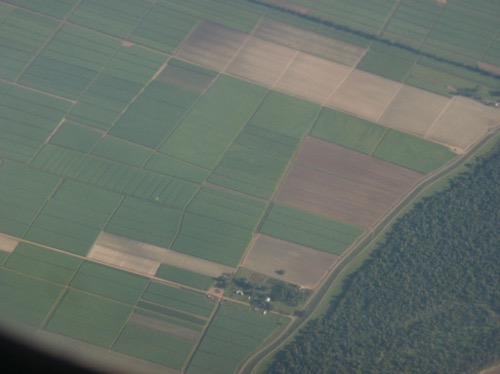
Image: Ken Lund via Wikimedia Commons, CC-BY-SA
Agriculture was probably first practiced in the Fertile Crescent, a region of southwestern Asia that includes parts of what are now Iran, Iraq, Israel, Jordan, Lebanon, Syria, and Turkey. Similar developments likely occurred at about the same time in China, although the archaeological evidence is less clear. Other cultures discovered the benefits of agriculture later through the domestication of local species of plants and animals (for instance, in parts of Central America, western South America, and New Guinea). However, in other regions, domesticated species were mostly imported from elsewhere, as occurred in Australia, Europe, and North America.
Module Goals and Objectives
Upon completion of this module, you will be able to:
- Define domestication and relate it to humans, crops, and livestock.
- List the most important plants and animals in agriculture; provide an overview of the management systems used in their cultivation.
- Explain how organic agriculture uses a more ecological approach to the cultivation of crops.
- Explain the difference between macronutrients and micronutrients.
- Explain the four pillars of food security.
- Provide an overview of the factors leading to global starvation and malnutrition.
- Describe global, national, and state strategies to address nutrition challenges.
- Identify nutritional connections between human health and environmental factors.
These outcomes address course learning objectives #1, 2, 3, 7, 8, 9, 10, and 11.
To achieve these objectives:- Read the Module 10 Introduction
- Review the Module 10 Slide Presentation.
- Read Chapter 10 in Pressbooks and complete all included activities.
- Complete any assignments, discussions, and assessments listed below.
-
Students mustMark as done
This file shows the Chapter 10 PowerPoint Presentation slides.
-
Students mustMark as done
Please read the textbook chapter on Global Nutrition, Starvation, and Malnutrition and complete all included h5p activities.
-

Image: Ivan Radic via Flickr, CC-BY
As the closing chapter of this textbook, it is imperative to discuss the social and economic impacts related to the covered environmental topics in chapters 1–10. This section defines environmental justice and the need for implementing it in all spaces. This section also highlights case studies demonstrating environmental inequities.
Module Goals and Objectives
Upon completion of this module, you will be able to:
- Explain the significance of environmental justice in the context of environmental science.
- Define environmental ethics and how communities are affected in decision-making.
- Differentiate between the environmental worldviews.
- Explain significant incidents of environmental injustice (i.e., environmental racism).
- Explain the interconnectedness of social, economic, and environmental factors relating to environmental justice.
To achieve these objectives:
- Read the Module 11 Introduction.
- Review the Slide Presentation for this module.
- Read Chapter 11 in Pressbooks.
- Complete all activities, discussions, and assessments listed below.
-
Students mustMark as done
This file shows the Chapter 11 PowerPoint Presentation.
-
Students mustMark as done
Please read the textbook chapter on Environmental Justice and complete all included activities.
Background Colour
Font Face
Font Kerning
Font Size
Image Visibility
Letter Spacing
Line Height
Link Highlight
Text Colour