
Math for Elementary Teachers
Section outline
-
Welcome to [INSTRUCTOR - PUT YOUR COURSE TITLE HERE]
Course Introduction [INSTRUCTOR - EDIT THIS SECTION AS NEEDED]
Welcome to Mathematics for Elementary Teachers, a course designed to build your confidence and deepen your understanding of essential mathematical concepts that you will one day teach. This course emphasizes number relations and operations, helping you explore how mathematical principles work conceptually, not just procedurally. You’ll investigate different counting and numbering systems, build fluency in basic operations (addition, subtraction, multiplication, and division), and develop flexible problem-solving strategies. The goal is not only to solve problems but to understand the why behind the methods—an approach critical for effective mathematics instruction in elementary classrooms.
Throughout the course, you’ll work with several number systems including whole numbers, integers, and fractions. You’ll strengthen your number sense by estimating and verifying solutions across multiple representations, while also exploring the connections between natural numbers, whole numbers, integers, and rational numbers. This conceptual grounding supports your ability to teach math as a coherent and connected discipline. You’ll use a variety of strategies and tools—both traditional and technological—to solve problems and support diverse learners.
This course is aligned primarily with Louisiana Student Standards for Mathematics and secondly with the National Council of Teachers of Mathematics (NCTM) standards. As a future educator, you’ll learn to connect course content directly to these frameworks while practicing clear and accurate mathematical communication—both written and verbal. By the end of the course, you’ll be able to explain mathematical ideas effectively, align lessons with standards, and apply problem-solving strategies with confidence, preparing you to become a skilled and reflective mathematics teacher.
Upon successful completion of this course, the student will be able to:- Demonstrate conceptual understanding of important mathematical principles such as number relations and number operations and use this understanding to solve related problems.
- Demonstrate a deep understanding of mathematics connecting course content to state and national standards.
- Formulate appropriate problem-solving strategies for a variety of problems.
- Demonstrate using digital tools to create accurate mathematical representations and explain the underlying concepts and problem-solving processes.
Adopting institution should provide learners information on how to navigate the course. Consider adding an introductory navigation video. Text description could include, for example:Structure of the Course
There are ten modules for this course.
Each module contains the following:
- Reading and practice skills from the OER textbook entitled Math for Elementary Teachers.
- Assignments reinforcing the OER textbook to be completed in the MyOpenMath online program.
- A student forum to complete and respond to other submissions from fellow classmates.
Navigating the Course
This course is set up in Modules covering various topics which may be accessed from the course navigation menu on the left or by scrolling below. Modules may be collapsed in the menu and it the body of the course to minimize scrolling. Each module includes the relevant OER Textbook reading and practice skills followed by assessments which include assignments in MyOpenMath and discussion forums for each module.Please move through the items below and continue through the Learner Support and Getting Started modules before moving on to Module 1.IMPORTANT! - Be sure to check for announcements and due dates to stay on track.This course and its contents are remixed and developed by the authors:- Elizabeth Miller
- Dr. Heather Gamel
- Dr. Jane Chunjing Ji
- Dr. Julie Sullivan
- Tara LaFrance
- Bill French, MLIS
It is licensed under Attribution-NonCommercial 4.0 International by LOUIS: The Louisiana Library Network, except where otherwise noted. CC BY-NC 4.0The original text remixed by the above authors is attributed to Julie Harland.Many images for this course were generated using the Amplify Polypad platform. Visit Amplify Classroom for free lessons, lesson-building tools, and Polypad virtual manipulatives. The content of this course is not affiliated with, sponsored by, or endorsed by Amplify or any of its licensors. Amplify®, Amplify Classroom™, and related trademarks are the property of Amplify Education, Inc. -
Adopting instructors should edit all pages in this module to reflect their institution's policies.
-
This module contains all the items you should review and complete before you begin Module 1. Before moving on, be sure to:
- Check the News and Announcements Forum
- Read the Course Syllabus
- Introduce yourself to the class
- Read the instructions for the Q & A Forum
- Review academic integrity expectations in the course
Good luck in the course!-
This forum contains general news and announcements. You can find all announcements listed in the "Latest News" block in Course Tools within this course or on your My Courses page.
-
Students mustMark as done
Use this forum to tell us a little about yourself and your interests. Some topic ideas:
- What is your field of study/research interest or concentration?
- What are you most interested in learning about in this class and why?
- Have you ever taken an online class before?
- Any other information you would like to share with your classmates, such as special interests or activities.
Post a picture! We look forward to meeting you.
-
Students mustMark as done
[INSTRUCTOR - Can delete this section or modify as needed]
Use this forum to ask your instructor any questions you have about the course. You may post at any time, and your instructor will respond here. Be as specific as possible.
Please keep in mind that others can see your posts, so do not post any personal information. If you have questions about your grade, please email your instructor directly. You can expect a response to posts and emails within [X] hours. [Recommendation is 24 hours M-F, next business day on weekends.]
Subscription should be set to Auto.
-
Instructor: Provide specific and contextualized information about how students can comply with institutional academic integrity policies and standards as they complete assessments in the course.
-
This module is designed to help you explore rounding and basic arithmetic operations with fractions, decimals, and precents.
Upon completion of this module, you will be able to:- Analyze and work proficiently with fractions, decimals, and percentages.
- Apply problem-solving strategies to a variety of mathematical problems.
- Be able to connect the current Louisiana Students Standards, and NCTM standards to course content.
- Express mathematical ideas clearly and correctly both orally and in writing, for purposes of mathematics instruction.
To achieve these objectives:- Read the sections below and work the embedded exercises within them.
- Complete MyOpenMath homework for this module.
- Complete the discussion forum for this module.
Module Pressbooks Resources and Activities
You will find the following resources and activities in this module at the Pressbooks website. Click on the links below to access or complete each item.
- Analyze and work proficiently with fractions, decimals, and percentages.
-
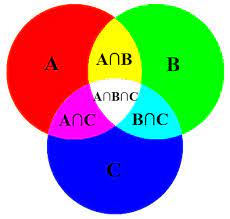
This module is designed to help you explore set theory. Have you ever collected anything? If so, what? Name some things people might collect, including anything people in your family collect. Sets are like collections, they are organized and described by characteristics.
Upon completion of this module, you will be able to:- Utilize number sense to estimate, solve, and check various problems involving different sets of numbers.
- Utilize number sense to estimate, solve, and check various problems involving different sets of numbers.
- Be able to connect the current Louisiana Students Standards, and NCTM standards to course content.
- Express mathematical ideas clearly and correctly both orally and in writing, for purposes of mathematics instruction;
- Apply problem-solving strategies to a variety of mathematical problems
To achieve these objectives:
- Read the sections below and work the embedded exercises within them.
- Complete MyOpenMath homework for this module.
- Complete the discussion forum for this module.
Note the check boxes to the right that help you track your progress: some are automatic, and some are manual.
Module Pressbooks Resources and Activities
You will find the following resources and activities in this module at the Pressbooks website. Click on the links below to access or complete each item.
-
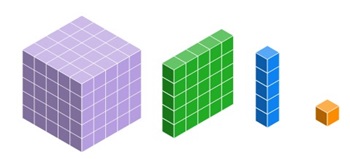
Why do you write numbers the way you do? Why is 9 the largest digit? In this module you will explore how our number system works. You will build off of the abstract idea of a number, for example, eight, and explore various ways of representing the concept of eight as a numeral. You probably already know two different representations for eight: 8 and VIII. This module guides you through other representations, such as Egyptian and Mayan as well as different number bases. Throughout this module you will gain a deeper knowledge of our base ten system and how place value works, preparing you to teach these concepts in your future classroom.
(Image created in Amplify Polypad)
Upon completion of this module, you will be able to:- Utilize different numbering and counting systems.
- Explain the connection between the properties of natural numbers, whole numbers, integers, and rational number operations.
- Utilize number sense to estimate, solve, and check various problems involving different sets of numbers.
- Be able to connect the current Louisiana Students Standards, and NCTM standards to course content.
- Express mathematical ideas clearly and correctly both orally and in writing, for purposes of mathematics instruction;
- Apply problem-solving strategies to a variety of mathematical problems
To achieve these objectives:- Read the sections below and work the embedded exercises within them.
- Complete MyOpenMath homework for this module.
- Complete the discussion forum for this module.
Module Pressbooks Resources and Activities
You will find the following resources and activities in this module at the Pressbooks website. Click on the links below to access or complete each item.
-
-
Students mustPost replies: 1Make forum posts: 1
-
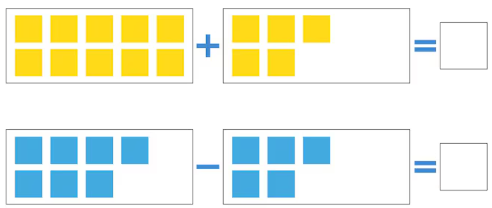
As you begin your journey to becoming a teacher, it's essential to revisit and master the basics, starting with addition and subtraction of whole numbers. You may already feel comfortable with these operations, but this module goes beyond just getting the right answers. It’s about understanding how and why these operations work so you can one day explain them clearly and confidently to your own students. They are the building blocks of everything from solving everyday problems to complex calculations in science, business, and technology. As an educator, your students will look to you for guidance and clarity. The ability to teach foundational math with confidence and adapt your explanations to meet diverse learning needs starts with your deep understanding. This module will help you strengthen not only your own skills, but your ability to guide others in building theirs.
Upon completion of this module, you will be able to:- Compute addition, subtraction, multiplication, and division problems using various strategies with or without technology.
- Be able to connect the current Louisiana Students Standards, and NCTM standards to course content.
- Express mathematical ideas clearly and correctly both orally and in writing, for purposes of mathematics instruction;
- Apply problem-solving strategies to a variety of mathematical problems
To achieve these objectives:
- Read the sections below and work the embedded exercises within them.
- Complete MyOpenMath homework for this module.
- Complete the discussion forum for this module.
Module Pressbooks Resources and Activities
You will find the following resources and activities in this module at the Pressbooks website. Click on the links below to access or complete each item.
-
-
Students mustPost replies: 1Make forum posts: 1
-
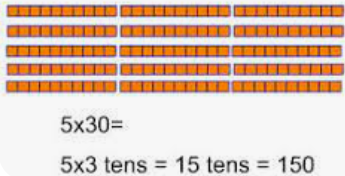
One of your most important responsibilities as a teacher will be helping students see mathematics not as a list of steps to memorize, but as a tool to make sense of the world around them. Multiplication is often one of the first concepts where this becomes clear. You might recall learning multiplication as something like “3 x 4 = 12.” Perhaps you memorized a table, drilled with flashcards, or sung facts aloud. But, were you ever encouraged to think about why "3 × 4 = 12" 0r what that actually means? In this module you will use centimeter strips and different numeration systems to model multiplication to enhance student understanding. You will also discuss repeated addition as the core of multiplication. Helping children grasp this concept will set the foundation for their success in future math courses.
Upon completion of this module, you will be able to:- Compute addition, subtraction, multiplication, and division problems using various strategies with or without technology.
- Be able to connect the current Louisiana Students Standards, and NCTM standards to course content.
- Express mathematical ideas clearly and correctly both orally and in writing, for purposes of mathematics instruction;
- Apply problem-solving strategies to a variety of mathematical problems
To achieve these objectives:
- Read the sections below and work the embedded exercises within them.
- Complete MyOpenMath homework for this module.
- Complete the discussion forum for this module.
Module Pressbooks Resources and Activities
You will find the following resources and activities in this module at the Pressbooks website. Click on the links below to access or complete each item.
-
-
Students mustPost replies: 1Make forum posts: 1
-
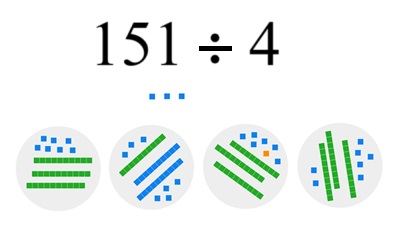
Division tends to be the toughest of the four operations for students, so how can you create a deeper understanding? In this module you will explore various visual models for division as well as the "how and why" for long division and repeated subtraction. You will use centimeter strips and blocks to clarify the long division algorithm (partition) and repeated subtraction algorithm. You will also discuss why you cannot divide by zero. Coming out of this section you will be prepared to answer the wide variety of student questions that arise when you teach them division.
(Image created in Amplify Polypad)
Upon completion of this module, you will be able to:- Compute addition, subtraction, multiplication, and division problems using various strategies with or without technology.
- Be able to connect the current Louisiana Students Standards, and NCTM standards to course content.
- Express mathematical ideas clearly and correctly both orally and in writing, for purposes of mathematics instruction;
-
Apply problem-solving strategies to a variety of mathematical problems
To achieve these objectives:- Read the sections below and work the embedded exercises within them.
- Complete MyOpenMath homework for this module.
- Complete the discussion forum for this module.
Module Pressbooks Resources and Activities
You will find the following resources and activities in this module at the Pressbooks website. Click on the links below to access or complete each item.
-
-
Students mustPost replies: 1Make forum posts: 1
-
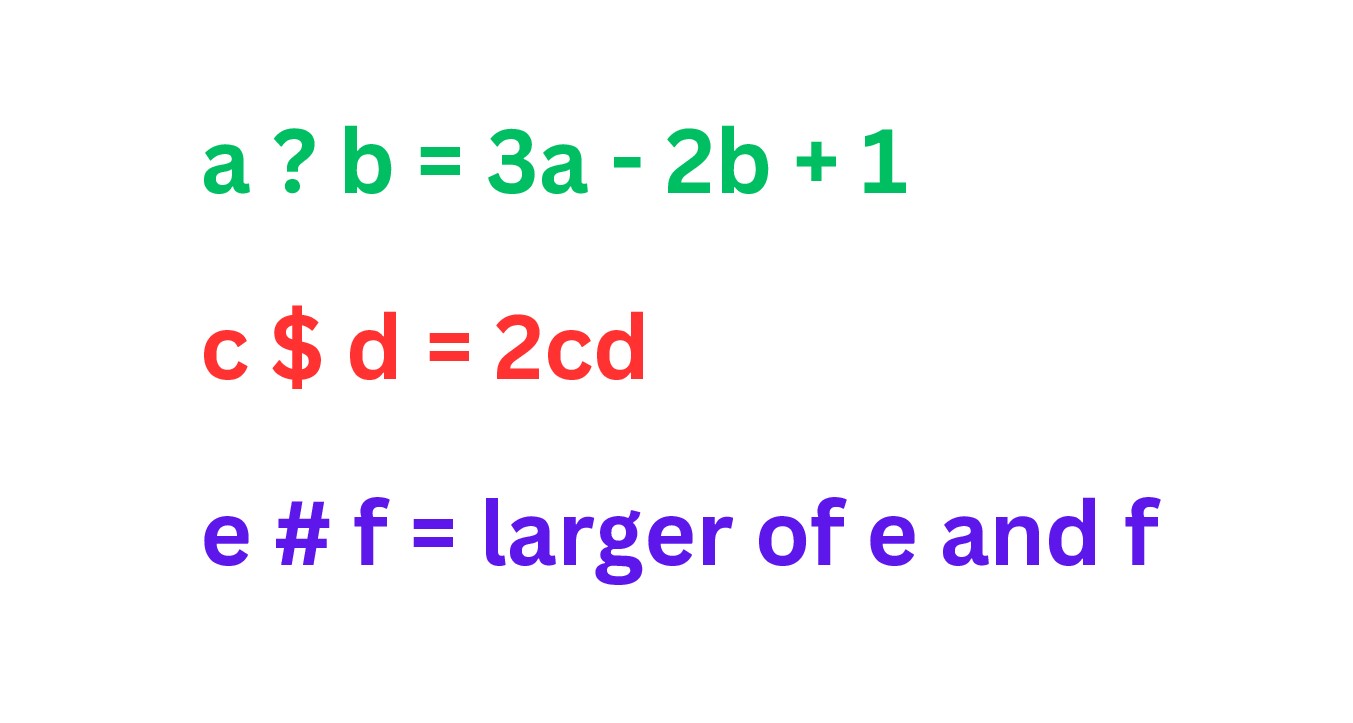
In this section you will be looking deeper into binary operations by going beyond addition, subtraction, multiplication and division. Here, you will be creating your own operations and investigating the commutative, associative, distributive, identity and closure properties. These basic properties and operations can be reviewed before moving on if necessary.
As you study these more advanced binary operations, you can see that you will be able to design problems that go beyond anything you have been able to do before. For example you might let "?" stand for the smaller of two numbers. If you look at 4 ? 7 then the answer would be 4.
Binary operations are used in computer science in areas such as data compression, encryption, networking and programming to name a few. Other fields like discrete mathematics and philosophy often use binary operations and systems with logic based on true/false statements.
Upon completion of this module, you will be able to:- Compute a binary operation for a defined operation.
- Determine if a binary operation holds true for the commutative, associative, distributive, identity and closure properties.
- Compute addition, subtraction, multiplication, and division problems using various strategies with or without technology.
- Be able to connect the current Louisiana Student Standards and NCTM Standards to the course content.
- Express mathematical ideas clearly and correctly both orally and in writing, for purposes of mathematics instruction.
To achieve these objectives:
- Read the sections below and work the embedded exercises within them.
- Complete MyOpenMath homework for this module.
- Complete the discussion forum for this module.
Module Pressbooks Resources and Activities
You will find the following resources and activities in this module at the Pressbooks website. Click on the links below to access or complete each item.
-
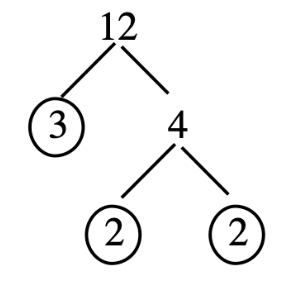
Number Theory explores the patterns and properties of whole numbers. These are concepts many students first encounter in elementary school. In this chapter, you build on some familiar concepts, such as factors, multiples, and prime numbers. You will also introduce engaging divisibility rules, along with a powerful tool: prime factorization. You will then use these to explore the concepts of the greatest common divisor and least common multiple in greater depth.
As future elementary educators, it’s important to you not only understand how numbers work, but also why they work that way. This chapter helps develop a deeper number sense and introduces strategies you can later adapt for your own teaching.
You’ll find that Number Theory is both practical and enriching. It strengthens your problem-solving skills and lays a foundation for helping young learners make sense of math with confidence and curiosity.
Upon completion of this module, you will be able to:
- Determine the digital root of a number and use it to verify arithmetic operations.
- Apply divisibility tests for 2, 3, 4, 5, 6, 7, 8, 9, 10, 11, and 12 to check divisibility without full division.
- Identify and define factors and multiples of whole numbers, and apply this understanding to solve problems.
- Classify numbers as prime or composite, and find the prime factorization of composite numbers.
- Determine greatest common factors (GCF) and least common multiple (LCM) using efficient strategies based on context.
- Be able to connect the current Louisiana Students Standards, and NCTM standards to course content.
To achieve these objectives:
- Read the sections below and work the embedded exercises within them.
- Complete MyOpenMath homework for this module.
- Complete the discussion forum for this module.
Module Pressbooks Resources and Activities
You will find the following resources and activities in this module at the Pressbooks website. Click on the links below to access or complete each item.
-
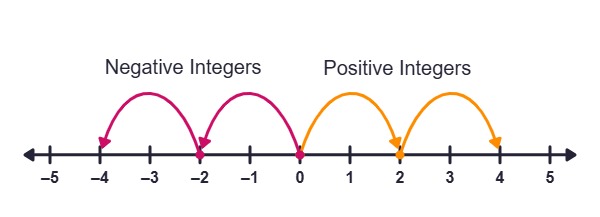
In this module, you will define what is an integer and learn how to add, subtract, multiply and divide integers. If needed, a review of addition, subtraction, multiplication and division of whole numbers can be used.
You will be using number lines and counters to learn why integer operations work. Then, after understanding why, you will be able to fluently solve integer problems.
Integers are the building blocks for advanced math concepts found in finance, computer science, and science to name a few. For example, in finance you can use both positive and negative integers to discuss credits and debits. A student might study positively and negatively charged particles in science or even play a round of golf and shoot "under par." The list goes on and on about where integers can be used in everyday life.
Upon completion of this module, you will be able to:
- Define and understand an integer.
- Use number lines and counters to solve addition, subtraction, multiplication and division of integers.
- Develop the sign rules of integers for multiplication and division.
- Work with the closure property of integers.
- Be able to connect the current Louisiana Students Standards, and NCTM standards to course content.
To achieve these objectives:
- Read the sections below and work the embedded exercises within them.
- Complete MyOpenMath homework for this module.
- Complete the discussion forum for this module.
Module Pressbooks Resources and Activities
You will find the following resources and activities in this module at the Pressbooks website. Click on the links below to access or complete each item.
- Define and understand an integer.
-
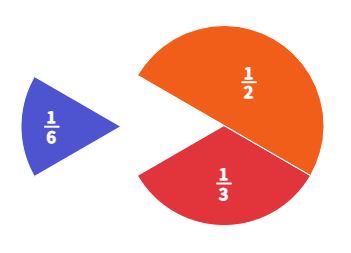
(Image from Amplify Polypad)
As you move deeper into your understanding of mathematics, this module on rational numbers builds on your prior knowledge of whole numbers and integers.
In this module, you will dive into the world of rational numbers—numbers that can be written as a fraction of two integers. You will explore how fractions, decimals, and negative numbers all fit into this category. You will learn how to add, subtract, multiply, and divide fractions, as well as how to work fluently with decimals in various contexts. You will emphasize not only how to perform operations but also the reasoning behind them.
Why does this matter? Rational numbers are everywhere—in money, measurement, cooking, sports statistics, and more. This module encourages you to think, with flexibility, about numbers. To make meaningful connections between different forms and operations and grow more confident in your number sense. It is not just about getting the answer. It is also about understanding how numbers work together and using that understanding in order to make informed decisions in everyday life.
(Image created in Amplify Polypad)
Upon completion of this module, you will be able to:
- Recognize and represent rational numbers in different forms, including fractions and decimals.
- Understand place value in decimals to compare, order, and reason about rational numbers.
- Compare and order fractions and decimals using various strategies.
- Perform all four operations (addition, subtraction, multiplication, and division) with fractions and decimals, and explain the reasoning behind each.
- Convert between fractions and decimals, including both terminating and repeating decimals.
- Apply rational number operations to solve real-life problems and use estimation and number sense to evaluate reasonableness.
- Be able to connect the current Louisiana Student Standards and NCTM standards to course content.
To achieve these objectives:
- Read the sections below and work the embedded exercises within them.
- Complete MyOpenMath homework for this module.
- Complete the discussion forum for this module.
Module Pressbooks Resources and Activities
You will find the following resources and activities in this module at the Pressbooks website. Click on the links below to access or complete each item.
-
Replace this text with a short module introduction in narrative form; provide context and instructor's perspective to review (prior knowledge), preview (highlights of the module), and motivate (relevance to students' personal and career goals). Avoid referencing textbook chapters, page numbers, or dates. To replace image, double click the image placeholder. Select 300–400 pixels wide, and update the description of image. Include attribution of your image (Image: Title, Author, Source, License).
Upon completion of this module, you will be able to:
- Obj. 1 (C.O. #)
- Obj. 2 (C.O. #)
- Etc.
To achieve these objectives: [Edit these items to match your resources and activities.]
- Read the Module # Introduction
- Read and view the materials in the Module # Pressbooks book
- Read Chapter # in Textbook Title, Article Title, etc.
[Include all reading assignments here that are outside of Moodle. Be as
concise as possible. More information can be included in the
third-party section below, if necessary.]
- Complete the [specific activities in the module. Include all in the order you want them completed. If an activity supports the development of foundational and/or industry-specific digital skills, note the skill to which it aligns.]
Module Pressbooks Resources and Activities
You will find the following resources and activities in this module at the Pressbooks website. Click on the links below to access or complete each item.
- Obj. 1 (C.O. #)
Background Colour
Font Face
Font Kerning
Font Size
Image Visibility
Letter Spacing
Line Height
Link Highlight
Text Colour