Section outline

  • Welcome to Intravenous Therapy!  (**this course does not have a common course number in the state catalog!)
     
    Course Introduction

    This course on Intravenous Therapy is designed to equip nursing professionals with the foundational knowledge necessary to safely and effectively initiate, manage, and discontinue intravenous therapy. The course emphasizes best practices in IV insertion, maintenance, medication administration, fluid and electrolyte balance, infection control, and the recognition and management of IV-related complications.

    The primary purpose of this course is to prepare nurses to confidently perform IV therapy without their scope of practice and in accordance with current clinical guidelines, state regulations, and facility policies.

    Upon successful completion of this course, the student will be able to:

    1. Summarize the major legal implications and limitations of intravenous therapy related to the Louisiana Nurse Practice Act.
    2. Identify anatomical and physiological principles related to intravenous therapy.
    3. Summarize the fundamentals of fluid and electrolyte metabolism and  principles of fluid therapy.
    4. Summarize the equipment, techniques, and documentation used in initiating, monitoring, and maintaining intravenous therapy.
    5. Perform nursing responsibilities related to initiating, monitoring and maintaining intravenous therapy. 
    6. Discuss prevention, assessment, and nursing interventions of complications related to intravenous therapy.
    7. Identify major principles of intravenous medication, blood transfusion, chemotherapy, and total parenteral nutrition administration.
    8. Identify cultural and lifespan considerations related to intravenous therapy
    9. Use a search strategy to find correct and applicable nursing regulations online 

    Structure of the Course
    This Intravenous Therapy course is organized into seven weekly modules, each designed to build upon foundational knowledge and clinical skills essential for safe and effective IV therapy. The course is structured to guide the student progressively through core topics.
     
    Navigating the Course

    This course is set up in Modules covering various topics which may be accessed from the course navigation menu on the left or by scrolling below. Modules may be collapsed in the menu and it the body of the course to minimize scrolling. Each module includes the relevant chapters followed by various activities, which may include discussion forums, listening activities and quizzes, practice quizzes, module tests, and other relevant activities as appropriate for each module. Many items are required and may be marked as completed automatically when the activity has been submitted (the broken check box), but others will marked as done by the student (the solid check box). 
     
    Please move through the items below and continue through the Learner Support and Getting Started modules before moving on to Module 1. Be sure to check for announcements and due dates to stay on track.
     
    Creative Commons attribution license This course and its contents have been developed by Becca Dauzat, Dr. LaTonya Dorsey, Amanda Olinde, Sabrina Palmer, and Dr. Trudy Williams and is licensed under a Creative Commons Attribution 4.0 International License by LOUIS: The Louisiana Library Network, except where otherwise noted. 
     
  • Adopting instructors should edit all pages in this module to reflect their institution's policies.

  • This module contains all the items you should review and complete before you begin Module 1. Before moving on, be sure to:

    1. Check the News and Announcements Forum
    2. Read the Course Syllabus
    3. Introduce yourself to the class
    4. Read the instructions for the Q & A Forum
    5. Review academic integrity expectations in the course
    Good luck in the course!
    • This forum contains general news and announcements. You can find all announcements listed in the "Latest News" block in Course Tools within this course or on your My Courses page.
    • Use this forum to tell us a little about yourself and your interests. Some topic ideas:

        1. What is your field of study/research interest or concentration?
        2. What are you most interested in learning about in this class and why?
        3. Have you ever taken an online class before?
        4. Any other information you would like to share with your classmates, such as special interests or activities.

      Post a picture!  We look forward to meeting you.

    • Use this forum to ask your instructor any questions you have about the course. You may post at any time, and your instructor will respond here. Be as specific as possible.

      Please keep in mind that others can see your posts, so do not post any personal information. If you have questions about your grade, please email your instructor directly. You can expect a response to posts and emails within 24 hours, M-F and the next business day if over the weekend

      Your subscription should be set to Auto.

    • Provide specific and contextualized information about how students can comply with institutional academic integrity policies and standards as they complete assessments in the course. 

  • Use the information in this module to customize the template to your needs. This module is currently hidden from students, and available for you to refer to throughout the semester.

  • Browse to find your image above. Then update alt text here. Set the first size number below to between 300-400.

    This introductory module provides an overview of intravenous (IV) therapy, including its purpose, scope, and relevance in clinical practice. Students will be introduced to the roles and responsibilities of healthcare providers involved in IV therapy, with a focus on the practical and professional expectations for nursing personnel. The module also explores key legal and ethical principles, such as informed consent, documentation standards, patient rights, scope of practice, and accountability. Emphasis is placed on understanding regulatory guidelines, professional standards, and ethical decision-making to promote safe, legal, and compassionate IV therapy practice.

     
    Upon completion of this module, you will be able to

    1. Describe the importance of IV therapy in modern medical practice. (M.O. #1)
    2. Summarize the major legal implications and limitations of intravenous therapy related to the Louisiana Nurse Practice Act. (C.O. #1)
    3.  Identify and explain ethical principles that guide the practice of intravenous therapy. (M.O. #2)
    4. Use a search strategy to find correct and applicable nursing regulations online (C.O. #9) 

    To achieve these objectives: 

    1. Read the Module 1 Introduction
    2. Read Chapters 1 and 2 in Intravenous Therapy for Practical Nurses.
    3. Complete the Module 1 Activity.
    4. Participate in the Module 1 Discussion.
    5. Complete the Module 1 Quiz.

    Note the check boxes to the right that help you track your progress: some are automatic, and some are manual. 

    Module Pressbooks Resources and Activities

    You will find the following resources and activities in this module at the Pressbooks website. Click on the links below to access or complete each item.

  • Browse to find your image above. Then update alt text here. Set the first size number below to between 300-400.

    This module provides a foundational review of the anatomical structures and physiological functions directly related to intravenous (IV) therapy. Emphasis is placed on the cardiovascular system, particularly the anatomy of veins used for IV access, including vein location, structure, and variation. Students will study the physiology of blood flow, vessel wall dynamics, and the mechanisms of fluid and solute transport within the vascular system. A solid understanding of these concepts provides the essential principles for informed clinical decision-making in IV therapy practice. 


    Upon completion of this module, you will be able to:

    1. Understand anatomical and physiological principles relating to intravenous therapy. (C.O. #2)
    2. Describe how intravenous therapy interacts with the circulatory system. (M.O. #1)
    3. Identify common anatomical sites for peripheral and central intravenous access. (M.O. #2)
    4. Understand the effects of intravenous therapy on the immune response. (M.O. #3)
    5. Identify how anatomical and physiological differences between pediatric, adult, and geriatric patients affect IV therapy. (M.O. #4)

    To achieve these objectives: 

    1. Read the Module 2 Introduction
    2. Read Chapter 3: Anatomy & Physiology in Intravenous Therapy for Practical Nurses.  
    3. Watch the Video provided.
    4. Review the Module 2 Interactive Lesson.
    5. Complete the Module 2 Assignment.
    6. Complete the Module 2 Quiz.

    Module Pressbooks Resources and Activities

    You will find the following resources and activities in this module at the Pressbooks website. Click on the links below to access or complete each item.

  • Browse to find your image above. Then update alt text here. Set the first size number below to between 300-400.

    Welcome to the Principles of Fluids and Electrolytes module. Understanding fluid and electrolyte balance is essential for safe and effective nursing care. This module will introduce you to the basic concepts of fluid compartments, electrolyte distribution, and the physiological mechanisms that maintain homeostasis. We will also briefly discuss types of intravenous fluids and specific clinical situations in which each would be used for. By the end of this module, you'll be better equipped to assess, monitor, and manage patients with fluid and electrolyte disturbances across various healthcare settings.

     
    Upon completion of this module, you will be able to:

    1. Summarize the fundamentals of fluid and electrolyte metabolism and principles of fluid therapy (C.O. #3).
    2. Explain the functions of water in the body (M.O. #1).
    3. Explain the function of each type of intravenous fluid (M.O. #2).
    4. Identify each electrolyte as intracellular or extracellular (MO. #3).
    5. Explain the effects of each electrolyte on the body (M.O. #4).


    To achieve these objectives: 

    1. Read the Module 3 Introduction
    2. Read Chapter 4: Principles of Fluids & Electrolytes in Intravenous Therapy textbook.
    3. Review Module 3 Interactive Lesson.
    4. Complete the guided reading assignment and upload to the Dropbox by 23:59 on the due date.

    Module Pressbooks Resources and Activities

    You will find the following resources and activities in this module at the Pressbooks website. Click on the links below to access or complete each item.

  • Browse to find your image above. Then update alt text here. Set the first size number below to between 300-400.

    Now that you understand the required anatomy and physiology as well as the importance of fluid balance within the body you will dive into the basics of IV initiation. As a nurse it is important to know why each step in the procedure is done and that we are following all related policies to ensure best practices and patient safety. 


    Upon completion of this module, you will be able to:
      1. Summarize the techniques, rationale, and procedure used in initiating intravenous (IV) therapy. (C.O. #4)
      2. Discuss the assessment of the patient prior to insertion of a peripheral intravenous (IV) catheter. (M.O. #1)
      3. Explain the equipment and the process of site selection for a peripheral intravenous (IV) catheter. (M.O. #2)
      4.  Discuss the rationale and procedures for dressing and documentation of an intravenous (IV) line. (M.O. #3)
      5. Discuss additional considerations associated with central intravenous therapy. (M.O. #4)
      6. Discuss considerations for the older adult when initiating intravenous therapy. (M.O. #5)
      7. Demonstrate the procedure to initiate intravenous (IV) therapy. (M.O. #6)

    To achieve these objectives: 

    1. Read the Module 4 Introduction 
    2. Read Chapter 5: Initiating Intravenous Therapy in Intravenous Therapy for Practical Nurses.  
    3. Complete the reading guide. 


    Module Pressbooks Resources and Activities

    You will find the following resources and activities in this module at the Pressbooks website. Click on the links below to access or complete each item.

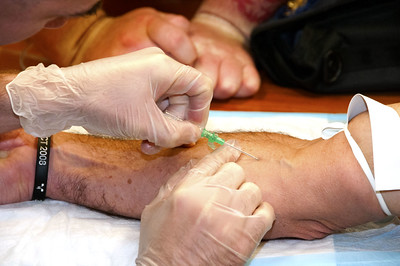
  • By LeoCarbajal - Own work, CC BY-SA 3.0, https://commons.wikimedia.org/w/index.php?curid=24896486Intravenous (IV) therapy is a critical component of patient care, providing fluids, medications, and nutrients directly into the bloodstream. This module introduces the essential practices for maintaining and monitoring IV therapy to ensure safe and effective treatment. Learners will explore techniques for site assessment, equipment management, and patient monitoring, along with the identification and management of common IV complications such as infiltration, phlebitis, infection, and fluid overload. By the end of this module, students will be equipped with the knowledge and skills to confidently manage IV therapy and respond promptly to potential issues to promote positive patient outcomes.


    Upon completion of this module, you will be able to: 

    1. Explain nursing responsibilities related to initiating, monitoring and maintaining intravenous therapy. (C.O. #5) 

    2. Discuss prevention, assessment, and nursing interventions of complications related to intravenous therapy. (C.O. #6)

    3. Demonstrate safe and evidence-based intravenous (IV) therapy practices. (M.O. #1)

    4. Analyze patient data to identify when and how to IV infusion therapy should be adjusted. (M. O. #2)

    5. Assess and respond to complications of IV therapy. (M. O. #3)

    To achieve these objectives:

    1. Read the Module 5 Introduction 
    2. Read Chapters 6: Maintaining & Monitoring IV Therapy and Ch. 7: Complications of IV Therapy in Intravenous Therapy for Practical Nurses. 
    3. Review PowerPoint Slides.
    4. Complete the discussion forum. 

    Module Pressbooks Resources and Activities

    You will find the following resources and activities in this module at the Pressbooks website. Click on the links below to access or complete each item.

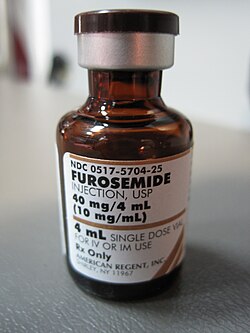
  • Three vials of liquid intravenous medication  waiting to be administeredModule Introduction: Principles of Intravenous Medication Administration

    Welcome to this essential module on the Principles of Intravenous (IV) Medication Administration. As your instructor, I want to begin by acknowledging the foundation you’ve already built in pharmacology, anatomy, and patient safety. You’ve learned how the body processes medications and how critical accurate dosing and timing are to patient outcomes. Now, we’ll build on that knowledge and apply it in one of the most high-stakes areas of nursing practice—IV medication administration.

    This module will guide you through the core principles of IV therapy, including aseptic technique, calculating and regulating flow rates, understanding compatibility and potential complications, and practicing proper documentation. You’ll also explore the Six Rights of Medication Administration in the context of IV delivery, and gain exposure to real-world case scenarios that require clinical judgment and critical thinking.

    Why does this matter? Because as a future nurse, your patients will trust you with their lives—often literally connected to you through an IV line. Whether you're working in an emergency department, medical-surgical unit, or intensive care setting, IV medication administration is a skill that will define your competence and confidence. Mastering it now not only increases patient safety but also positions you as a capable and reliable nurse ready to handle complex care situations.

    Let’s approach this module with purpose, curiosity, and the commitment to excellence that brought you into this profession. Your future patients—and your future self—will thank you.

        
    Upon completion of this module, you will be able to:

    1. Identify major principles of intravenous medication, blood transfusion, chemotherapy, and total parenteral nutrition administration. (C.O. #7)
    2. Demonstrate safe and accurate preparation and administration of IV medications. (M.O. #1)
    3. Apply clinical judgment in monitoring patients for therapeutic responses and potential adverse reactions. (M.O. #2)
    4. Adhere to legal, ethical, and institutional guidelines. (C.O #1)
    5. Define terminology related to infusion medication methods. (M.O. #3)

    To achieve these objectives: 
    1. Read the Module 6 Introduction 
    2. Read Chapter 8: Principles of Intravenous Medication Administration in Intravenous Therapy for Practical Nurses
    3. Complete the discussion board forum.
    4. Review PowerPoint Slides.


    1. Module Pressbooks Resources and Activities

    You will find the following resources and activities in this module at the Pressbooks website. Click on the links below to access or complete each item.

  • Browse to find your image above. Then update alt text here. Set the first size number below to between 300-400.

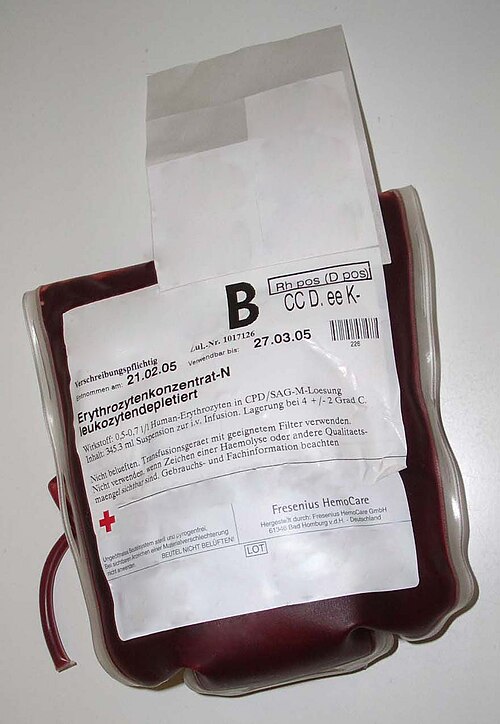
    Welcome to this vital module on Principles of Blood Products, Chemotherapy, and Parenteral Nutrition. As your instructor, I recognize the strong clinical foundation you have already developed in IV therapy and pharmacology. Now, we are stepping into more advanced territory—where critical thinking, precision, and empathy are indispensable.

    In this module, you’ll explore the safe administration of blood products, essential concepts in chemotherapy handling and monitoring, and the specialized process of providing nutrition intravenously. You’ll learn how to identify adverse reactions, follow strict protocols, and advocate for patients who are often immunocompromised, malnourished, or facing life-threatening illness.

    These are not just technical skills—they’re tools that will prepare you to work in high-acuity settings like oncology, critical care, and surgery. Your role as a nurse in these areas can significantly impact patient survival, recovery, and quality of life. I encourage you to approach this module with curiosity, courage, and the heart of a healer—because what you learn here will save lives.

    Upon completion of this module, you will be able to:

    1. Identify major principles of intravenous medication, blood transfusion, chemotherapy, and total parenteral nutrition administration. (C.O. #7)
    2. Discuss potential alternatives to blood transfusion. (M.O #1)
    3. Differentiate between allogeneic, autologous and designated blood transfusions. (M.O. #2)
    4. Discuss indications for parenteral nutrition. (M.O. #3) 
    5. Explain the pharmacologic principles and clinical applications of chemotherapy. (M.O. #4) 

    To achieve these objectives: 

    1. Read the Module 7 Introduction 
    2. Read Chapter 9, Principles of Blood Products, Chemotherapy, and Parenteral Nutrition in Intravenous Therapy for Practical Nurses. 
    3. Complete the discussion board assignment. 

    Module Pressbooks Resources and Activities

    You will find the following resources and activities in this module at the Pressbooks website. Click on the links below to access or complete each item.

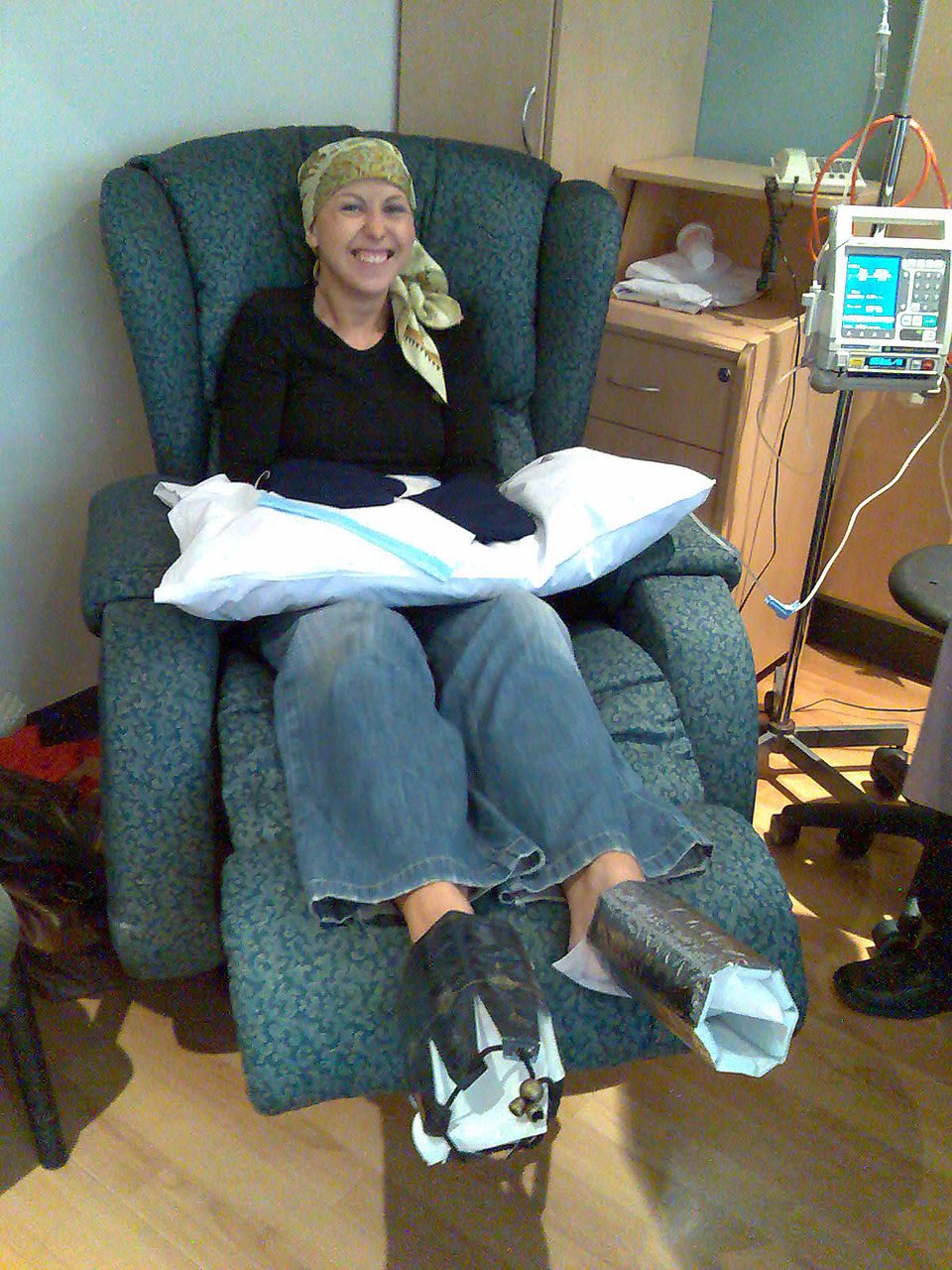
  • Smiling woman receiving chemo treatment wearing accral cooling devices


    In this short module, you will take a long set of quiz questions in order to assess your readiness to succeed in a final exam.  No grade will be submitted officially, however by taking it will you discover topics in need of review. 


    Woman receiving chemotherapy using accral cooling devices, Jenny Mealing, Cold mits and wine coolers!, CC-BY 2.0


  • An African American nurse dressed in blue surgical scrubs is seen hanging a bag of blood on an IV pole in an operating room

    In this module you will take your final exam/final assessment for this course. Read the instructions carefully and take note of any special submission guidelines. 

    IV Therapy Skills Checklist as Final Course Evaluation

    Purpose

    The IV Therapy Skills Checklist serves as the comprehensive final evaluation for this course and is designed to assess the student’s ability to safely and competently perform essential intravenous therapy skills. This evaluation allows students to demonstrate integration of cognitive knowledge, psychomotor skills, clinical judgment, and professional behaviors required for safe IV therapy and medication administration.

    Student Evaluation

    At the conclusion of the course, each student will complete the IV Therapy Skills Checklist as the final course evaluation. The final skills evaluation may be conducted in various modalities: in person or online or as a demonstration in person in the Skills and Simulation Lab or virtually, depending on course modality, scheduling, or extenuating circumstances as determined by the course coordinator.

    For in-person evaluations, students will perform assigned IV therapy skills under direct faculty observation in the simulation lab.
    For virtual evaluations, students may demonstrate skills using a structured virtual simulation platform, recorded skills demonstration, or live video session as directed by the instructor. Virtual evaluations will follow the same checklist criteria and performance standards as in-person evaluations to ensure consistency, fairness, and rigor.

    Skills assessed may include, but are not limited to, IV push medication administration, IV piggyback (IVPB) infusion, continuous infusion management, infusion pump programming, IV site assessment, infection prevention, patient identification, medication verification, documentation, and post-administration monitoring.

    Students are expected to follow established nursing standards, institutional policies, and evidence-based guidelines. Each step on the checklist must be completed accurately and safely to demonstrate competency. A passing score on the IV Therapy Skills Checklist is required for successful completion of the course. Failure to demonstrate competency may result in remediation or course failure in accordance with program policy.

    Instructor Evaluation

    The IV Therapy Skills Checklist also functions as an instructional evaluation tool. Faculty will review student performance outcomes—whether completed in person or virtually—to evaluate the effectiveness of teaching strategies, skills instruction, simulation resources, and course delivery. This process supports continuous quality improvement and curriculum refinement.

    Feedback and Documentation

    Students will receive timely verbal and/or written feedback following the skills evaluation. Completed checklists will be maintained as part of the student’s academic record and may be used to verify IV therapy competency for progression within the nursing program.

    Professional Accountability

    The IV Therapy Skills Checklist reinforces professional accountability, patient safety, and clinical readiness. Whether completed in person or virtually, students are expected to approach the final skills evaluation with professionalism, preparation, and adherence to nursing standards. Successful completion signifies readiness to safely apply IV therapy skills in clinical practice.

    Upon completion of this module, you will have:

    1. Read and viewed the final assessment instructions
    2. Scheduled your exam with the proctoring service [if applicable]
    3. Scheduled your final assessment in the Simulation Lab


Accessibility

Background Colour Background Colour

Font Face Font Face

Font Kerning Font Kerning

Font Size Font Size

1

Image Visibility Image Visibility

Letter Spacing Letter Spacing

0

Line Height Line Height

1.2

Link Highlight Link Highlight

Text Colour Text Colour